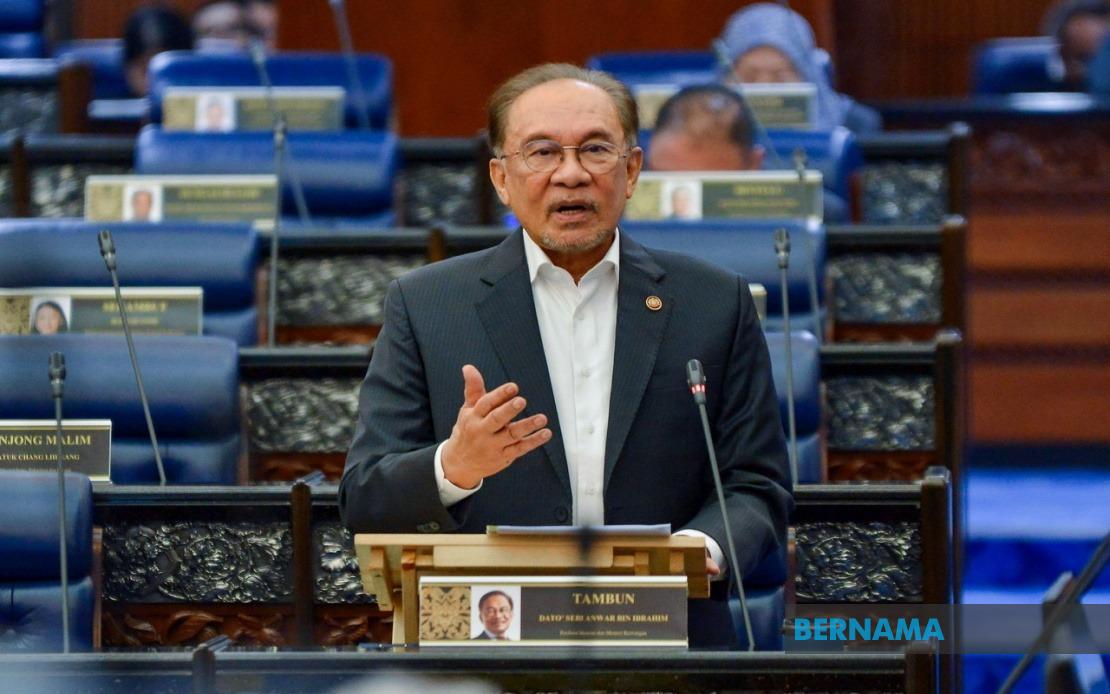
Malaysia's government will maintain its focus on directing employment opportunities to local workers whilst conducting careful assessments of foreign labour requirements, Prime Minister Datuk Seri Anwar Ibrahim said during parliamentary proceedings today. In responding to concerns raised about workforce shortages affecting small and medium enterprises, Anwar acknowledged that certain sectors genuinely require foreign workers, yet emphasised that any intake must follow established legal frameworks and security protocols. The position reflects a careful navigation between immediate economic pressures and longer-term national employment priorities.
Anwar's comments highlight an ongoing tension within Malaysia's economy. Whilst many SMEs face operational constraints due to labour shortages, policymakers remain concerned about limiting genuine job pathways for Malaysian citizens, particularly young workers entering the employment market. The Prime Minister noted that millions of foreign workers already reside in Malaysia, suggesting that a more strategic approach to their deployment and retention could address sectoral shortages without necessarily requiring increased recruitment quotas. This perspective shifts the conversation from one centred on fresh foreign worker intake to one focused on optimising existing labour resources.
The government recognises that several economic sectors cannot function effectively without foreign labour, a reality that has persisted for decades. Construction, manufacturing, hospitality, and domestic services exemplify industries where Malaysian workers have shown limited interest, creating genuine operational challenges for employers. However, Anwar signalled that any expansion of foreign worker programmes requires careful coordination between the Ministry of Human Resources and the Ministry of Home Affairs, reflecting security and regulatory concerns that extend beyond purely economic calculations. This inter-ministerial approach suggests the government views foreign labour policy through a broader national security lens, not merely as a labour market management tool.
Anwar was particularly critical of what he termed foreign worker syndicates, describing these networks as longstanding burdens on the economy that facilitate wealth accumulation through illicit channels. This characterisation indicates government frustration with exploitative labour trafficking and corruption within the foreign worker system. By explicitly addressing what many observers recognise as endemic problems in labour recruitment, Anwar signalled intent to reform these systems rather than simply accept them as unavoidable costs of employing migrant workers. Tackling these syndicates would require sustained enforcement and potentially restructured recruitment pathways.
The Prime Minister stressed that enforcement action against workers violating Malaysian law would continue without discrimination based on nationality, ethnicity, or migration status. He explicitly mentioned Rohingya workers, indicating that undocumented or irregular migrants would face consistent legal consequences if found violating regulations. Simultaneously, Anwar promised protection for both local and foreign workers who comply with applicable laws, framing enforcement as rule-based rather than ethnically or nationality-based. This dual messaging attempts to assure both workers and employers that the government maintains impartial, law-focused labour management.
Regarding employment opportunities for Malaysian youth, the government has begun tightening approval processes for foreign professional workers, particularly in high-skilled sectors. Anwar revealed that some companies had obtained approvals to import workers claiming expertise in emerging fields like artificial intelligence, only to deploy them in unrelated roles unconnected to their purported specialisation. This pattern reflects a broader concern that foreign worker visas can be manipulated to circumvent normal hiring procedures or to suppress wage levels in skilled professions. Closing these loopholes protects Malaysian professionals from unfair competition whilst ensuring that foreign expertise genuinely serves developmental needs.
The government's approach distinguishes between legitimate skills transfers and labour substitution masked as expertise importation. If Malaysia genuinely requires specialists in digital technologies, artificial intelligence, or other advanced fields, the government indicates it will facilitate such hiring. However, this access depends on genuine necessity and appropriate role alignment, not on employers using professional worker categories as convenient alternatives to recruiting and training Malaysians. This distinction reflects a modernising approach to labour policy that acknowledges globalisation whilst protecting local workforce development.
Anwar's parliamentary responses address real concerns raised by SMEs operating in competitive regional markets where labour constraints can threaten viability. Yet they simultaneously signal that the government will not simply capitulate to demands for unlimited foreign worker intake. Instead, a more sophisticated framework appears to be developing, one emphasising better coordination of existing foreign workers, tighter controls on new recruitment, enhanced enforcement against exploitation, and protection of professional opportunities for Malaysians. This represents a nuanced position distinguishing Malaysia from some neighbours that have adopted more permissive foreign labour regimes.
For Malaysian employers, the government's stance requires strategic workforce planning that prioritises domestic recruitment and training. Companies can no longer rely on automatic foreign worker quota increases to manage labour challenges; instead, they must invest in Malaysian worker development, competitive wage structures, and operational efficiency. This transition may impose short-term costs but could yield long-term benefits through reduced dependence on labour importation and stronger local skill development. Sectors like construction and manufacturing may face particular adjustment pressures as foreign worker availability becomes more constrained.
The policy implications for Southeast Asia's labour markets are significant. Malaysia's approach contrasts with some regional economies that have adopted more open foreign labour frameworks, suggesting a potential shift toward more selective, skills-focused migration. If Malaysia successfully implements tighter coordination between ministries and more rigorous professional worker vetting, it could establish a model balancing development needs with labour market protectionism. Other regional economies facing similar SME complaints about labour shortages may observe Malaysia's experience with interest, considering whether selective restriction offers advantages over unlimited expansion.
For foreign workers already in Malaysia, the government's messaging contains both assurance and warning. Those complying with regulations should experience stable employment relationships and legal protections. Those attempting to work illegally, violate employment terms, or engage in irregular activities face enforcement action. This clarity aims to incentivise compliance whilst deterring exploitative arrangements. The emphasis on protecting compliant workers reflects recognition that Malaysia's economy has become integrated with migrant labour, making orderly management preferable to chaotic enforcement.
The government's commitment to studying sectoral foreign worker needs jointly across relevant ministries suggests forthcoming policy refinements rather than immediate changes. The coordination between Human Resources and Home Affairs ministries indicates that security clearance and labour market assessment will proceed in parallel, potentially yielding more evidence-based decisions than currently apply. This methodical approach, whilst potentially frustrating to employers seeking immediate relief, could produce more sustainable long-term frameworks. The coming months should clarify which sectors receive approval for expanded foreign worker intake and under what conditions.
Ultimately, Anwar's parliamentary statement reflects a government attempting to balance competing pressures: economic growth requiring adequate labour, local employment opportunity protection, skilled workforce development, and security concerns around migrant worker management. The approach privileges Malaysian employment priority whilst acknowledging reality that some foreign labour remains necessary. Whether this framework satisfies both domestic workers anxious about competition and employers facing operational pressures remains to be tested through implementation.

