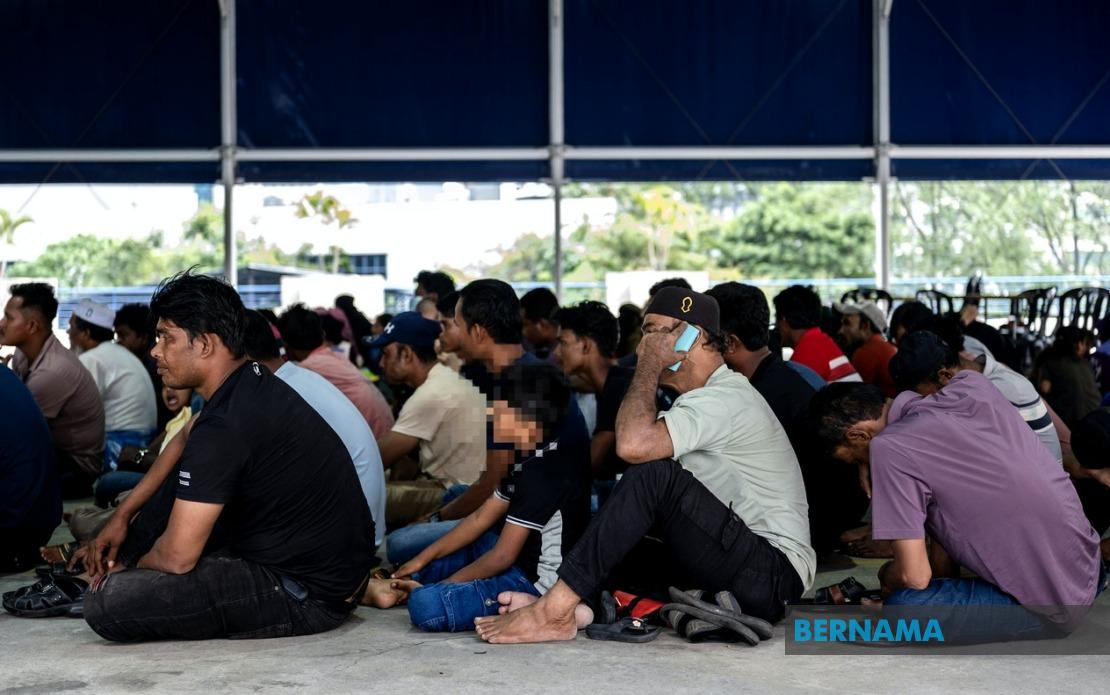
Malaysia will have preliminary figures on its registered Myanmar refugee population ready by the end of 2024, according to Home Minister Datuk Seri Saifuddin Nasution Ismail, marking a significant step in the government's effort to systematically document and manage the displaced population currently residing in the country. Speaking after a public event in Putrajaya on August 9, the minister indicated that the Immigration Department is actively collecting biometric and identity information through its Refugee Registration Document (DPP) programme, a centralized initiative designed to bring order to what has long been an administratively fragmented humanitarian challenge.
The registration drive represents a departure from previous ad-hoc approaches to refugee management and aligns with the National Security Council Directive No. 23 (Revision 2023), which sets the policy framework for how Malaysia handles refugee populations. The exercise is not confined solely to Myanmar nationals but encompasses all individuals classified as refugees within Malaysia's borders, reflecting the government's broader ambition to establish a comprehensive database of displaced persons. This inclusive approach suggests recognition that refugee flows into Malaysia extend beyond the Myanmar crisis, encompassing movements from Afghanistan, Syria, and other conflict zones across the region.
Saifuddin Nasution emphasized that the data collection initiative serves multiple strategic objectives. Beyond administrative tidiness, having verified biometric and identity records will enable the government to distinguish between genuine refugees entitled to protection and other irregular migrants, a distinction that has historically proven difficult given the scale of undocumented populations in Malaysia. The accuracy of such data remains crucial, as it will inform policy decisions on repatriation priorities, resource allocation for humanitarian services, and engagement with international organizations like the United Nations High Commissioner for Refugees.
The minister outlined that individuals confirmed as legitimate refugees through this verification process will receive priority consideration for voluntary repatriation, with the Foreign Ministry (Wisma Putra) taking the lead on diplomatic negotiations and logistical arrangements. This suggests a coordinated approach across multiple government agencies, a necessity given that repatriation involves complex bilateral discussions with neighboring countries, particularly Myanmar, where political instability following the 2021 military coup continues to complicate safe return frameworks. The timing of repatriation initiatives remains sensitive, as conditions in Myanmar remain unstable and international legal standards require that returns occur only when safety can be assured.
The registration programme itself requires sustained public engagement to succeed. Saifuddin Nasution acknowledged that authorities must conduct outreach campaigns to encourage refugees to come forward voluntarily and participate in the data collection exercise. This presents a practical challenge, as many undocumented or semi-documented refugees operate in informal economic sectors and may harbor legitimate concerns about revealing their presence to authorities. Building trust through clear messaging that cooperation facilitates humanitarian assistance rather than automatic detention or deportation will be essential to achieving comprehensive coverage.
Malaysia's approach reflects both pragmatic necessity and humanitarian obligation. The country hosts one of Southeast Asia's largest refugee populations outside camps, with Myanmar nationals forming a significant portion of this group. Since 2021, political turmoil in Myanmar has triggered waves of displacement, adding to the existing populations of refugees who had fled earlier conflicts and persecution. The DPP programme's implementation suggests Malaysia recognizes that managing these populations requires sophisticated data infrastructure rather than reactive crisis responses.
The promise of Q4 data release comes as regional refugee movements remain volatile. Thailand, Bangladesh, and Indonesia are similarly grappling with significant displaced populations, and Malaysia's systematic approach could potentially offer lessons or models for broader ASEAN coordination on refugee management. Conversely, the challenges Malaysia encounters may highlight the limitations of national-level solutions to what are fundamentally regional displacement crises requiring multilateral cooperation and international burden-sharing.
Politically, the data collection initiative also addresses domestic concerns about irregular migration and social cohesion. By establishing transparent, verifiable figures on refugee numbers and demographics, the government can counter speculation and misinformation that often fuel public anxiety about foreign populations. Accurate data enables informed policy discussion grounded in facts rather than estimates or anecdotes, potentially supporting more nuanced public discourse around Malaysia's humanitarian responsibilities and immigration management.
The fourth quarter timeline suggests the government is working with reasonable urgency, though large-scale biometric data collection across dispersed populations invariably encounters logistical obstacles. Refugee communities are often concentrated in urban areas but remain distributed across multiple states, requiring coordinated efforts by federal and state-level immigration authorities. The willingness of refugees to participate depends on confidence in the process, which the government must actively cultivate through community leaders, humanitarian organizations, and trusted intermediaries.
Looking ahead, the release of preliminary data will represent a baseline from which Malaysia can measure the effectiveness of its humanitarian programs and identify gaps in service provision. Armed with verified figures on refugee numbers, demographics, skills, and vulnerabilities, policymakers can design targeted interventions addressing health, education, livelihood, and social integration needs more systematically. For regional observers and international humanitarian organizations, Malaysia's data transparency will provide crucial insights into the scope of displacement flows affecting Southeast Asia and the continent's capacity to manage protracted refugee situations.

