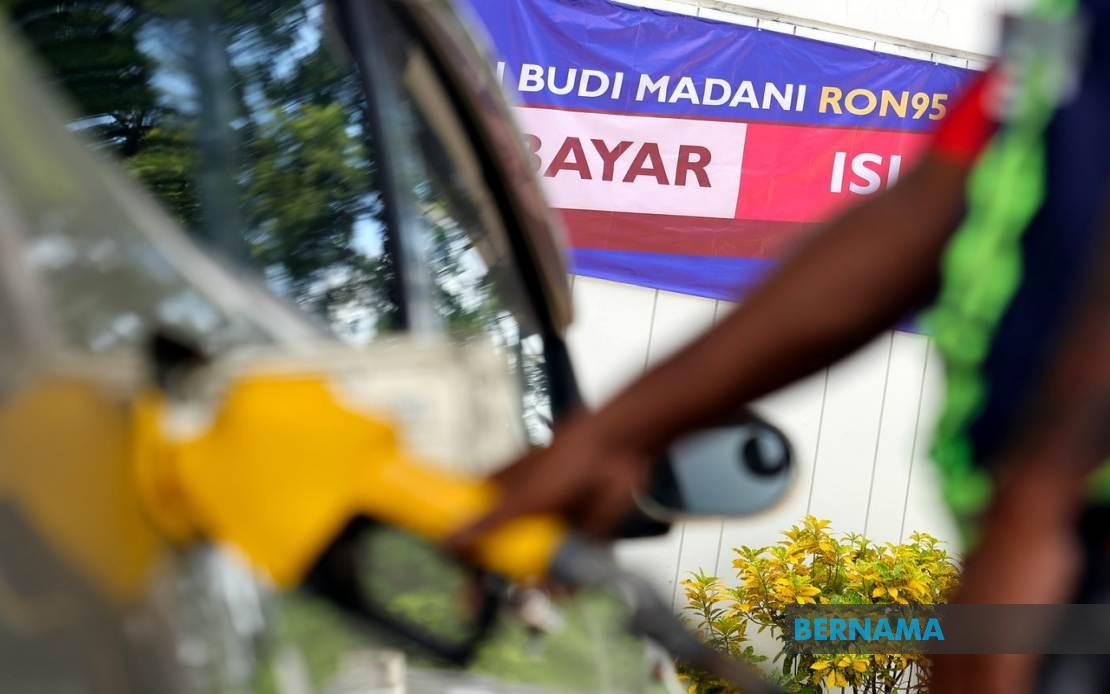
Malaysia will not pare back its assistance to citizens despite shouldering nearly RM40 billion in petroleum product subsidies this year, Deputy Finance Minister Liew Chin Tong announced during parliamentary proceedings on July 15. The escalating subsidy bill stems largely from geopolitical tensions in West Asia, which have kept global crude prices elevated and threatened the nation's fuel security.
Liew's commitment to maintaining current support mechanisms comes as the government faces mounting fiscal pressure from international market volatility. Speaking in response to parliamentary questioning about whether other subsidies—including direct cash transfers under Sumbangan Tunai Rahmah (STR) and Sumbangan Asas Rahmah (SARA)—might face cuts, Liew reaffirmed the administration's resolve to sustain the full suite of welfare interventions. The government views these programmes as integral to insulating lower-income households from commodity price shocks that have destabilised regional economies.
At the heart of this commitment lies the BUDI MADANI RON95 scheme, introduced in September of the previous year. This price-capping mechanism has proven instrumental in shielding ordinary Malaysians from the worst effects of petroleum price volatility. When West Asian tensions peaked in March and April, international crude benchmarks soared to levels that would have translated into retail petrol prices exceeding RM5 per litre under normal market conditions. Instead, Malaysian consumers continued purchasing fuel at the fixed price of RM1.99 per litre, a stark disparity that underscores the government's intervention strategy.
The BUDI95 programme operates through a dual mechanism of price stabilisation and supply assurance. By fixing the retail price at RM1.99 while simultaneously guaranteeing fuel quotas, the government effectively decouples domestic pump prices from international market gyrations. This approach carries substantial fiscal implications, as the Treasury must absorb the difference between what consumers pay and what fuel actually costs on global markets. Yet officials argue this expenditure serves a critical policy objective: maintaining economic stability and social cohesion during periods of external turbulence.
Liew's parliamentary statement highlights a fundamental tension facing middle-income economies like Malaysia. As a net petroleum exporter, the nation possesses certain advantages in weathering commodity volatility compared to fuel-importing neighbours. Yet deliberate price controls—rather than allowing market mechanisms to operate—create hidden fiscal costs that accumulate swiftly during periods of global oil price elevation. The RM40 billion annual subsidy burden represents roughly three percent of government revenues, a substantial allocation that constrains spending flexibility across other policy domains.
The government's refusal to trim assistance programmes reflects political economy calculations extending beyond immediate budgetary concerns. Reducing cash transfers or food subsidies during a period of elevated fuel costs would amplify the cumulative burden on household purchasing power, potentially triggering social friction. By maintaining all support mechanisms simultaneously, policymakers hope to preserve living standards for vulnerable populations whilst managing the structural fiscal costs of fuel price regulation. This approach prioritises social stability over short-term budget consolidation.
The regional dimension of Malaysia's subsidy strategy warrants particular attention for Southeast Asian observers. Thailand and Indonesia have both experienced significant social unrest when governments attempted to curtail fuel subsidies or allow rapid price increases. Malaysia's experience suggests a competing approach: absorb subsidy costs through the fiscal system whilst maintaining comprehensive welfare support. This strategy trades immediate debt accumulation for medium-term political stability, a calculation that may appeal to other nations facing similar pressures from commodity volatility and geopolitical uncertainty.
During parliamentary exchanges, Liew emphasised Malaysia's distinctive advantage in maintaining fuel supply continuity despite global market upheaval. The ability to queue in traffic—rather than facing fuel shortages—reflects not merely price controls but also the nation's infrastructure investments and reserve management. This distinction matters because fuel scarcity, rather than high prices alone, poses the most severe risk to economic activity. By guaranteeing supply through the BUDI95 quota system whilst stabilising prices, the government addresses both dimensions of energy security.
The sustainability of Malaysia's current subsidy posture depends fundamentally on international oil price trajectories and the persistence of West Asian tensions. Should crude prices moderate, the annual subsidy burden will decline substantially, reducing fiscal pressure. Conversely, further escalation of regional conflict or new supply disruptions could push annual petroleum subsidy costs even higher. This exposure to geopolitical risk beyond Malaysia's control represents an uncomfortable reality underlying policymakers' statements about maintaining assistance levels.
Looking forward, the government faces difficult strategic choices about programme design and targeting efficiency. Rather than cutting nominal subsidy levels—politically fraught and economically painful—officials might explore better targeting mechanisms that concentrate assistance on lower-income households whilst allowing wealthier consumers to face more market-reflective prices. Such reforms require careful implementation to avoid unintended consequences or public backlash. Yet without either subsidy reductions or targeting improvements, Malaysia's fiscal position will remain vulnerable to external commodity shocks, constraining long-term economic resilience.
The parliamentary exchange also underscores how regional geopolitical turbulence propagates through economic channels into Southeast Asian governments' domestic policy calculus. West Asian conflicts thousands of kilometres away influence Malaysian fuel prices, subsidy burdens, and ultimately citizens' household budgets. This interdependence highlights the region's vulnerability to external shocks and the importance of long-term energy diversification and efficiency improvements. Until Malaysia reduces petroleum consumption intensity through transport electrification and industrial modernisation, such volatility transmission mechanisms will persist.

