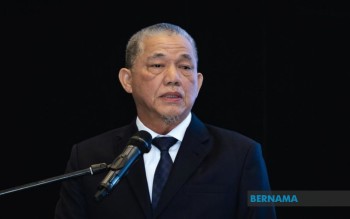
Deputy Prime Minister Datuk Seri Fadillah Yusof has outlined an ambitious strategy to transform Malaysia's ageing coal infrastructure into clean energy facilities, signalling the government's determination to advance its energy transition while protecting economic interests. Speaking at the World Economic Forum's closing ceremony for "Malaysia's Energy Future: Power Sector Decarbonisation Deep Dive" in Kuala Lumpur, Fadillah unveiled the National Coal Site Repurposing Framework, a comprehensive approach designed to prevent valuable industrial assets from becoming economically stranded as the country phases out coal dependence.
The framework recognises that Malaysia's existing coal power stations represent far more than ageing generators. These facilities are embedded within strategic nationwide infrastructure networks, featuring established transmission connections, industrial ecosystems, and land parcels positioned to serve broader economic purposes. Rather than allowing these sites to deteriorate or sit idle, the government sees an opportunity to channel substantial infrastructure investments into productive renewable energy ventures. Fadillah emphasised that this approach transforms what could be viewed as infrastructure decline into a catalyst for economic diversification and industrial renewal.
Under the proposed framework, carefully selected coal plant locations would transition into multipurpose renewable energy hubs capable of hosting large-scale solar installations, wind facilities, and advanced battery energy storage systems. These consolidated centres would combine generation, storage, and grid integration capabilities, creating integrated clean energy zones rather than piecemeal conversions. The strategy recognises that proximity to existing transmission networks, trained workforces, and developed industrial land provides significant competitive advantages for deploying renewable technologies efficiently across Malaysia's energy landscape.
The economic dimension extends beyond energy generation alone. Fadillah highlighted that retiring power stations represent opportunities to nurture entirely new industries, generate employment, and facilitate workforce transitions toward emerging sectors. Communities surrounding these facilities, many of which have historically depended on coal operations, would benefit from diversified economic activities centred on renewable energy manufacturing, maintenance services, battery production, and related green industries. This approach attempts to ensure that Malaysia's energy transition does not leave significant population centres economically disadvantaged.
Malaysia's commitment to decarbonisation remains substantial. The government has pledged to cease constructing new coal-fired power plants immediately, phase out coal-generated electricity by 2044, and achieve 70 per cent renewable energy installed capacity by 2050. These targets position Malaysia as a regional leader in emissions reduction, though they require careful sequencing to avoid creating energy security vulnerabilities. Fadillah stressed that renewable deployment must proceed faster than coal retirement, highlighting a critical tension that many developing nations face during energy transitions.
This sequencing concern reflects a genuine energy security risk specific to Malaysia's circumstances. If renewable capacity does not expand sufficiently to replace retiring coal generation, the nation risks substituting coal dependence with excessive reliance on imported liquefied natural gas. Such substitution would merely shift vulnerability from domestic resource constraints to international fuel price fluctuations and geopolitical exposures. Fadillah explicitly warned that a transition succeeding only in changing energy sources rather than reducing overall import dependence would represent strategic failure, exposing Malaysia to commodity price shocks and external economic pressures beyond domestic control.
To accelerate renewable deployment, the Ministry of Energy Transition and Water Transformation is prioritising multiple technological pathways. Large-scale solar installations form the foundation of this strategy, supported by the Corporate Renewable Energy Supply Scheme enabling businesses to source clean power directly. Battery energy storage systems address the intermittency challenges inherent in renewable generation, while smart grid modernisation ensures efficient electricity distribution across increasingly complex networks balancing diverse generation sources. This multifaceted approach acknowledges that successful energy transitions require simultaneous advancement across generation, storage, and distribution infrastructure.
Regional cooperation amplifies Malaysia's transition prospects significantly. Fadillah reaffirmed commitment to advancing the ASEAN Power Grid and expanding cross-border electricity commerce, recognising that Southeast Asian energy security improves when nations can trade renewable power across boundaries. Greater regional integration allows individual countries to balance seasonal and weather-related generation variations by importing power from geographically diverse sources. This interconnectedness strengthens the entire region's resilience while facilitating cleaner energy deployment than isolated national systems could achieve.
Looking beyond the immediate transition horizon, Malaysia continues exploring advanced low-carbon generation options including next-generation nuclear technologies and small modular reactors. These technologies could provide baseload power complementing intermittent renewables while producing zero carbon emissions. However, Fadillah stressed that nuclear deployment requires rigorous safety protocols, sophisticated regulatory frameworks, transparent governance structures, and sustained public confidence. Malaysia's approach to advanced energy sources emphasises that technological capability alone remains insufficient without establishing institutional capacity and social acceptance.
The National Coal Site Repurposing Framework represents an integrated response to the complex realities of energy transitions in developing economies. Malaysia must simultaneously decarbonise, maintain energy security, protect economic interests, and manage social transitions in coal-dependent communities. By conceptualising retiring coal plants as platforms for renewable energy development rather than infrastructure losses, the framework attempts to reconcile environmental, economic, and security objectives. This perspective offers lessons for other Southeast Asian nations navigating similar transitions, demonstrating that thoughtful infrastructure planning can transform energy sector decline into economic opportunity.

