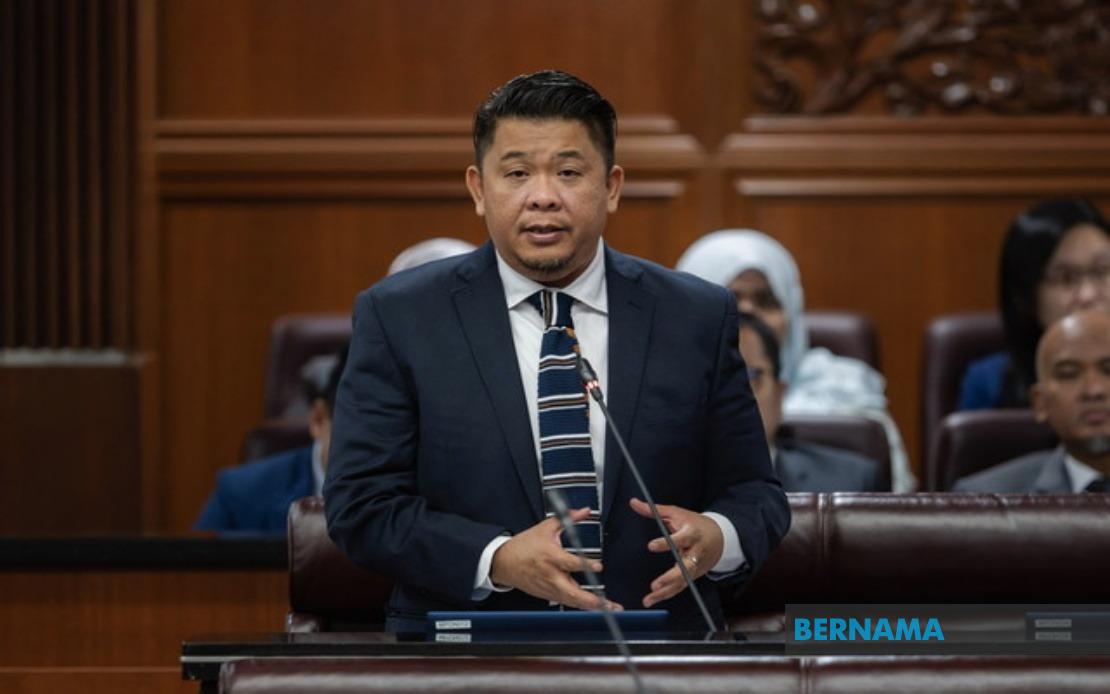
The Malaysian government is maintaining close surveillance over more than 21,000 nationals scattered across 14 countries engulfed in armed conflict, with detailed contingency frameworks in place to facilitate swift evacuations if security deteriorates further. Deputy Foreign Minister Datuk Lukanisman Awang Sauni disclosed during a parliamentary question-and-answer session that Wisma Putra has invested substantially in developing robust preparedness mechanisms, drawing lessons from the government's experience managing previous regional crises to refine its response capabilities.
The scope of this monitoring operation reflects the significant Malaysian diaspora working and studying in geopolitically volatile regions, a reality that demands constant vigilance from the nation's diplomatic machinery. The ministry's approach combines real-time tracking of citizen locations with pre-positioned resources and established communication channels, ensuring that decision-makers can act decisively when security conditions shift. This infrastructure becomes particularly critical given the region's propensity for rapid escalation, where a localised incident can quickly spiral into broader conflict affecting multiple countries simultaneously.
Lukanisman emphasised that the evacuation framework operates through extensive inter-agency coordination, binding together multiple government departments and security forces under a unified operational structure. The Royal Malaysian Air Force maintains readiness to deploy transport aircraft for emergency extractions, while commercial airline operators have committed charter capacity for mass movement scenarios. Beyond governmental actors, the ministry has integrated non-governmental organisations and private sector entities including umrah operators and travel agencies, recognising that comprehensive evacuation requires mobilising all available national resources rather than relying solely on state mechanisms.
Petroliam Nasional Bhd, the national oil corporation with substantial personnel investments throughout the Middle East, operates parallel evacuation protocols tailored to its operational requirements. This layering of sector-specific contingency plans acknowledges that different categories of Malaysians—diplomats, corporate employees, students, pilgrims, and casual visitors—face distinct security vulnerabilities and require differentiated response strategies. The coordination between Petronas and the Foreign Ministry exemplifies how Malaysia's whole-of-nation approach extends beyond traditional diplomatic channels to encompass strategic national enterprises.
Every Malaysian diplomatic mission maintains constantly updated contingency documents that transcend generic frameworks, instead incorporating location-specific intelligence about citizen distribution, local security dynamics, and accessible evacuation corridors. These operational guides establish clear hierarchies for threat assessment and response activation, preventing both paralysis through over-caution and reckless action during ambiguous situations. The protocols specify communication mechanisms ensuring that isolated Malaysians can rapidly establish contact with diplomatic staff, resource coordination procedures for marshalling transportation and accommodation, and staged evacuation strategies that distinguish between precautionary relocations and full emergency extractions.
The ministry actively encourages Malaysian citizens abroad to maintain registration through multiple channels including the e-Consular system, email notifications, and telephone contact, while simultaneously promoting the MyWorldAlert application for real-time security briefings. This multi-layered registration approach acknowledges varying levels of digital literacy and connectivity among the diaspora, ensuring that no significant population segment remains invisible to government oversight. Citizens who keep their diplomatic missions informed substantially improve their own security calculus, receiving advance warning of deteriorating conditions and prioritised assistance during actual crises.
Since the outbreak of West Asian conflict earlier this year, Malaysia's foreign service has issued three separate travel advisories calibrated to evolving conditions, reflecting the dynamic nature of regional insecurity. The recent reopening of airspace following the April 8 ceasefire announcement illustrates how rapidly circumstances can shift, transforming isolated conflict zones into accessible regions within days. This volatility underscores why static planning proves insufficient; successful contingency frameworks must incorporate mechanisms for regular reassessment and tactical adjustment as facts on the ground evolve.
The government's explicit articulation of these monitoring and evacuation capabilities carries dual significance for Malaysian society. Domestically, it provides reassurance to families with relatives abroad that their government maintains active awareness of their kin's circumstances and can mobilise resources to protect them if necessary. Regionally, Malaysia's demonstrated preparedness signals to partner nations and international actors that Kuala Lumpur possesses institutional capacity to manage complex humanitarian emergencies involving its nationals, enhancing the nation's diplomatic standing and credibility.
The 21,427 figure encompasses diverse populations facing qualitatively different risk profiles. University students concentrated in particular cities experience distinct vulnerabilities compared to distributed oil and gas workers or temporary pilgrims on religious journeys. The ministry's location-mapping efforts therefore require sophisticated granularity, moving beyond aggregate national statistics to understand sub-national concentration patterns and sectoral distribution. This intelligence enables authorities to prioritise evacuation resources toward highest-risk populations while maintaining capability to reach isolated individuals in challenging circumstances.
The integration of travel agencies and umrah operators into contingency planning represents pragmatic recognition that Malaysian citizens frequently move through conflict regions via commercial channels rather than government-sponsored programmes. These private sector actors possess their own networks, transportation capacity, and ground intelligence that can supplement official government resources. By formalising relationships with these entities before crises emerge, the Foreign Ministry ensures smoother coordination when urgent circumstances demand rapid decision-making and resource mobilisation across multiple sectors.
Matrices distinguishing between different risk levels determine when contingency plans transition from theoretical documents into operational reality. The ministry articulated that activation proceeds incrementally based on current threat assessments, local security developments, and the scale of affected populations, preventing unnecessary panic while ensuring swift response when genuine danger materialises. This graduated approach acknowledges that premature evacuation carries substantial costs for affected individuals and bilateral relationships with host countries, making careful calibration of response timing essential for optimal outcomes.
The precedent of previous regional conflicts provided crucial lessons that informed current preparedness architecture, though each crisis invariably presents novel challenges and unexpected complications. Malaysia's accumulated experience managing previous evacuations has created institutional memory and established relationships with military and commercial partners that accelerate execution when actual crises emerge. This institutional readiness, combined with technological infrastructure for tracking and communication, positions Malaysia relatively favourably compared to nations lacking similar systematic preparation, though no contingency framework can guarantee perfect outcomes amid the chaos of actual conflict.

