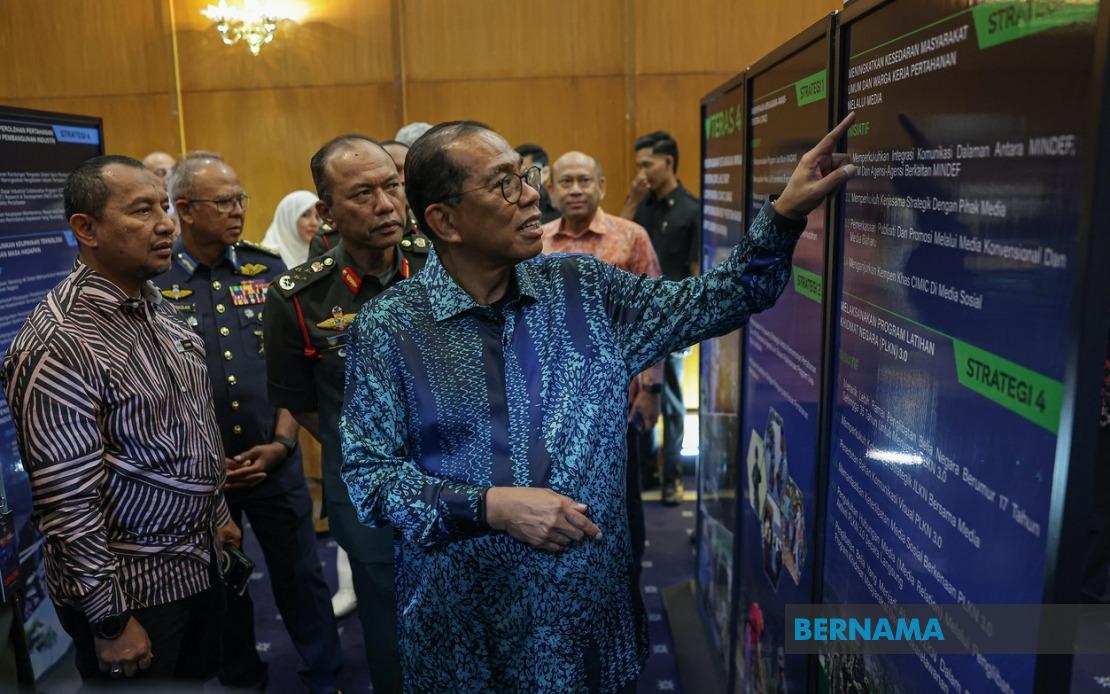
Malaysia's Defence Ministry has released two interconnected strategic documents designed to fortify the nation's security posture over the coming five years, marking a significant evolution in how the armed forces approach national defence planning. The National Defence Strategic Plan (PSPN) and the Defence Capacity Blueprint (RTKP) 2026-2030, unveiled by Defence Minister Datuk Seri Mohamed Khaled Nordin, represent a deliberate recalibration of defence policy in response to a world increasingly characterised by unpredictability, technological upheaval, and threats that defy traditional military classifications.
The timing of this initiative reflects a broader reassessment happening across Southeast Asia as regional powers grapple with intensifying great power competition, the proliferation of advanced weapons systems, and the emergence of security challenges that transcend conventional borders. Malaysia's strategic location along vital shipping lanes and its position within a geopolitically contested region make such foresight particularly relevant. The documents build directly upon Malaysia's Defence White Paper, functioning as a detailed operational roadmap that translates policy ambitions into concrete, measurable outcomes across multiple domains of national security.
Minister Mohamed Khaled emphasised that the planning process carefully examined the implications of rapid geopolitical fragmentation, the accelerating pace of technological innovation including artificial intelligence and automation, and the growing sophistication of non-traditional security threats. These considerations were systematically integrated during a comprehensive mid-term review, ensuring that Malaysia's defence framework remains sufficiently flexible to accommodate unforeseen developments whilst maintaining strategic coherence. The challenge lies in building defence structures that can simultaneously address immediate operational requirements and prepare for threats that remain partially unknowable.
The PSPN operates along seven strategic pillars that collectively aim to overhaul how Malaysia approaches defence across the full spectrum of military and security concerns. These pillars encompass the operational effectiveness of the Malaysian Armed Forces, the modernisation and expansion of defence capabilities, the protection and advancement of personnel welfare and veteran support, and critically, the integration of emerging technologies and innovation into defence operations. This multi-dimensional approach recognises that military strength depends not merely on hardware and weapons systems but equally on the quality, training, and morale of personnel operating them.
Complementing the PSPN, the Defence Capacity Blueprint functions as the enabling instrument that transforms strategic ambitions into achievable results. Rather than outlining what Malaysia wishes to accomplish, the RTKP addresses the practical question of how those objectives will be realised. This involves systematic development across financial channels, human resources recruitment and training, technological expertise cultivation, and mechanisms for coordinating effort across Defence Ministry entities and other government agencies. The minister characterised the relationship succinctly: while the PSPN articulates the destination, the RTKP supplies the fuel and navigation systems to reach it.
The capacity framework extends beyond narrow defence ministry concerns to encompass leadership development, professional competency standards, research and innovation ecosystems, and the coordination mechanisms necessary for coherent whole-of-government action. This reflects a sophisticated understanding that military capability cannot be developed in isolation from broader national institutions and societal capacity. The approach deliberately incorporates a whole-of-society dimension, acknowledging that national defence ultimately depends on public support, technological prowess distributed across academic and commercial sectors, and the alignment of defence objectives with national economic and social priorities.
The practical application of these frameworks is already evident in Malaysia's military modernisation trajectory. The Defence Ministry has recently received three ANKA Medium Altitude Long Endurance Unmanned Aircraft Systems, which became operational at Labuan Air Base in March following their arrival. These platforms represent the kind of technologically advanced, persistent intelligence-gathering capability that modern defence operations increasingly demand, particularly across the expansive maritime domains that fall within Malaysian responsibility. The deployment demonstrates how strategic plans translate into concrete operational enhancements.
Additional procurement projects currently underway further illustrate Malaysia's commitment to capability enhancement. The acquisition of FA-50M light combat aircraft, maritime patrol aircraft, and additional Littoral Mission Ships represents a deliberate effort to bolster the armed forces' capacity to project power, conduct surveillance, and maintain control across maritime zones that extend hundreds of kilometres from the coast. These acquisitions collectively indicate a strategic posture oriented toward enhanced detection, rapid response, and persistent presence across domains where threats increasingly manifest. The scheduled arrival of these systems reinforces confidence that the PSPN and RTKP frameworks are being matched with tangible resource allocation.
For Malaysian defence planners, the integration of these new strategic documents addresses a fundamental challenge confronting all Southeast Asian militaries: the need to maintain relevance and credibility whilst operating under budgetary constraints and competing with much wealthier regional rivals. The PSPN and RTKP attempt to solve this through prioritisation, efficiency, and strategic alignment rather than attempting to match potential adversaries through raw spending. This approach recognises that Malaysia's security depends on sophisticated planning, judicious capability investment, and the cultivation of technological expertise as much as on traditional military metrics.
The geopolitical context surrounding this initiative cannot be overlooked. Heightened tensions in the South China Sea, ongoing great power competition, and the proliferation of unmanned and cyber capabilities have created an environment where defence planning that fails to anticipate technological and strategic surprise courts disaster. Malaysia's formulation of these frameworks demonstrates awareness that the nation cannot remain passive whilst regional security architecture evolves at an accelerating pace. The documents represent an attempt to inject strategic discipline into defence planning during a period of genuine uncertainty about what security challenges the coming decade will present.
Looking forward, the successful implementation of these strategies will depend on sustained political will, consistent resource allocation, and the cultivation of the human expertise necessary to operate and maintain increasingly sophisticated defence systems. The frameworks themselves represent sound strategic thinking; their value will ultimately be determined by the rigour with which Malaysian defence planners execute them and adapt them as circumstances evolve. For a nation positioned at the intersection of major power interests and dependent on secure maritime commerce, such strategic coherence remains indispensable.

