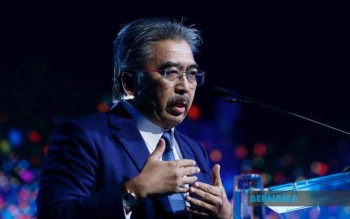
The Malaysian government is navigating a complex policy challenge in its push towards electric vehicle adoption, wrestling with how to finance a nationwide charging network without unduly burdening consumers or manufacturers. At a parliamentary proceeding yesterday, Investment, Trade and Industry Minister Datuk Seri Johari Abdul Ghani outlined the government's measured approach, emphasising that no final decision has been made on implementing a proposed EV levy despite growing calls for dedicated funding mechanisms.
The core tension underlying this debate reflects broader economic realities facing the country. Malaysia's fiscal position remains strained, with government finances operating under a deficit that constrains spending on large-scale infrastructure projects. This constraint becomes particularly acute when considering the scale of charging infrastructure needed to support mass EV adoption. The minister pointed to China's extensive public charging network as a benchmark, underscoring the magnitude of investment required to create comparable coverage across Malaysia's diverse geography, from densely populated urban centres to sprawling rural areas.
One of the central questions the government is grappling with concerns who ultimately bears the cost of this infrastructure expansion. Officials are considering a direct levy on every electric vehicle sold, with proceeds funnelled into a dedicated fund specifically for public charging station development. This approach has a certain logic, as it ties infrastructure funding directly to the growing EV market. However, the minister acknowledged that if manufacturers face increased levies, they will typically pass these costs downstream to consumers, effectively shifting the burden to car buyers rather than distributing it broadly across society.
Johari emphasised that policymakers cannot view this issue in isolation but must understand the interconnected nature of energy policy, industrial competitiveness, and fiscal sustainability. Malaysia remains heavily dependent on fossil fuel-based electricity generation, relying substantially on gas and coal-fired power plants to supply the grid. This reality means that even as vehicles transition to electric propulsion, the underlying energy infrastructure must be upgraded and maintained, incurring considerable costs in electricity supply development. The minister argued that many observers fail to grasp this broader picture, focusing narrowly on vehicle costs rather than recognising the systemic investments required to support electrification.
The government has already extended substantial subsidies to support EV adoption, reflecting its commitment to accelerating the transition. However, these subsidies represent an ongoing fiscal drain that must be reconciled with other pressing spending priorities. The minister posed a fundamental question facing policymakers: as fiscal deficits persist, where should additional revenue come from to fund both continued EV incentives and the necessary infrastructure? This dilemma captures the genuine policy difficulty Malaysia faces—encouraging EV adoption through subsidies while simultaneously needing revenue to build the systems that make those vehicles practical for consumers.
Another complicating factor is the coexistence strategy the government is pursuing. Rather than rushing towards a rapid phase-out of petrol and diesel vehicles, Malaysian policymakers are taking a measured approach that allows internal combustion engines and electric vehicles to operate in parallel for an extended transition period. This dual-track approach requires different infrastructure investments simultaneously, straining limited budgets further. While this gradualism reduces disruption and gives manufacturers time to adjust production capacity, it also means the government cannot immediately redirect all transport-related spending towards charging infrastructure.
The proposed levy mechanism under consideration represents one of several options being evaluated. By directly linking infrastructure funding to EV sales, this approach creates a self-reinforcing cycle where vehicle adoption generates revenue for charging expansion, potentially improving convenience and reducing buyer hesitation about charging availability. Such a system could become more efficient as EV penetration increases, with growing sales producing proportionally larger funding pools for infrastructure development.
However, policymakers must carefully calibrate any levy to avoid strangling the emerging EV market before it achieves sufficient scale. Setting rates too high could price consumers out of the market or push them towards conventional vehicles, undermining the electrification objective. Conversely, setting rates too low would generate insufficient revenue to meaningfully expand charging networks, leaving buyers with inadequate infrastructure regardless of subsidy levels. This calibration challenge requires detailed economic analysis and forecasting of adoption patterns.
The minister's comments also reflect growing international experience with EV transition funding models. Several countries have experimented with various mechanisms, from carbon taxes to dedicated transport levies, each with different distributional impacts and effectiveness levels. Malaysia's policymakers appear to be studying these precedents while considering which approaches best suit local conditions, including the country's energy mix, vehicle ownership patterns, and fiscal constraints.
For Malaysian consumers and the automotive industry, the coming months will likely see intensive government consultation and analysis before any announcement. The outcome will significantly influence EV adoption rates, as affordability remains a critical factor determining market uptake among middle and working-class buyers. Manufacturers will be equally attentive, as levy structures will affect their production decisions and pricing strategies in one of Southeast Asia's largest vehicle markets.
The broader implications extend beyond Malaysia to the entire region's transport transition. As the Association of Southeast Asian Nations seeks to reduce emissions and build resilient economies, infrastructure financing challenges similar to those facing Malaysia confront most member states. How Malaysia resolves this policy puzzle could offer valuable lessons for neighbouring countries wrestling with similar choices about infrastructure investment, fiscal discipline, and energy transition pathways.

