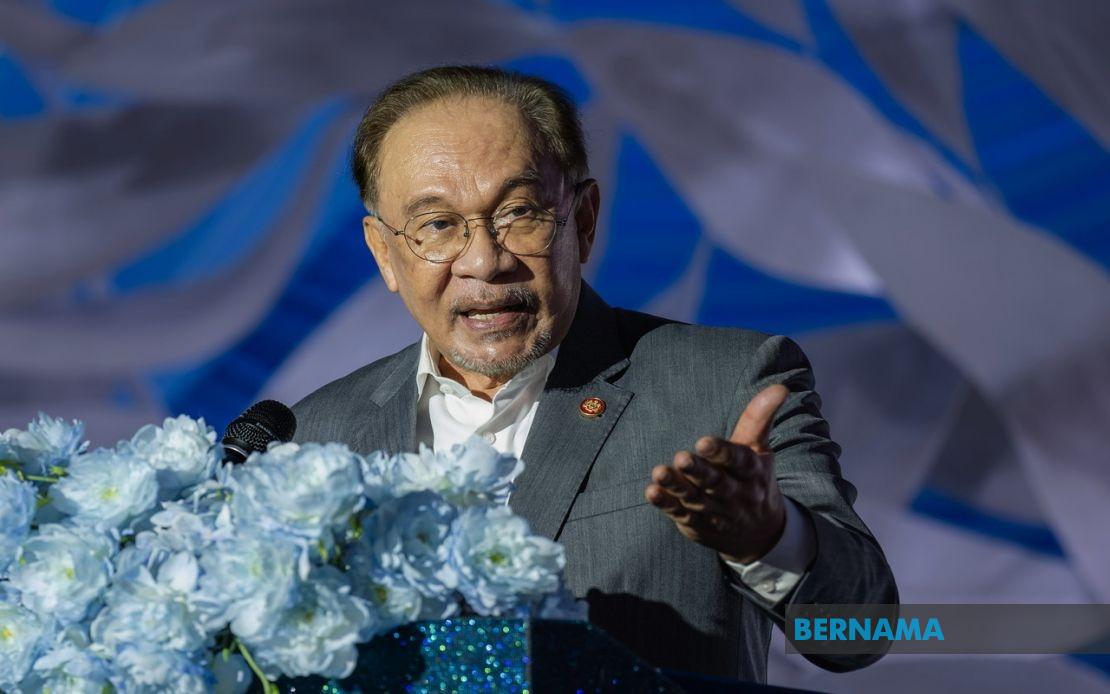
Malaysia's government has made clear its uncompromising stance on Israeli entry to the country, with Prime Minister Datuk Seri Anwar Ibrahim declaring that any nationals from Israel discovered on Malaysian soil will face immediate deportation. The announcement comes as security agencies launch investigations into reports that Israeli citizens may have entered the nation using dual citizenship documents, triggering concerns about potential breaches of the country's long-standing non-recognition policy.
Anwar's statement underscores the government's firm commitment to enforcing immigration controls related to Israeli nationals, signalling that no exceptions will be made regardless of circumstances. Speaking to journalists in Kuala Lumpur on July 15, the Prime Minister stressed that Malaysia's foundational policy of not recognising Israel extends into all practical enforcement mechanisms, meaning entry by Israeli citizens represents a direct violation of this principle and will trigger immediate action by immigration authorities.
The government's coordinated response involves multiple security agencies working to investigate allegations that have surfaced in recent days. Anwar indicated that the inquiry encompasses all relevant bodies tasked with border security and national defence, with each agency contributing its expertise to determine the scope and nature of any alleged Israeli presence within Malaysian territory. The comprehensive nature of this investigation reflects the seriousness with which the government views potential breaches of its immigration protocols.
Specific allegations emerged recently regarding activities in Johor, where reports suggested that foreign nationals carrying Israeli passports alongside citizenship documents from other countries had attempted to access or were operating within Malaysia. These individuals were reportedly connected to the Network School in Forest City, which became the focal point of public concern after the Johor government initiated its own inquiry. The use of dual citizenship documents as a potential method to circumvent immigration scrutiny has raised questions about enforcement gaps and the sophistication of potential attempts to enter the country.
Johor's state government moved swiftly to escalate the matter, with Menteri Besar Datuk Onn Hafiz Ghazi urging the Home Ministry and related agencies to conduct a thorough investigation into the Network School's operations and the individuals involved. His call for action acknowledged public anxiety about the possibility that Israeli nationals had successfully operated within Malaysian territory, potentially engaging in educational or other activities without proper oversight. The state-level initiative demonstrates the gravity with which regional authorities view the situation.
Anwar indicated that the Higher Education Minister, Datuk Seri Dr Zambry Abdul Kadir, would provide detailed explanations to the public once investigations progressed further. This delegation of responsibility suggests that the alleged activities may have educational dimensions, necessitating involvement from the education sector's regulatory bodies alongside security agencies. The appointment of a specific minister to address the matter publicly signals the government's commitment to transparency while ensuring that relevant expertise guides responses.
For Malaysia, this incident touches on fundamental issues of national sovereignty and consistent foreign policy implementation. Malaysia's non-recognition of Israel represents a cornerstone of its diplomatic stance, reflected in its support for Palestinian causes and participation in regional coalitions opposing Israeli policies. The potential infiltration or presence of Israeli nationals, even through dual citizenship mechanisms, represents not merely an administrative concern but a challenge to the integrity of this carefully maintained position.
The revelations also highlight vulnerabilities in Malaysia's immigration systems that foreign actors might exploit. The use of dual passports to obscure national origin suggests that standard documentation checks may require strengthening, particularly for individuals arriving from regions with complex geopolitical dynamics. This incident provides an opportunity for the government to review and upgrade border security protocols to close loopholes that could be similarly exploited in future.
The timing of these events reflects broader regional tensions regarding Israel's international engagement and efforts by various countries to enforce restrictive policies toward Israeli nationals. Several Southeast Asian nations maintain non-recognition stances, though Malaysia's position has historically been among the most emphatic. The government's swift and public response demonstrates determination to maintain consistency with this principle, particularly as social media scrutiny had already amplified public awareness of the alleged incident.
Public reaction to the allegations reveals underlying sensitivities within Malaysian society regarding Israel-related matters. The circulation of unverified claims on social media had already generated concern before official authorities confirmed investigations, indicating that this issue resonates deeply with significant segments of the population. The government's decisive messaging serves both to assure the public that its non-recognition policy remains active and to signal that breaches will face serious consequences.
Looking forward, this incident may catalyse broader security reviews beyond immigration controls. The involvement of an educational institution suggests potential vulnerabilities in how Malaysia monitors foreign engagement with educational facilities, particularly those serving international communities. Future policy responses may extend to vetting mechanisms for educational entities and enhanced coordination between the education sector and security agencies to prevent similar situations.
The government's commitment to enforcing immediate deportation underscores that Malaysia views this not as a grey area permitting case-by-case discretion, but as a clear-cut matter of policy application. This unambiguous position, while satisfying those who support strict enforcement of the non-recognition stance, also ensures that relevant agencies understand exactly what action the government expects in instances where Israeli nationals are identified. The consistency of this messaging across different government levels, from the Prime Minister to state officials, reflects a unified approach to maintaining Malaysia's principled position on this issue.

