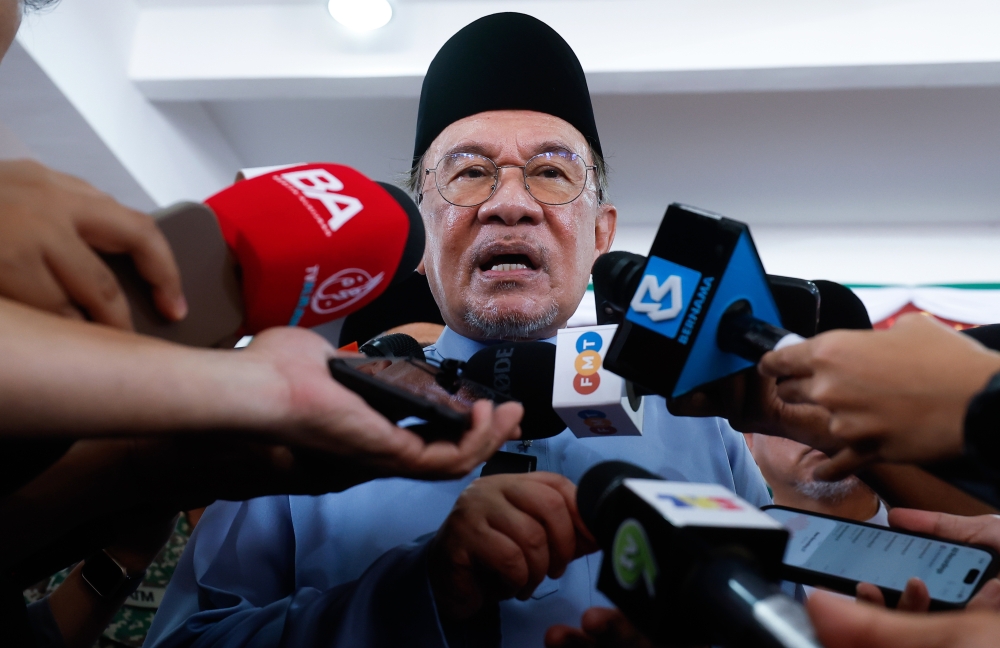
Prime Minister Datuk Seri Anwar Ibrahim has reaffirmed Malaysia's determination to maintain active dialogue with the United States regarding tariff arrangements, signalling that Kuala Lumpur will not abandon the negotiating table despite ongoing trade tensions between the two nations. Speaking in Port Dickson, Anwar conveyed measured optimism about the trajectory of these discussions, emphasizing that Malaysia's economic interests remain a central priority even as broader geopolitical trade dynamics continue to shift.
The Prime Minister's comments come at a time when tariff negotiations between Washington and regional trading partners have intensified, reflecting the Trump administration's broader strategic shift toward reshaping global trade relationships. Malaysia, as a significant participant in US-Southeast Asian commerce and a critical node in global supply chains, faces particular pressure to secure favourable terms that do not disrupt its manufacturing and export sectors. Anwar's commitment to continued talks underscores the government's recognition that prolonged tariff disputes could threaten Malaysia's competitive advantages and economic growth trajectory.
Crucially, Anwar expressed notable relief regarding the specific tariff rate that has emerged from preliminary discussions, characterizing it as relatively modest compared to the more severe impositions that had been contemplated. This assessment suggests that Malaysia's diplomatic efforts and economic arguments have gained some traction in Washington policymaking circles. The moderate rate, in the Prime Minister's view, provides sufficient breathing room for Malaysian industries to adjust their operations and supply chain strategies without facing immediate existential pressures.
The relief articulated by the government reflects deeper anxieties within Malaysia's business community about potential tariff escalation. Sectors including electronics, semiconductors, petrochemicals, and automotive manufacturing depend heavily on unimpeded access to American markets and integrated regional production networks that would be severely disrupted by punitive tariff regimes. A manageable tariff level, therefore, permits these industries to maintain their current operational models while Malaysia pursues longer-term structural adjustments to address American trade concerns.
Anwar's strategic positioning in these negotiations balances firmness with pragmatism. Rather than adopting an adversarial stance, the Prime Minister has framed Malaysia's approach as one seeking mutually beneficial outcomes through sustained engagement. This diplomatic orientation reflects Malaysia's broader geopolitical calculus: maintaining robust economic relations with the United States remains essential despite competing interests from other major trading partners including China. The government understands that tariff conflicts, if allowed to escalate uncontrolled, could destabilize both bilateral relations and Malaysia's position within the broader regional economic ecosystem.
The continuation of negotiations also signals Malaysian confidence that Washington remains open to dialogue even amid the current trade protectionist environment. Unlike some governments that have adopted confrontational rhetorical stances, Kuala Lumpur's measured approach seeks to preserve channels for ongoing discussion and potential compromise. This strategy carries inherent risks, as it could be perceived as capitulation, yet it reflects the reality that Malaysia's economic vulnerabilities make aggressive posturing counterproductive.
For Malaysian exporters and multinational corporations operating within the country, the government's commitment to sustained negotiations provides some reassurance, though uncertainty persists. Many firms have already begun evaluating contingency plans, including potential relocation of production facilities or diversification of export markets. The moderate tariff rate offers a window for these adjustments to proceed at a manageable pace rather than requiring emergency restructuring.
The broader context of these US tariff negotiations extends beyond bilateral economics. Malaysia's role as a Southeast Asian trading hub means that tariff arrangements affecting Malaysian exporters ripple across the region's integrated manufacturing networks. Thailand, Vietnam, Indonesia, and Singapore all benefit from Malaysia's position as a regional manufacturing and logistics center. Therefore, tariff outcomes affecting Malaysia carry implications for the entire ASEAN economic architecture and the region's collective bargaining power in global trade discussions.
Anwar's public statements on this matter also serve a domestic political function, reassuring Malaysian stakeholders that their government remains attentive to economic security concerns. By emphasizing the relatively moderate nature of the tariff rate and the government's commitment to ongoing negotiations, the Prime Minister signals competence in managing Malaysia's international economic relations. This messaging becomes particularly important given the substantial anxieties within Malaysia's export-dependent manufacturing sector regarding broader global trade volatility.
Looking forward, Malaysia's negotiating strategy will likely emphasize sector-specific accommodations, potential investment pledges by Malaysian companies in the United States, and appeals to shared security interests within the Indo-Pacific region. These arguments have proven moderately persuasive in other bilateral trade discussions and may provide additional leverage in coming negotiations. The government's willingness to continue talks, rather than accept any terms immediately or adopt an entirely defensive posture, keeps space open for creative solutions that address legitimate American concerns while protecting Malaysian economic interests.
The trajectory of these negotiations will significantly influence Malaysia's economic performance in coming quarters. Beyond the direct tariff impact, outcomes will shape investor confidence in Malaysia's stability and predictability as a manufacturing destination. The government's demonstrated commitment to sustained, serious engagement in tariff discussions therefore carries economic significance extending far beyond the technical details of specific tariff rates, affecting broader perceptions of Malaysia's reliability as a long-term economic partner.

