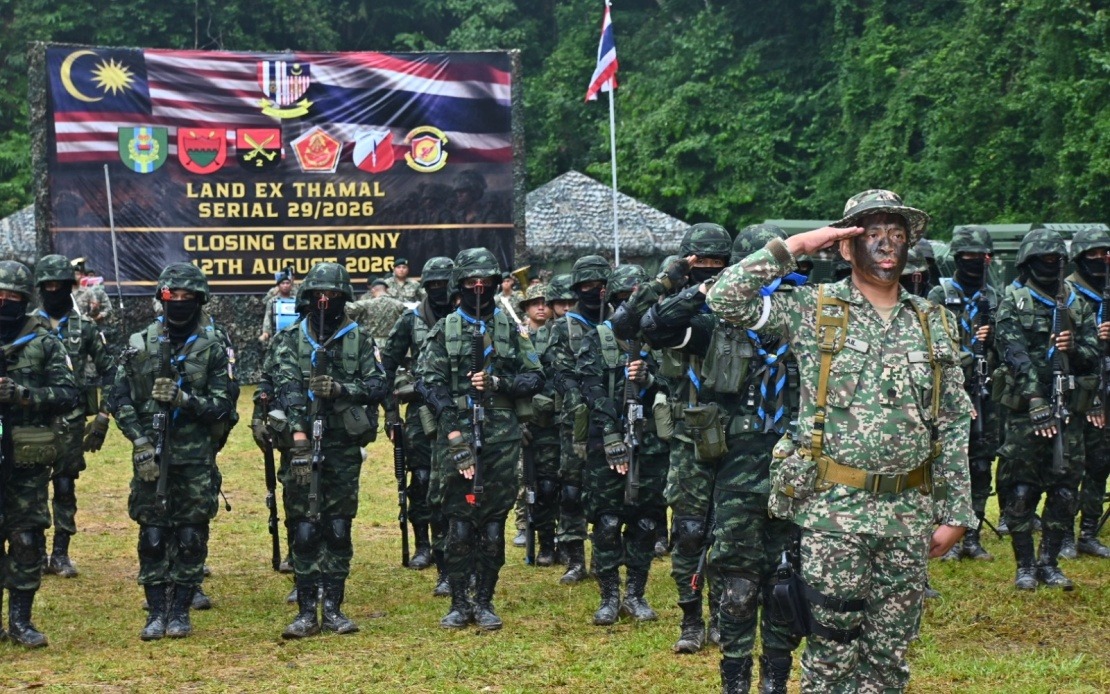
More than 250 soldiers from Malaysia and Thailand are engaged in an intensive joint military exercise in Gerik, underscoring the two nations' commitment to strengthening defence ties and enhancing operational readiness in one of Southeast Asia's most strategically important borders. Exercise LAND THAMAL Series 29/2026, which commenced on August 5 and involves 197 personnel from the Malaysian Army (TDM) and 55 from the Royal Thai Army (RTA), represents a significant opportunity for both militaries to synchronise tactical approaches and develop deeper understanding of each other's operational doctrine.
The 2nd Malaysian Infantry Division, which is coordinating the exercise from its headquarters in Ipoh, structured the training programme across three distinct phases designed to progressively build joint capability. The Cross Training Exercise component provides foundational knowledge exchange, while the Field Training Exercise phase exposes soldiers to practical scenarios including combat manoeuvres, obstacle negotiation, establishment of forward positions, reconnaissance operations, and coordinated assault tactics. This tiered approach ensures that participating personnel develop not merely technical proficiency but also genuine familiarity with how their counterparts approach tactical problems and organisational challenges.
The Malaysian-Thai defence partnership has evolved considerably over recent decades, transitioning from a relationship primarily focused on border management to one encompassing comprehensive operational coordination. Gerik, situated in the border state of Perak, carries particular significance given its proximity to sensitive areas along the Malaysia-Thailand frontier. Conducting major exercises at this location sends a clear message about the stability of the bilateral relationship and the mutual confidence between Bangkok and Kuala Lumpur regarding security cooperation in their shared neighbourhood.
At the official opening ceremony on August 5, held at Gerik Airstrip, Brigadier General Datuk Mohd Zaini Hashim representing the 30th Malaysian Infantry Brigade and Senior Colonel Taweeporn Kanatong of the 5th Thai Infantry Brigade jointly presided over proceedings. Taweeporn's remarks during the ceremony highlighted how exercises such as LAND THAMAL transcend traditional military training objectives and serve as instruments of strategic communication. His emphasis on the exercise's role in helping both nations build capacity to confront contemporary security challenges—ranging from natural disasters and transnational crime to regional instability—reflects how modern defence cooperation has broadened beyond conventional warfare scenarios.
The exercise incorporates a civil-military action component through the Jiwa Murni Programme, which mobilises soldiers from both countries for community service initiatives. During this phase, participants undertook activities at Sekolah Menengah Kebangsaan Sultan Idris Shah II in Gerik, blending military training objectives with visible engagement in local community development. This dimension is particularly valuable in border communities, where demonstrations of cooperative security efforts by friendly nations can reinforce perceptions of stability and mutual commitment to regional wellbeing.
From a technical standpoint, exercises of this nature serve practical military purposes that extend beyond symbolic significance. The emphasis on shared knowledge exchange and tactical capability development indicates genuine interest in ensuring that Malaysian and Thai forces can operate effectively together during crises or in pursuit of common security objectives. The focus on interoperability—the ability of forces from different countries to work seamlessly together—represents a professional hallmark of serious defence cooperation. This is particularly relevant for two nations sharing a substantial land border and facing common security concerns.
The exercise also provides value through confidence-building measures at the operational level. When military personnel from different nations train together over extended periods, they develop personal relationships and mutual respect that can prove invaluable during actual coordinated operations or during diplomatic moments when military channels serve as important communication links. The explicit mention of building trust and understanding operational methods between TDM and RTA personnel reflects recognition that military-to-military relationships form a crucial foundation for broader bilateral ties.
Regionally, the Malaysia-Thailand defence partnership carries implications that extend beyond the bilateral relationship. Both nations are founding members of the Association of Southeast Asian Nations and share interests in maintaining regional stability, combating transnational threats, and ensuring freedom of navigation in surrounding waters. Exercises demonstrating military capability and interoperability among ASEAN members contribute to the broader regional security architecture. When Malaysia and Thailand demonstrate sophisticated joint operational capability, this creates stabilising effects that benefit the entire region by demonstrating mature mechanisms for managing bilateral issues and coordinating responses to common challenges.
The continuity and expansion of the LAND THAMAL exercise series—now in its 29th iteration planned for 2026—demonstrates institutional commitment to the defence relationship. Unlike one-off training events that can languish due to changing priorities or budgetary pressures, regularly scheduled bilateral exercises become embedded in military planning cycles and personnel development frameworks. This predictability allows both militaries to build increasingly sophisticated training scenarios and to evaluate progress across multiple iterations.
Malaysian defence analysts have long viewed Thailand as a crucial partner in regional security architecture. The two nations share maritime interests in the Andaman Sea and Gulf of Thailand, face common challenges related to maritime boundary clarification, and cooperate on counterterrorism and countertrafficking operations. Joint exercises provide opportunities to refine these cooperative arrangements and to introduce new personnel to established protocols and relationships. The participation of relatively junior officers and enlisted personnel in LAND THAMAL ensures that the institutional knowledge and personal relationships binding the defence establishments remain robust as personnel rotate through postings.
The exercise also reflects broader strategic preferences both nations have signalled regarding their defence development. Rather than pursuing isolated, unilateral military modernisation, Malaysia and Thailand have increasingly emphasised cooperative approaches that pool resources and expertise. Joint exercises require far less capital investment than independent capability development while often yielding superior outcomes through shared learning and complementary specialisations. For Malaysia, particularly, engagement with Thailand in border security and joint operations enhances the military's strategic value within national security deliberations.
Looking forward, the stated intention to continue LAND THAMAL as an ongoing platform for strengthening Malaysia-Thailand defence relations suggests both governments view this partnership as enduring regardless of broader geopolitical fluctuations. This long-term commitment to institutionalised military cooperation provides reassurance to both militaries that investments in interoperability and relationship-building will pay dividends across multiple potential scenarios and time horizons. The exercise thus represents not merely a training event but rather a tangible expression of how two Southeast Asian nations navigate their relationship through substantive engagement at the operational level.

