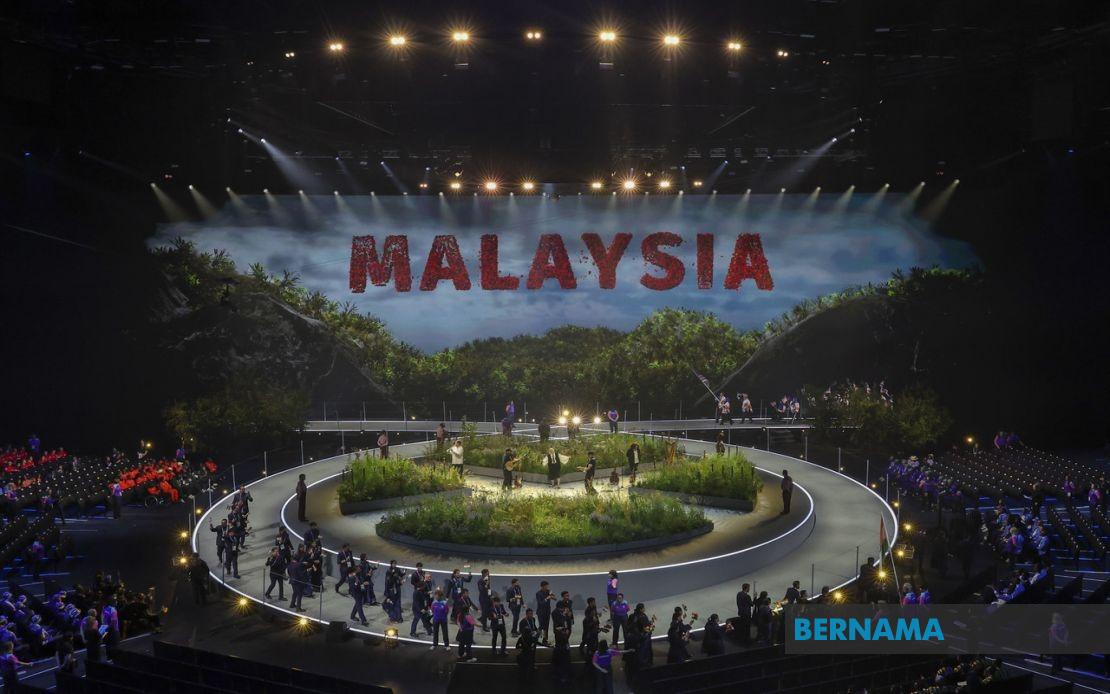
Malaysia's Commonwealth Games contingent has delivered a performance that has prompted Cabinet-level recognition, with government officials hailing the athletes' achievements as a source of national pride and international validation. Communications Minister Datuk Seri Fahmi Fadzil, speaking as MADANI Government spokesman, conveyed the Cabinet's formal congratulations following the Glasgow 2026 Games, where Malaysian competitors secured a medal haul that substantially exceeded initial projections and marked the nation's most successful Commonwealth Games campaign since 2010.
The strength of Malaysia's showing at Glasgow becomes evident when comparing results against pre-competition targets. The contingent captured eight gold medals, three silver, and five bronze medals across various sporting disciplines, a combined tally that decisively surpassed the government's original benchmark of five gold medals. This 60 percent improvement over the minimum target reflects both enhanced athlete preparation and effective resource deployment by Malaysian sports administrators in the lead-up to the Games. The ability to exceed targets by such a margin demonstrates growing competitiveness in Commonwealth sports, where Malaysia has traditionally competed against nations with significantly larger populations and funding bases.
For Malaysian athletes and the broader sports ecosystem, the timing of this success carries considerable symbolic weight. The performance builds momentum following decades of investment in sports development programmes and talent identification systems. Government recognition of achievement through formal Cabinet commendation signals political commitment to supporting athletic excellence, a messaging strategy designed to motivate current competitors and encourage younger athletes to pursue competitive sports as viable career pathways. Fahmi's public emphasis on how the athletes' accomplishments should inspire their peers reflects an understanding that major international victories function as cultural catalysts within developing sporting nations.
The financial dimension of this recognition manifests through the Sports Victory Incentive Scheme, commonly known as SHAKAM. The government's allocation of RM1.1 million in direct monetary rewards to medal-winning athletes represents tangible investment backing rhetorical support. Such schemes provide critical supplementary income for athletes who may have forgone educational or employment opportunities to pursue competitive sport full-time. In Malaysia's context, where government funding for athletes remains comparatively modest relative to wealthier Commonwealth nations, SHAKAM incentives constitute meaningful recognition that extends beyond ceremonial acknowledgement.
Contextualising the Glasgow result within Malaysian sporting history underscores the significance of this achievement. The reference point of New Delhi 2010, when Malaysia captured twelve gold medals, had long represented the nation's Commonwealth Games benchmark. That 2010 performance stood unmatched for sixteen years, a period during which Commonwealth Games competition intensified globally and medal distributions shifted across the participating nations. The Glasgow 2026 result, though not eclipsing the 2010 total in absolute gold medal terms, nonetheless represents a competitive resurgence that reverses any perception of declining Malaysian competitiveness at the Commonwealth level.
The composition of Malaysia's medal haul across different sporting disciplines offers insight into where national development programmes have proven most effective. While specific sports generating medals at Glasgow were not detailed in official statements, the distribution of eight gold, three silver, and five bronze medals suggests either dominance in particular disciplines or competitive capability spread across multiple sports. Understanding where Malaysian athletes excel—whether in individual sports like badminton and table tennis, team sports, or athletic events—provides administrators with evidence regarding resource allocation efficiency and areas meriting continued investment or strategic redirection.
For Southeast Asian sporting developments more broadly, Malaysia's Glasgow performance carries regional implications. Within ASEAN, Malaysia competes alongside similarly-sized economies and populations, yet international Commonwealth Games success establishes clear benchmarks within the region's sporting hierarchy. Neighbouring nations monitor such performances as indicators of comparative investment effectiveness and coaching quality. Malaysia's exceeding of targets may prompt other regional competitors to reassess their own Commonwealth Games preparation strategies and resource commitments.
The Cabinet's formal response, articulated through government spokesman channels, reflects how contemporary Malaysian governance treats sporting achievement as intertwined with national identity and international standing. In an era where soft power and national prestige increasingly depend on diverse achievements beyond traditional economic and diplomatic metrics, athletes competing at Commonwealth Games serve as unofficial ambassadors. Their medals carry political value by generating positive international media attention and domestic morale, particularly significant for a middle-income nation seeking to maintain competitive prestige among global peers.
Looking forward, the Glasgow 2026 result establishes elevated expectations for future Commonwealth Games cycles. While the eight-gold-medal performance may not inevitably translate into similar or greater achievements at future editions, the demonstrated capacity to exceed targets suggests that systematic training and selection improvements have taken effect. Malaysian sports administrators must now navigate the challenge of sustaining momentum while managing the inherent unpredictability of international competition where athlete form, injury, and competitive field composition vary substantially between Games editions.
The convergence of strong athletic performance and government financial recognition creates positive feedback loops within competitive sports ecosystems. Athletes who receive formal acknowledgement and monetary reward develop enhanced motivation for future competitions. Younger aspiring competitors observe that national excellence generates official recognition and concrete financial returns, incentivising pursuit of sporting careers. Coaches and administrators gain confidence that government support will follow demonstrated competitive success, facilitating strategic planning and resource requests for upcoming Olympic cycles and Commonwealth Games campaigns.
Malaysia's Glasgow 2026 achievement ultimately illustrates how sustained sports development investment, when coupled with effective talent identification and coaching systems, generates measurable international success. The contingent's performance validates policy decisions made years earlier when sports programmes received funding and strategic prioritisation. As the nation looks toward future Commonwealth Games and Olympic cycles, the precedent established at Glasgow provides both a performance benchmark and a demonstration that Malaysian athletes, when adequately supported, can consistently compete at the highest Commonwealth level.

