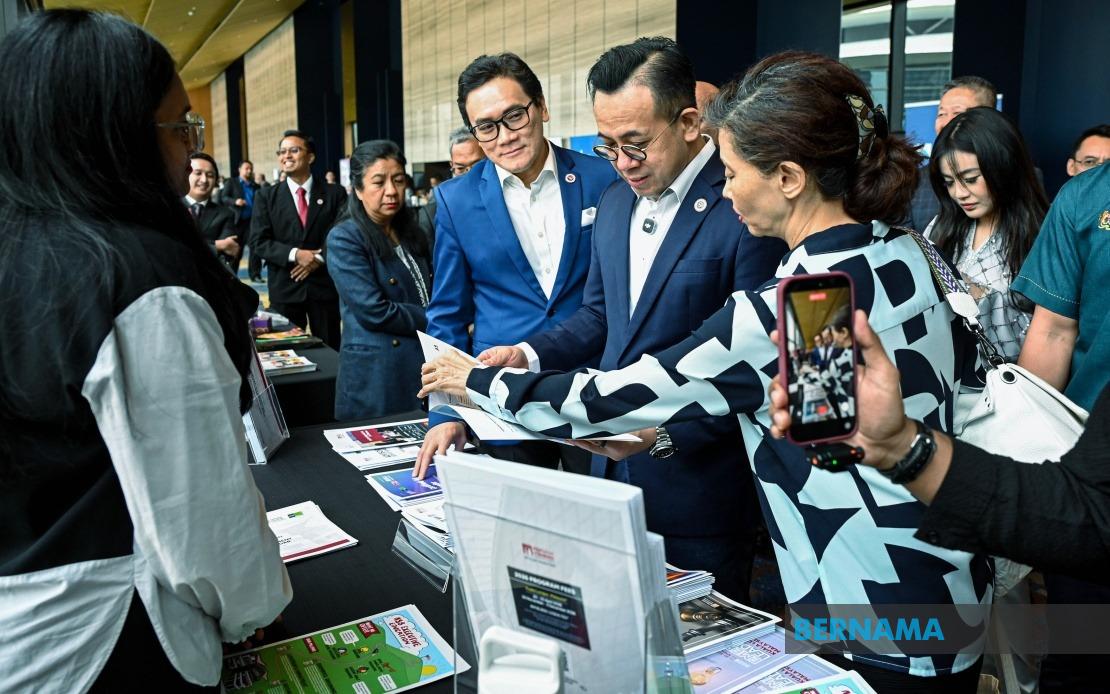
The government is pushing Malaysian enterprises to fundamentally rethink their competitive positioning in global markets by building brands around innovation and quality rather than competing primarily on cost. Entrepreneur and Cooperatives Development Minister Steven Sim outlined this strategic direction at the BrandQuest 2026 programme and National Mark of Malaysian Brand Appreciation Ceremony in Kuala Lumpur, signalling a deliberate policy shift aimed at elevating the perceived value of products with Malaysian origins.
Sim's emphasis on transitioning from a "Made in Malaysia" model to a "Made by Malaysia" framework represents a significant conceptual pivot in how the country approaches manufacturing and product development. Under the traditional approach, Malaysian factories primarily manufactured goods designed and conceived elsewhere, simply applying the Malaysian label to products that lacked distinctive local innovation or ownership. The proposed model instead envisions Malaysian entrepreneurs taking control of the entire value chain—from initial concept and design through to manufacturing and market delivery—thereby capturing significantly greater margins and establishing authentic brand equity that reflects local ingenuity and expertise.
This repositioning strategy carries particular relevance for Southeast Asian economies facing intense competition from lower-cost producers in Vietnam, Cambodia, and Bangladesh. By emphasising quality, safety standards, and innovative design over price-based competition, Malaysian companies could potentially carve out premium market segments where they compete on differentiation rather than simply undercutting competitors. The minister framed this not merely as a marketing exercise but as essential infrastructure for ensuring Malaysian products maintain competitiveness in increasingly sophisticated global supply chains where cost arbitrage alone provides insufficient competitive advantage.
To support this transition, the government has directed financial resources toward brand development and standardisation. SME Corp allocated RM230,000 to help approximately 40 micro, small and medium enterprises obtain National Mark of Malaysian Brand certification during 2025 and 2026. While the allocation appears modest relative to the broader economy, it represents targeted support for companies seeking formal recognition of their commitment to quality standards and brand integrity. Sim indicated that the ministry would periodically reassess funding levels to determine whether increased allocations are necessary to strengthen the competitiveness of locally produced goods in both domestic markets and international trade channels.
Beyond brand certification, the government has deployed broader financing mechanisms to support entrepreneurial activity across the economy. Through the Power Up 10K programme, RM9 billion in financing has been channelled to 250,000 entrepreneurs nationwide as of July, representing substantial progress toward the RM15 billion target for the full year. This programme reflects an understanding that brand development and competitive positioning ultimately depend on entrepreneurs having adequate access to capital for expansion, research and development, and market entry activities. For Malaysian companies seeking to transition toward design-led manufacturing and innovation-focused business models, access to patient capital represents a critical enabling factor.
The ceremony highlighted recognition for companies that have demonstrated sustained commitment to building competitive Malaysian brands. Recipients of the Malaysian Brand Heritage Award included Seasonings Specialties Sdn Bhd, Passive Fire Protection Sdn Bhd, Goodnite Sdn Bhd, Halagel (M) Sdn Bhd, and Sydney Cake House Sdn Bhd. These award winners span diverse sectors—from food and beverage to specialty chemicals and consumer goods—suggesting that the government's brand-building agenda applies broadly across the manufacturing and services landscape rather than concentrating on particular industries or product categories.
The strategic implications for Malaysia's economic development trajectory are considerable. As global supply chains increasingly value reliability, intellectual property, and branded product differentiation, countries that position themselves primarily as low-cost manufacturing platforms risk being progressively marginalised by automation and by cheaper producers in other jurisdictions. By contrast, building a reputation for innovative design, quality assurance, and authentic brand ownership creates more resilient competitive advantages that sustain higher-value employment and business returns over longer timeframes.
For regional context, Malaysia's approach parallels strategies being pursued by other Southeast Asian economies attempting to climb the manufacturing value chain. Thailand's emphasis on branded automotive components, Vietnam's growing role in electronics design and assembly, and Indonesia's development of branded consumer products all reflect similar recognition that sustainable competitiveness requires moving beyond contract manufacturing toward original design and brand ownership. Malaysia's explicit policy push in this direction indicates government recognition that the window for competing primarily on labour cost advantages continues to narrow as regional wage structures converge.
Implementation challenges remain significant. Transitioning established manufacturing operations toward design-led business models requires investment in research capabilities, product development infrastructure, intellectual property protection, and market development expertise—skill sets that many small and medium enterprises currently lack. The government's financing initiatives and brand certification programmes address these gaps only partially. Success will ultimately depend on whether Malaysian entrepreneurs can develop the organisational capabilities, technical expertise, and market access networks necessary to bring genuinely innovative products to international consumers while maintaining the quality and safety standards that justify premium positioning.
Sim's emphasis on making "Malaysian businesses great" reflects both nationalist sentiment and pragmatic economic calculation. A nation's ability to generate high-value employment, retain talented entrepreneurs, and build globally competitive corporations depends fundamentally on developing authentic branded enterprises rather than remaining perpetually dependent on foreign investors to define production priorities and capture the bulk of value added. The minister's statements indicate that policymakers understand this dynamic and are attempting to create conditions—through financing, certification, and rhetorical emphasis—that encourage Malaysian companies to make the strategic transition from manufacturing execution to innovation leadership.

