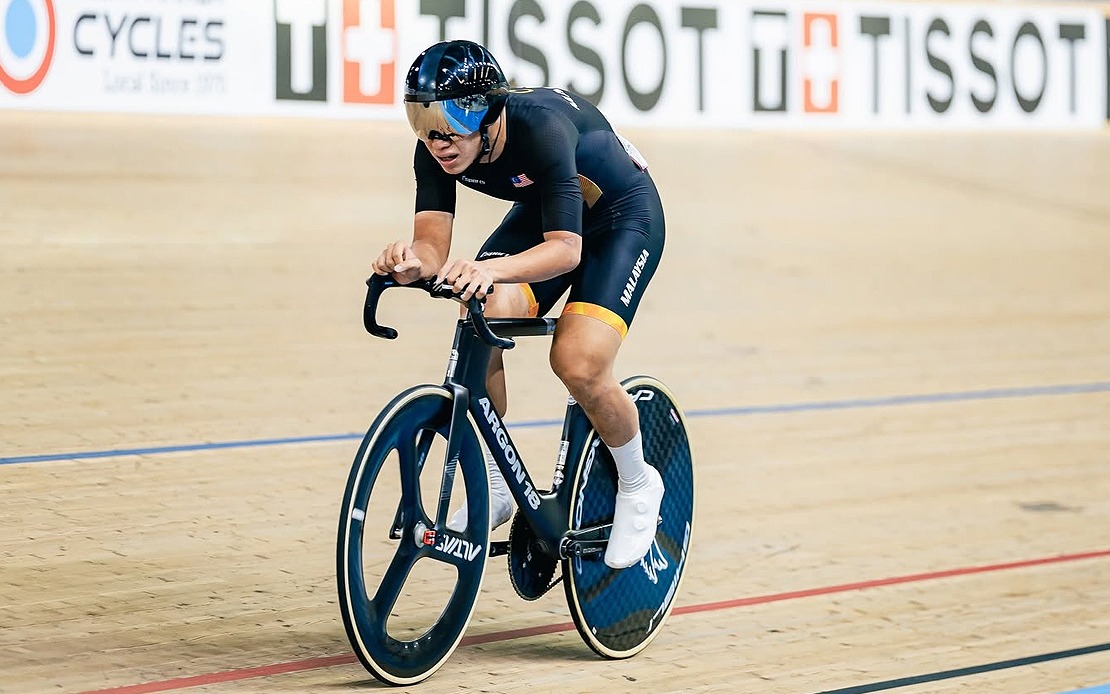
National track cyclist Lau New Joe is in stable condition and has been cleared to fly back to Malaysia after a collision during the men's 10-kilometre scratch race final at the 2026 Glasgow Commonwealth Games on Saturday. The incident unfolded at the Sir Chris Hoy Velodrome in a multi-rider pile-up involving nine cyclists, occurring mere moments before the final lap as competitors jostled for position heading into the home stretch. New Joe lost consciousness briefly following the impact and required stretcher assistance from the medical team, ultimately failing to complete the race.
Following the crash, New Joe was transported to the emergency department at Queen Elizabeth University Hospital, where he underwent comprehensive diagnostic imaging to assess the extent of his injuries. The medical team performed both a computed tomography scan and full-body X-rays to identify any serious damage. Dr Kamarul Hashimy Hussein, the chief medical officer for the Malaysian contingent, confirmed that whilst the scans revealed no internal bleeding within the brain—a significant relief given the severity of the fall—the cyclist had sustained minor fractures to the bones of his face. The findings were encouraging enough to warrant discharge from hospital, though his condition required ongoing professional care.
The injuries extended beyond skeletal fractures. New Joe suffered considerable dental trauma, with multiple teeth sustaining fracture damage that will necessitate an extended course of specialist treatment and periodic follow-up appointments with maxillofacial practitioners. Immediately following the initial diagnosis, two dental and maxillofacial specialists provided emergency treatment at the hospital that stretched from approximately 9 pm until 1 am, stabilising his condition and addressing the most pressing dental concerns. Despite these injuries, New Joe's overall medical status improved sufficiently to allow discharge from the hospital the same evening, enabling him to return to the Malaysian team accommodation.
Dr Kamarul outlined a comprehensive rehabilitation strategy that extends well beyond the immediate post-injury period. The National Sports Institute will assume responsibility for managing New Joe's recovery once he returns to Malaysia, coordinating ongoing treatment with maxillofacial specialists for his dental injuries whilst simultaneously addressing the psychological dimension of his trauma. The medical chief emphasised that New Joe possesses considerable mental fortitude and a competitive drive that will prove essential to his rehabilitation journey. The cyclist's expressed eagerness to return to racing, despite the severity of his accident, reflects the determination that characterises elite athletes, though the medical team remains cognisant of the need for appropriate psychological support throughout his recovery.
The physical rehabilitation programme will be equally rigorous. Medical personnel will continuously monitor New Joe's functional capacity, including his cardiovascular stamina and muscular endurance, to ensure he achieves optimal conditioning before receiving clearance to compete again. This measured approach recognises that return-to-sport protocols in cycling demand comprehensive restoration of full physical function, particularly given the explosive power and sustained effort required in track racing. Dr Kamarul expressed optimism regarding New Joe's recovery trajectory, suggesting that if rehabilitation proceeds favourably, the cyclist might be positioned to compete at the forthcoming Asian Games scheduled to take place from September 19 to October 4.
New Joe's participation at the Glasgow Games represented his maiden appearance at the Commonwealth Games, making his premature exit from the competition particularly disappointing for both the athlete and the Malaysian cycling programme. Nevertheless, his clearance to travel suggests that the injury, whilst serious, does not pose long-term complications that would necessitate extended hospitalisation or restrict his mobility. He is scheduled to depart Glasgow alongside the broader Malaysian delegation on August 3, returning to his home country where the intensive phase of his rehabilitation will commence under NSI supervision.
The incident itself serves as a stark reminder of the physical risks inherent in track cycling, a sport where athletes operate in close proximity at high speeds, leaving minimal margin for error. The nine-rider collision that precipitated New Joe's fall exemplifies the hazards that competitors face in scratch races, where aggressive positioning and tactical manoeuvring are essential components of the event. Such incidents, whilst fortunately rare, underscore the importance of robust medical protocols at major sporting competitions and the necessity for rapid response capabilities that the Glasgow organisers clearly possessed.
From a broader Malaysian sporting perspective, New Joe's accident and subsequent recovery will be closely monitored by the national cycling federation and Institute, as maintaining the health and development of elite track cyclists remains crucial to Malaysia's competitive standing in the sport. The cyclist's potential participation in the Asian Games, contingent upon successful rehabilitation, could prove significant for the region's cycling landscape. His return to competition, should it occur within the projected timeline, would demonstrate both the resilience of the athlete and the effectiveness of Malaysia's sports medicine infrastructure.
The incident also highlights the critical role of contingent medical officers and specialist healthcare providers in supporting athletes at international competitions. Dr Kamarul's coordinated response, drawing upon local hospital facilities and specialist expertise, ensured that New Joe received appropriate acute care whilst maintaining continuity with Malaysia's own medical and rehabilitation systems. This integrated approach to athlete welfare represents best practice in international sporting competition, where seamless transition from local emergency services to home-country specialist care can significantly influence recovery outcomes and long-term athletic prospects.

