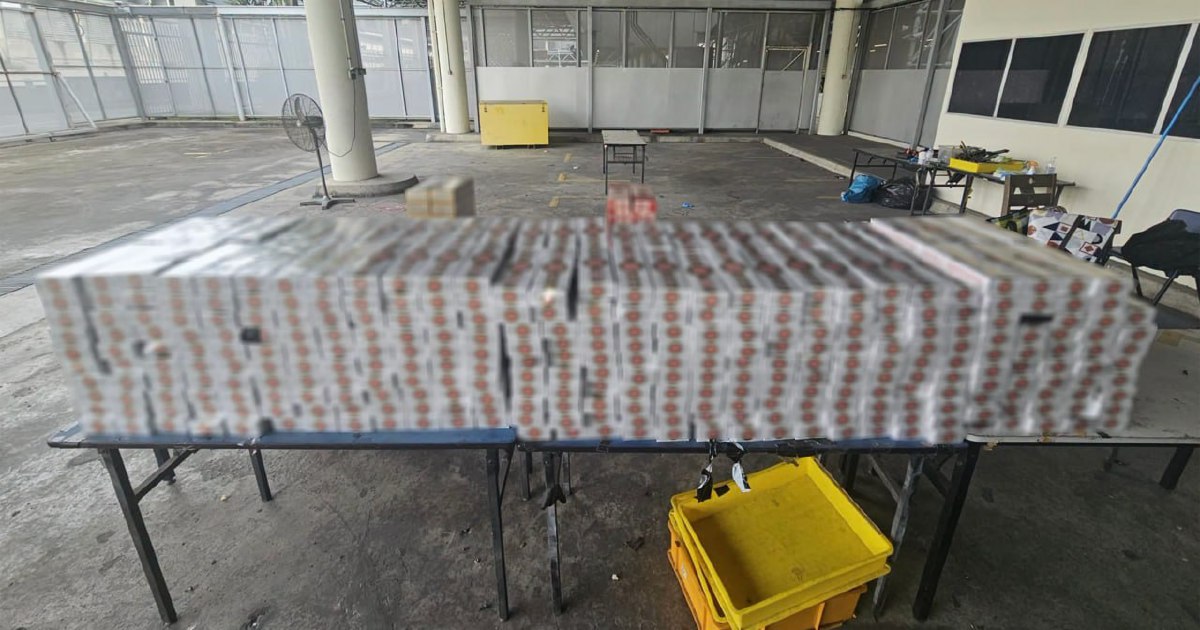
Authorities at Singapore's Woodlands Checkpoint apprehended a 30-year-old Malaysian national after discovering an extensive cache of contraband cigarettes concealed within his vehicle during routine border screening. The seizure of over 700 cartons and 100 individual packets of duty-unpaid tobacco products represents a significant interdiction in ongoing efforts to combat cigarette smuggling across the Malaysia-Singapore border.
The arrest underscores the persistent challenge of illicit cigarette trafficking in Southeast Asia, where significant price differentials between neighbouring jurisdictions create strong financial incentives for smuggling operations. Malaysia's lower tobacco excise duties compared to Singapore's substantially higher tax regime make cross-border movement of cigarettes particularly lucrative for traffickers seeking to profit from price arbitrage. The scale of this seizure indicates that such operations often involve substantial quantities designed to generate considerable returns despite the risks of detection and legal prosecution.
Cigarette smuggling represents a sophisticated criminal enterprise throughout the region, typically involving multiple layers of coordination between suppliers, transporters, and distribution networks. The concealment method employed in this case suggests deliberate planning to evade detection systems at checkpoints, reflecting the evolving tactics used by smuggling syndicates to circumvent border security measures. The quantity recovered indicates this was likely not an isolated incident of personal consumption but rather part of an organised distribution attempt.
Singapore customs authorities have intensified their vigilance at key entry points following previous incidents of large-scale contraband seizures. The Woodlands Checkpoint, serving as one of Southeast Asia's busiest land border crossings, processes hundreds of thousands of vehicles monthly, creating both surveillance challenges and opportunities for detection. Enhanced screening protocols and intelligence-led operations have proven effective in intercepting trafficking attempts, though the continued occurrence of such cases demonstrates that smugglers persistently adapt their methodologies.
The financial implications of this smuggling operation are substantial. Duty-unpaid cigarettes in Singapore represent a deliberate evasion of excise taxes, depriving the government of significant revenue while creating unfair market competition for licensed tobacco retailers. Singapore's tobacco tax regime, among the world's highest, generates considerable state revenue while serving public health objectives through pricing mechanisms designed to discourage consumption. Successful interdiction efforts therefore protect both fiscal interests and policy outcomes.
For Malaysian nationals, involvement in such smuggling operations carries serious legal consequences within Singapore's jurisdiction. The arrested individual faces potential charges under Singapore's excise duty regulations and customs legislation, which carry substantial penalties including fines and imprisonment. Cross-border smuggling charges typically result in prosecution under stringent statutes that reflect the government's commitment to border integrity and revenue protection. The case serves as a cautionary reminder to Malaysian travellers regarding the severe consequences of involvement in contraband activities.
The incident reflects broader regional patterns in illicit tobacco trade, which international agencies identify as a significant challenge to border security and public finance across Asia-Pacific. The World Health Organization and customs authorities routinely highlight cigarette smuggling as enabling criminal networks, funding organised crime, and undermining legitimate commerce. Malaysia-Singapore cross-border activity attracts particular attention because of high trafficking volumes and the substantial price differential that motivates smuggling attempts.
Investigations into such seizures typically extend beyond the apprehended individual to identify upstream suppliers, logistics coordinators, and downstream distribution networks. Authorities sharing intelligence across jurisdictions has strengthened capacity to disrupt smuggling syndicates operating across the border. The cooperation between Malaysian and Singapore customs agencies, though sometimes strained by political considerations, remains essential to combating organised trafficking operations that exploit border vulnerabilities.
For Malaysian businesses and individuals, heightened awareness of smuggling enforcement represents an important consideration. Travellers transporting goods across the Woodlands Checkpoint face increasingly sophisticated detection systems, from drug-sniffing dogs to advanced scanning technology. The substantial penalties for smuggling offences—including vehicle forfeiture and criminal records—create compelling reasons for compliance with customs regulations. Even apparently low-risk contraband, such as cigarettes, can result in severe consequences when discovered at checkpoints.
The seizure also highlights questions surrounding enforcement consistency and the effectiveness of current deterrence mechanisms. Despite numerous previous interceptions, smuggling volumes remain significant, suggesting that potential profits for traffickers continue exceeding perceived enforcement risks. Regional authorities continue evaluating whether additional measures, including enhanced cooperation frameworks and technology deployment, might prove more effective in reducing contraband flows. The challenge remains balancing border security demands with the practical realities of managing high-volume legitimate cross-border movement.

