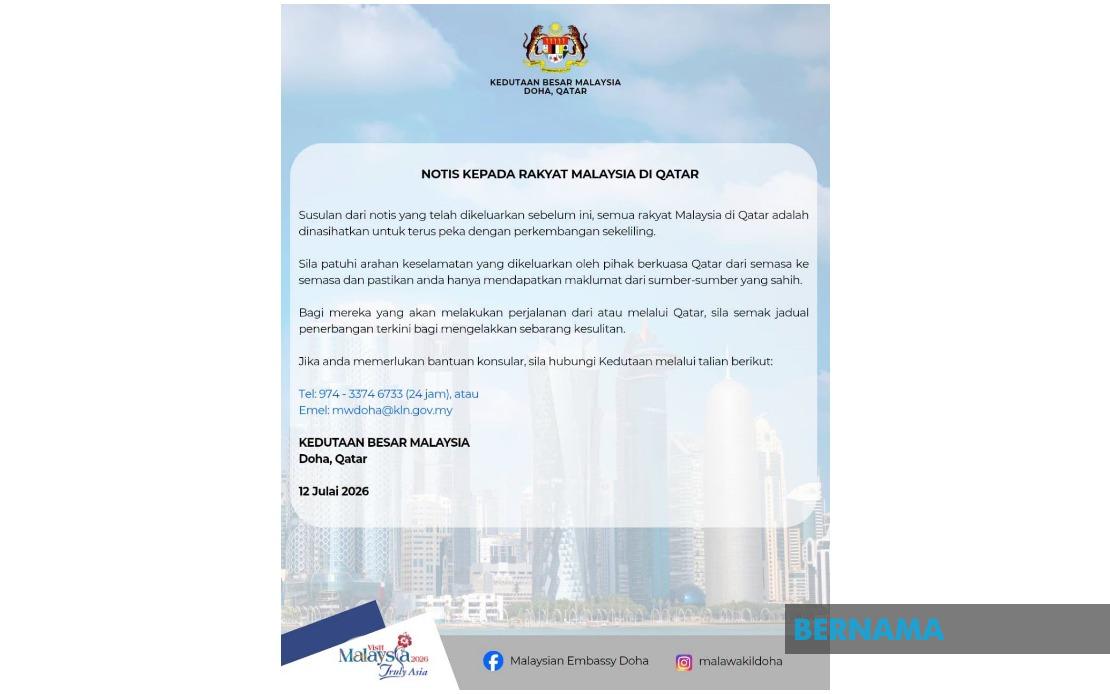
The Malaysian Embassy in Doha has issued fresh guidance to Malaysian nationals residing in or transiting through Qatar, instructing them to maintain heightened awareness of their surroundings and strictly adhere to security protocols established by Qatari authorities. The diplomatic advisory, disseminated through the embassy's official social media channels, reflects growing concerns over escalating military tensions between Washington and Tehran that have intensified dramatically this week, creating an unpredictable security environment across the Gulf region where thousands of Malaysian expatriates live and work.
The guidance represents a measured but serious response to the deteriorating situation in one of the world's most strategically significant maritime zones. Malaysians are explicitly urged to obtain updates solely from verified, authoritative sources and to remain alert to developments in their immediate environment, as misinformation and rumour can spread rapidly during periods of geopolitical tension. The embassy's 24-hour consular hotline at +974-3374 6733 and email services have been activated to provide assistance to any Malaysian nationals requiring support or facing difficulties during this volatile period.
The advisory comes in response to a significant escalation in hostilities between the United States and Iran that commenced late last week. On Sunday, American military forces executed their third wave of strikes targeting Iranian positions within a single week, initiating these operations following what Washington characterised as provocative Iranian military action. Specifically, Iran's Islamic Revolutionary Guard Corps navy conducted armed operations against a commercial vessel transiting the Strait of Hormuz, one of the world's most critical maritime chokepoints through which approximately one-third of global seaborne oil passes daily.
That same day, the IRGC navy announced an extraordinary closure of the Strait of Hormuz to all international shipping traffic, declaring the waterway would remain sealed until further notice. Iranian authorities explicitly conditioned the reopening of this strategically vital passage on the cessation of what they termed "US interventions in the region," effectively holding global maritime commerce hostage to their geopolitical objectives. The closure of the Strait of Hormuz represents an unprecedented challenge to international law and freedom of navigation principles, with profound implications for global energy security and regional stability.
For Malaysian policymakers and citizens alike, the ramifications are substantial. Malaysia, as a major trading nation heavily dependent on international commerce, faces potential disruptions to supply chains and energy markets should the closure persist. The Strait of Hormuz's closure directly threatens the flow of crude oil to Asian markets, including Malaysia, and could trigger broader economic consequences across Southeast Asia. Regional shipping companies, including Malaysian firms operating vessels in Gulf waters, must navigate heightened insurance costs, extended voyage routes, and operational uncertainties.
The current crisis follows a June agreement that had briefly offered hope for de-escalation. Tehran and Washington, brokered through Pakistan's diplomatic intermediation, had concluded a memorandum of understanding explicitly designed to terminate the conflict that erupted in late February. That accord stipulated immediate cessation of all military hostilities, lifting of the American naval blockade on Iranian waters, and critically, reopening of the Strait of Hormuz to international maritime traffic. The framework appeared to represent a potential pathway toward sustainable peace in the region.
Yet despite this formal agreement bearing both nations' commitment, the arrangement has proven fragile and ineffective. This week's renewed military exchanges underscore the profound mistrust persisting between Washington and Tehran, and demonstrate that signing agreements does not automatically translate into compliance or peaceful conduct. The breakdown suggests deeper structural tensions and fundamental disagreements regarding implementation timelines, verification mechanisms, and the underlying legitimacy of each side's grievances remain unresolved beneath the diplomatic veneer.
The cyclical pattern of attacks and counter-attacks raises urgent questions about the agreement's viability and the international community's capacity to broker lasting settlements in the region. For Malaysia and other Southeast Asian nations, this instability presents a vexing challenge: how to maintain neutral diplomatic relations with both powers while protecting national interests in maritime security and commercial stability. The disruption to the Strait of Hormuz carries direct economic costs that ripple through Asian supply chains and energy markets.
Malaysian citizens in Qatar face particular vulnerability given Qatar's geographic proximity to Iran and its significant economic relationships with both Washington and Tehran. The country hosts major American military installations while maintaining robust commercial ties with Iran, creating complex cross-pressures that affect the security environment. Qatari authorities have implemented various protective measures, and Malaysians are advised to remain cognisant of these evolving protocols.
The diplomatic corps in Doha, including Malaysian representation, continues monitoring developments closely. Embassy personnel are prepared to provide emergency consular support should the situation deteriorate further or warrant evacuation procedures. Malaysian nationals employed in critical infrastructure sectors, shipping, or business operations affecting US-Iran relations face heightened complexity in their working environment and should exercise particular caution in their professional responsibilities and personal movements.
For the broader Southeast Asian region, the US-Iran escalation serves as a sobering reminder of vulnerability to external power competition and the risks posed when major powers pursue confrontational strategies in strategically vital waterways. The incident underscores the necessity for regional frameworks addressing maritime security, freedom of navigation, and mechanisms for preventing unilateral closure of international waters. Malaysia, as a significant maritime nation and ASEAN member, has vested interests in international laws protecting shipping lanes and preventing weaponisation of critical passages.
The situation remains fluid and unpredictable. International pressure from key stakeholders including Europe, China, and regional actors may yet facilitate renewed diplomatic engagement, though current trajectories suggest further military exchanges remain possible. Malaysian authorities continue monitoring the situation with appropriate concern, maintaining readiness to support nationals while advocating through diplomatic channels for de-escalation and restoration of maritime stability in this essential global corridor.

