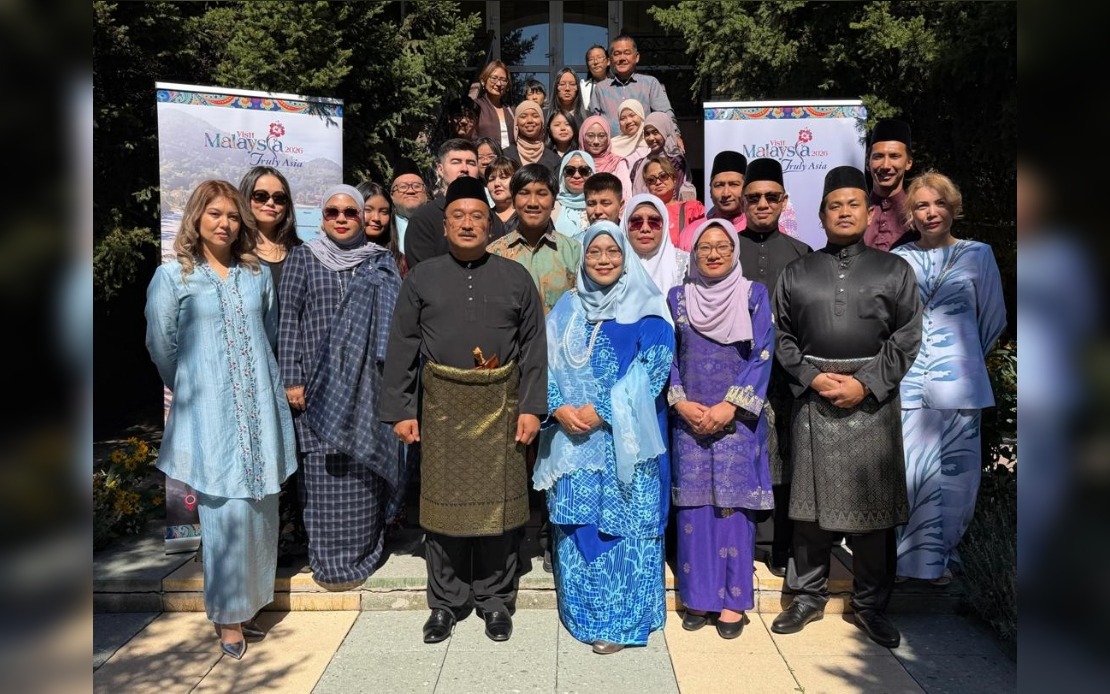
Thousands of kilometres from home, Malaysians living in Kazakhstan demonstrated their deep connection to their nation on Saturday by participating in a flag-raising ceremony and National Day reception held at Malaysia House in Astana. The gathering, organised under the auspices of the Embassy of Malaysia in Astana, reflected how patriotic sentiment transcends geographical boundaries, uniting Malaysians abroad through shared civic values and national pride. The ceremonial proceedings commenced with the hoisting of the Jalur Gemilang, accompanied by renditions of the national anthem Negaraku and a collective recitation of the Rukun Negara, anchoring the occasion in Malaysia's constitutional and spiritual foundations.
Mohd Adli Abdullah, Malaysia's Ambassador to Kazakhstan, used the platform to articulate the deeper meaning behind this year's National Day theme: Malaysia MADANI: Prosperity Enjoyed. His interpretation extended beyond conventional measurements of national success, challenging the notion that progress can be adequately assessed through economic indicators and infrastructure development alone. Instead, he positioned prosperity as a qualitative experience—one fundamentally dependent on whether the fruits of development permeate society equitably and encompass all demographic groups. This framing carries particular resonance for a developing nation conscious of regional inequality and the necessity of inclusive growth models in an increasingly fragmented world.
The ambassador's remarks underscored the expectations placed on Malaysians abroad to function as custodians of their nation's reputation and values. By engaging with host communities and maintaining personal conduct reflecting integrity, discipline and mutual respect, expatriate Malaysians effectively extend the country's soft power influence. Adli's call for these individuals to embody the MADANI framework—centred on hard work, ethical conduct, and collective responsibility—reframed overseas postings not merely as personal career advancement but as patriotic duty. This conceptualisation attempts to strengthen emotional bonds between diaspora communities and the homeland, fostering a sense of ongoing civic participation despite physical separation.
Among those gathered were embassy personnel, Malaysian students undertaking tertiary education in Kazakhstan, alumni of the Malaysia Technical Cooperation Programme (MTCP), and various friends of Malaysia whose lives have intersected with the nation's development initiatives. This diverse composition reflected Malaysia's multifaceted engagement with Central Asia, extending beyond bilateral governmental relations to encompass educational exchange, professional networking, and cultural connection. The presence of MTCP beneficiaries and graduates particularly underscored how technical cooperation transcends conventional diplomacy, creating lasting personal linkages rooted in shared professional experiences and mutual institutional learning.
The MTCP, established in 1980 as Malaysia's contribution to South-South cooperation mechanisms, represents a distinctive approach to development assistance that prioritises capacity-building and knowledge transfer rather than financial aid. Operating primarily through training programmes, institutional strengthening initiatives, and postgraduate scholarship opportunities, the scheme channels Malaysian expertise toward countries navigating comparable developmental challenges. This model aligns with Malaysia's own trajectory as a nation that transitioned from commodity dependence to diversified industrialisation, thereby positioning it as a credible knowledge partner for developing economies. The programme's longevity and sustained engagement across multiple sectors demonstrate Malaysia's serious, long-term commitment to shaping global development discourse and practices.
Kazakhstan has been a substantive beneficiary of this cooperation framework, with 196 officials having participated in various capacity-building initiatives as of 2025. These figures, while numerical, represent institutional memory transfer and professional networks established across ministries, technical agencies and educational institutions. Individual trajectories of MTCP participants often translate into policy adjustments, operational improvements, and enhanced governance practices within Kazakhstan's public sector. The accumulation of such micro-level changes across multiple agencies compounds into systemic effects that strengthen institutional capacity and administrative effectiveness. For Malaysia, such engagement generates diplomatic goodwill while simultaneously positioning the nation as a thoughtful development partner capable of meaningful contribution to Central Asian growth and modernisation.
The reception additionally functioned as the MTCP Alumni Get-Together 2026, deliberately creating space for professional reflection, networking renewal, and relationship consolidation among Malaysian specialists and Kazakhstani counterparts. Such gatherings serve as informal but substantive mechanisms for sustaining cooperative relationships that formal governmental channels might otherwise allow to atrophy. Alumni networks frequently become entry points for expanded collaboration, whether through consulting relationships, institutional partnerships, or policy dialogue. The ambassador's hosting of this concurrent gathering signalled institutional commitment to maintaining and deepening the human relationships undergirding formal bilateral cooperation.
From Malaysia's strategic perspective, Kazakhstan occupies a geopolitically significant position in Central Asia, bordering Russia and serving as a gateway to markets across the former Soviet sphere. Strengthening ties through technical cooperation and people-to-people connections creates foundations for expanding bilateral engagement in areas ranging from energy cooperation to trade facilitation. As Malaysia seeks to diversify its international partnerships and reduce over-reliance on traditional Southeast Asian and Western engagements, Central Asia represents a frontier region with substantial economic potential and relatively underdeveloped Malaysian presence. Enhanced cooperation through MTCP pathways positions Malaysia advantageously for future commercial and political engagement across the region.
The National Day celebration in Astana also reflected evolving patterns of Malaysian diaspora activism and identity maintenance. Unlike previous decades when overseas Malaysians might have observed national occasions through informal family gatherings, contemporary expatriate communities increasingly organise formal, institutionally-supported commemorations that assert cultural presence within host societies. Such public festivities serve multiple functions: reinforcing internal group cohesion, demonstrating Malaysia's institutional capacity and diplomatic presence, and introducing host-country populations to Malaysian culture and values. In Kazakhstan's multicultural urban environment, the visible celebration of Malaysian National Day contributes to broader recognition of Malaysia within Central Asian consciousness.
The emphasis on MADANI values throughout the occasion reflected broader governmental messaging strategies seeking to reframe Malaysia's development narrative in explicitly ethical and inclusive terms. Rather than pursuing growth metrics that might mask underlying inequalities or social fragmentation, this thematic approach acknowledges that sustainable prosperity requires attention to distribution mechanisms, social inclusion, and collective well-being. For overseas audiences including Kazakhstan's governmental officials and professional networks, this messaging positions Malaysia as a nation grappling thoughtfully with development's complexities rather than pursuing simplistic growth maximisation. Such intellectual engagement elevates Malaysia's standing in international development discourse and appeals to host-country counterparts concerned with crafting equitable development models.
Looking forward, the momentum generated through events like the Astana National Day celebration and concurrent MTCP alumni gathering positions Malaysia-Kazakhstan relations for potential expansion. The networks established and reinforced through such occasions create informal diplomatic channels and professional relationships that often prove more durable and productive than formal governmental agreements. As both nations navigate regional uncertainties and economic transitions, deepened cooperation across human capital development, institutional capacity-building and cultural exchange offers mutually beneficial pathways. Malaysia's consistent investment in such relationship-building through technical cooperation and diaspora engagement demonstrates strategic patience and sophisticated understanding of how sustained, personal-level connections ultimately generate geopolitical dividends.

