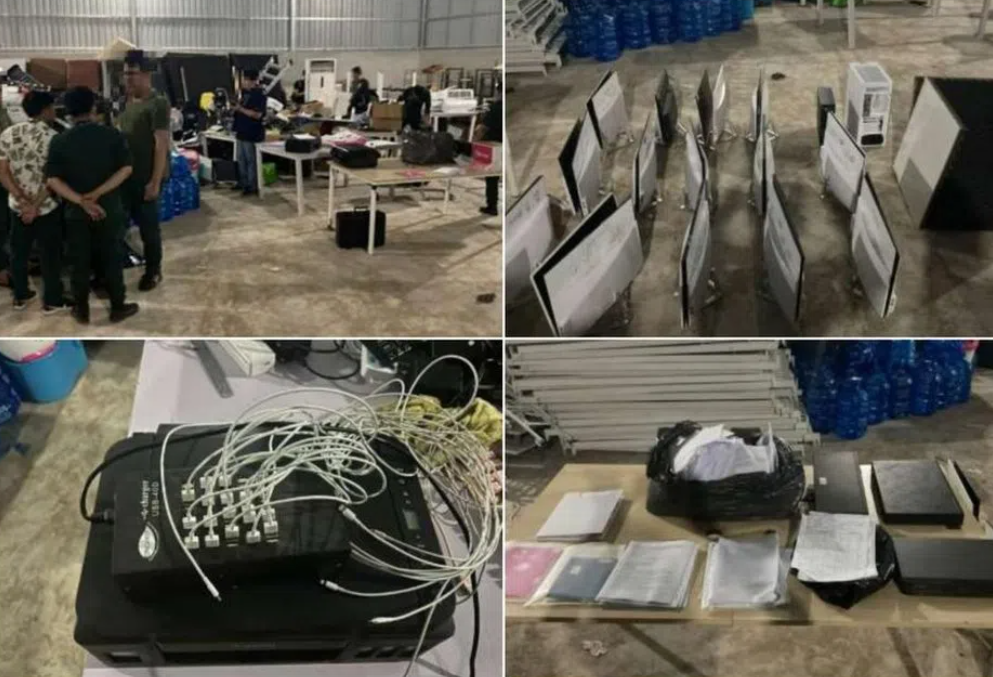
A 30-year-old Malaysian has been handed a 16-month jail sentence for his brief involvement with a sophisticated scam operation centred in Cambodia that systematically defrauded Singaporean victims of more than S$52 million. Yip Chee Ming's case stands as an unusual example of criminal incompetence within a well-organised fraud machine: despite being given scripts and coaching by experienced trainers, he proved unable to successfully convince a single victim during his three days employed by the syndicate. The court in Singapore heard on Friday that Yip pleaded guilty to membership in an organised crime group, with a separate charge of cheating taken into consideration during sentencing.
The pathway into criminality began when Yip's friend Jason approached him in October 2024 with an unusual job proposal. Rather than face recruitment alone, Jason asked Yip to join him in what was presented as a lucrative overseas employment opportunity. The two men were subsequently added to a Telegram group by Tang Soon Wah, identified as one of the syndicate's operational leaders, who extended an invitation to visit Cambodia and inspect the physical infrastructure. The recruitment process reflected the sophistication of the larger operation: the men were offered plane tickets and a chance to evaluate the scam compound before committing to employment.
When Yip and Jason travelled to Phnom Penh on November 21, 2024, they discovered an operation of considerable scale. The syndicate operated from a five-storey building fortified with security guards, presenting the appearance of a legitimate business enterprise to the outside world. This physical infrastructure supported a hierarchical structure comprising leadership overseeing criminal strategy, supervisors and trainers managing call centre personnel, and money laundering specialists converting cryptocurrency proceeds. Court evidence indicated at least 78 individuals were integrated into this network at various levels.
Yip commenced employment on November 22, 2024, with compensation structured to incentivise successful fraud: he was offered US$1,800 monthly in cryptocurrency plus a one per cent commission extracted from each victim's losses. His assigned role required impersonating a bank officer in calls targeting Singaporeans, following scripts designed by the training division to maximise plausibility. The trainers, court documents revealed, actively coached callers on techniques including adopting Singaporean accents to establish credibility and relationship-building strategies to manipulate victims into surrendering financial information.
The broader scam machinery had operated with devastating effectiveness. Between September 3, 2024, and September 5, 2025, the syndicate generated at least 528 reported fraud cases resulting in approximately S$52.5 million in losses among Singaporean victims. The operation's focus on government official impersonation represented a particularly insidious category of fraud, with such cases more than doubling across Singapore from 1,504 incidents in 2024 to 3,363 in 2025, making it the fifth most prevalent scam type in the city-state that year. The scale of loss and victim count underscored the operational efficiency of the larger organisation.
Yip's tenure proved markedly different from the syndicate's track record. Despite receiving training, scripts, and coaching from experienced operators, he was unable to successfully deceive any victim on his first day of work. Undeterred, he attempted calling again on November 23, 2024, but again failed to secure any fraudulent gains. This performance gap between expectation and execution appeared to exceed the organisation's tolerance threshold. Tang Soon Wah terminated Yip's employment after merely three days, even deleting their message exchanges to eliminate records of his involvement. Court documents do not clarify how Yip returned to Malaysia following his dismissal.
Law enforcement intervention came nine months later when police arrested Yip in Singapore on September 9, 2025, as part of a broader coordinated operation against the syndicate. The arrest formed part of a joint enforcement action between Singapore police and the Cambodian National Police targeting the network's membership. In total, 12 individuals were charged with alleged syndicate membership across multiple nationalities. Nine defendants identified as Singaporeans include Deon Tan Ke Yuan, aged 25; Lester Ng Jing Hai, 29; Christy Neo Wei En, 29; Heiqal Lee, 30; Tay Jun Xiang, 32; Ng Wei Kang, 33; Zachary Lee Jia An, 35; Melvin Tan Wenzheng, 35; and Lau Haoxiang, 39. The remaining accused comprise Malaysian Muhamad Asyraf Anuar, 29, and Filipina De Villar Rizalyn Panganiban, 34.
Yip's sentencing reflects judicial assessment of culpability balanced against his minimal practical impact on victims. While he participated knowingly in an organised criminal enterprise and received explicit training in deception techniques, his complete failure to execute any successful fraud limited demonstrable harm attributable to his direct actions. Nevertheless, membership in such organisations carries substantial legal consequences in Singapore. Offenders convicted under organised crime statutes face maximum penalties of five years imprisonment, fines up to S$100,000, or both. The sentence of 16 months and two weeks represents a measured penalty acknowledging both Yip's participation and limited contribution to the syndicate's total victimisation toll.
The case illuminates several operational realities within transnational fraud networks. First, the compartmentalisation of such syndicates—with distinct layers for leadership, supervision, calling, and money laundering—enables scale and resilience despite individual failures. Second, the reliance on neighbouring jurisdictions like Cambodia reflects the attraction of operating beyond immediate law enforcement reach while remaining close enough to target wealthy populations in developed economies. Third, the substantial recruitment networks bringing Malaysian and Singaporean nationals into overseas criminal enterprises indicate how economic incentives and social connections drive participation in organised fraud across the region.
For Malaysian authorities, the case underscores ongoing challenges posed by citizens recruited into cross-border criminal operations. The involvement of Malaysian recruits in Cambodia-based syndicates, combined with the broader phenomenon of Singaporeans actively participating as callers and facilitators, suggests criminal networks are deliberately cultivating talent from multiple nationalities to reduce detection risk and ensure operational continuity. The international coordination between Singapore and Cambodian law enforcement proved essential in disrupting this particular operation, highlighting the necessity for sustained regional cooperation mechanisms.
The trajectory from employment termination to prosecution demonstrates that distance and time cannot reliably shield participants in international crime from eventual accountability. Yip's inadequacy as a fraudster paradoxically provided him minimal protection: while he generated no direct victim harm, his membership in the organisation subjected him to criminal liability regardless. The broader syndicate's apprehension after nearly a year of operation suggests that even sophisticated, well-resourced criminal enterprises ultimately face detection when operating at significant scale across international borders. For aspiring criminals in the region, Yip's experience offers a sobering reminder that overseas crime offers neither financial security nor legal insulation.

