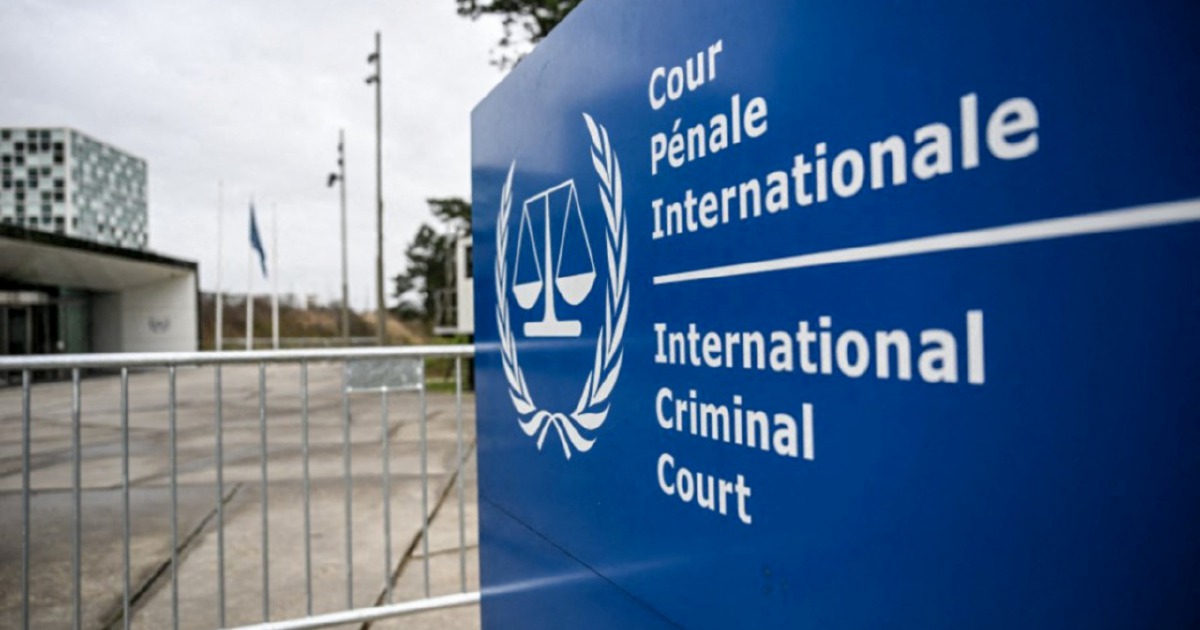
A Malaysian lawyer at the centre of the International Criminal Court's sexual misconduct investigation into prosecutor Karim Khan has come forward publicly for the first time, breaking her silence to counter what she describes as deliberate distortions of her identity and motivations. In an interview with CNN, the woman whose identity had previously been protected due to the sensitive nature of her allegations, explained that maintaining anonymity had created a vacuum that various parties filled with their own narratives and interpretations.
The appearance marks a significant moment in a case that has already roiled the institution tasked with prosecuting war crimes and crimes against humanity worldwide. When the allegations first emerged, they sparked immediate controversy given Khan's prominent role investigating the situation in Palestinian territories—a matter of particular sensitivity across the Muslim-majority region and among developing nations that view the court's work through the lens of global power imbalances. The emergence of a Malaysian complainant immediately invited scrutiny and speculation about geopolitical motivations and potential backing from various state actors.
The lawyer's decision to step into the public sphere carries substantial personal and professional risk. Anonymous complaint mechanisms exist within formal systems precisely to protect accusers from retaliation, harassment, and the kind of public scrutiny that can undermine both their credibility and safety. By choosing to identify herself, she has forfeited these protections while simultaneously providing an opportunity to establish her narrative on her own terms rather than through the interpretations and allegations circulating among media outlets, diplomatic circles, and political analysts.
Specifically, she addressed widespread claims circulating in diplomatic channels and Israeli media suggesting that her complaint was somehow orchestrated or influenced by Israeli interests. Given Israel's contentious relationship with the ICC and Khan's work on Palestinian matters, such theories had gained traction in certain quarters. The lawyer's public denial of any such connection underscores how easily allegations can become entangled in geopolitical narratives, particularly when the accused holds a position involving Israeli-Palestinian issues. Her rebuttal suggests that reducing her complaint to a proxy mechanism for state interests fundamentally mischaracterises both her motivations and her agency.
For Malaysia specifically, the case carries implications beyond the immediate circumstances. As a Muslim-majority nation with significant diplomatic engagement on Middle Eastern affairs and a track record of supporting Palestinian causes, Malaysia occupies a particular position in international discussions about the ICC and accountability mechanisms. The emergence of a Malaysian complainant in such a high-profile case unavoidably draws attention to Malaysia's role in global justice frameworks, even though the lawyer appears to have acted in a purely individual capacity.
The ICC itself faces reputational consequences regardless of how the investigation concludes. The institution was established to provide impartial justice mechanisms above the political fray, yet investigations into its own leadership create perceptions of vulnerability to external pressure and manipulation. That a complaint lodged against the prosecutor leading investigations into the Palestinian situation would be met with theories about geopolitical manipulation speaks to how deeply polarised international attitudes toward the court have become, particularly on matters touching the Israeli-Palestinian conflict.
Khan's position remains precarious throughout the investigation process. If allegations prove substantiated, his credibility and effectiveness in leading inquiries into politically fraught situations would be permanently compromised. Conversely, if the investigation exonerates him, questions about institutional integrity and complaint handling procedures will persist. The fact that his accuser felt compelled to identify herself publicly suggests that neither complete vindication nor resolution through standard processes may satisfy all stakeholders in this contentious matter.
The timing and context of the lawyer's public statement also merit consideration. By choosing to speak directly to international media rather than relying on statements through legal representatives, she has attempted to establish direct communication with a global audience while simultaneously framing her own narrative. This represents a strategic choice about how allegations and counterarguments circulate in an information environment where official channels and public discourse frequently diverge.
Regionally, the case illustrates broader tensions about international institutions, accountability mechanisms, and how accusations become entangled with geopolitical narratives. Southeast Asian observers of the ICC have long grappled with questions about whether the institution serves justice equitably or reflects the interests of powerful states. A case involving a Malaysian complainant and allegations against the prosecutor investigating Israeli conduct in Palestine inevitably draws attention to these underlying questions about institutional legitimacy and fairness.
Moving forward, the investigation into Khan will proceed through formal ICC processes, but the damage to institutional confidence has already occurred. Whether the lawyer's public identification ultimately strengthens or weakens her position within the investigation remains uncertain. What seems clear is that this case exemplifies how allegations involving politically sensitive jurisdictions become immediately vulnerable to reinterpretation through geopolitical lenses, forcing accusers to defend not just the substance of their complaints but also their own independence and motivations.

