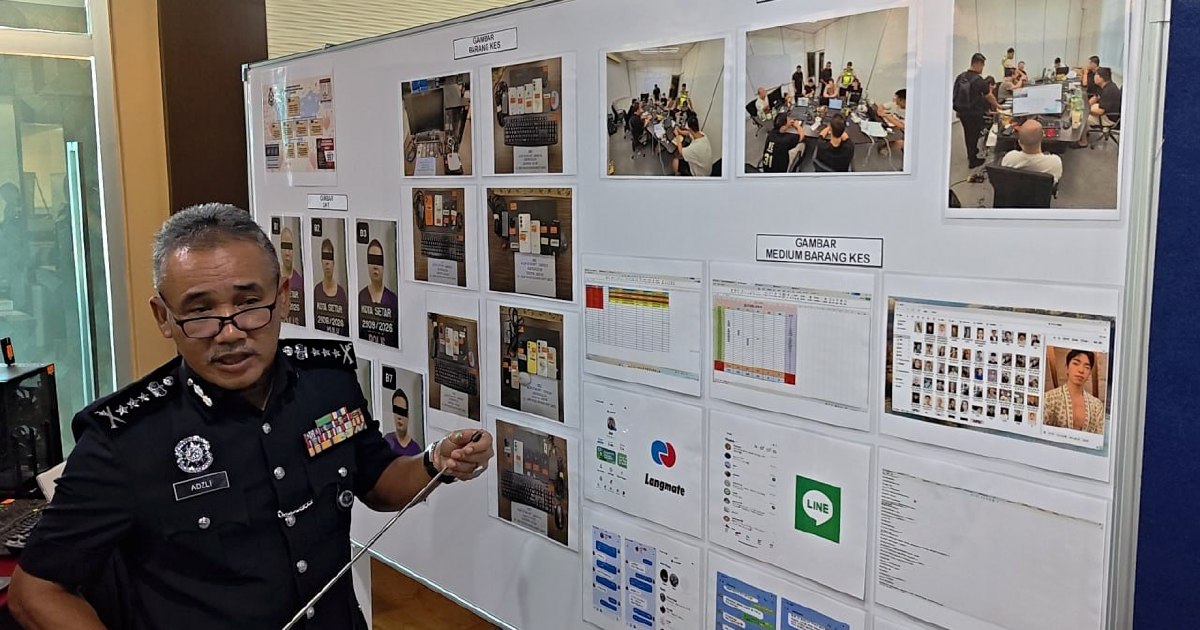
Malaysian authorities have successfully brought down an organised online romance fraud operation that systematically targeted Japanese nationals, with seven Chinese citizens taken into custody following a coordinated enforcement action in Alor Star. The operation came to light through a targeted raid conducted on a shop lot situated within the Kristal Light Industrial Park, marking another significant blow against transnational cybercrime syndicates operating from Malaysian soil.
Romance scams have emerged as one of Southeast Asia's most insidious forms of financial crime, exploiting emotional vulnerability and cultural trust barriers to extract substantial sums from victims across borders. The modus operandi typically involves perpetrators assuming false identities on social media and dating platforms, cultivating relationships over weeks or months before fabricating emergencies or investment opportunities requiring urgent money transfers. Japanese citizens, whose online engagement habits and relative trust in digital interactions make them particularly susceptible, have become frequent targets for such organised fraud networks operating throughout the region.
The specific targeting of Japanese victims suggests a level of operational sophistication within this particular syndicate. Scammers often conduct extensive research into victim profiles, cultural preferences, and financial circumstances to craft believable narratives. They may impersonate military personnel, oil rig workers, or businesspeople with plausible reasons for communication difficulties and inability to meet in person, while building genuine emotional connections that cloud victims' judgment. The time investment and psychological manipulation involved reveals that these operations function as genuine criminal enterprises rather than opportunistic schemes.
Alor Star's emergence as a hub for such sophisticated cyber-fraud operations underscores Malaysia's continued vulnerability as a base for transnational organised crime. The Kristal Light Industrial Park location suggests the syndicate operated under commercial cover, likely renting legitimate office space to maintain an air of legitimacy while conducting digital criminal activity. Such arrangements allow operators to minimise detection risks while maintaining reliable internet infrastructure and security systems necessary for coordinating scams across multiple time zones and jurisdictions.
The involvement of Chinese nationals in the operation reflects broader patterns of cross-border criminal networks operating within Southeast Asia. Many such syndicates comprise individuals with legitimate travel status who enter Malaysia on business or tourist visas before engaging in illicit activities. The relative ease of obtaining working space and establishing basic operational infrastructure has made Malaysia an attractive staging ground for coordinating international fraud campaigns targeting wealthier nations throughout Asia.
Japanese authorities have reported increasing cases of romance fraud involving Malaysian-based perpetrators, with victims often reporting substantial losses exceeding millions of yen. These crimes create significant diplomatic sensitivities and place pressure on Malaysian law enforcement to demonstrate tangible progress in combating cyber-fraud. The successful dismantling of this syndicate provides concrete evidence of operational capacity, though experts caution that such busts represent only the visible portion of considerably larger underground networks.
Beyond the immediate arrests, the operation has likely yielded digital evidence including communication records, transaction histories, and victim information that will assist both Malaysian and Japanese authorities in building broader understanding of the network's structure and reach. Forensic analysis of devices seized during the raid typically reveals connections to other syndicates, supply chains for false documentation, and patterns of money laundering that authorities use to unravel larger criminal networks. Intelligence shared through interpol and bilateral law enforcement channels extends the investigation's impact beyond the initial arrests.
The financial implications for Japanese victims extend well beyond immediate monetary losses. Romance fraud frequently triggers severe psychological trauma, with victims experiencing shame, depression, and damaged trust in online interactions. Family relationships suffer when victims exhaust savings or incur debt attempting to resolve scammer demands, while some individuals face additional victimisation when perpetrators use stolen personal information for secondary fraud schemes or identity theft.
Malaysian authorities face mounting pressure to enhance cybercrime detection and prevention capabilities as such operations become increasingly sophisticated. The proliferation of encrypted communication platforms, cryptocurrency usage for laundering proceeds, and international jurisdictional complexities create substantial investigative challenges. Enhanced inter-agency coordination and regional law enforcement cooperation remain essential for identifying and disrupting these networks before victims suffer losses.
For Malaysian consumers and businesses, this operation serves as a reminder that romance scams do not discriminate by nationality. Local victims have also fallen prey to similar schemes, often targeting older individuals with modest digital literacy. Public awareness campaigns emphasising red flags—requests for money, inconsistent personal details, pressure for rapid relationship escalation, and resistance to video verification—remain critical prevention tools.
The case demonstrates that despite Malaysia's reputation as a regional technology hub, insufficient resources and expertise have historically impeded cybercrime prosecution. Successful outcomes like this raid require substantial intelligence work, cross-border coordination, and sustained investigative resources that strain local police capacity. As transnational crime continues evolving, Malaysia's response framework must similarly advance in technical sophistication and regional integration.
Police have not yet disclosed the full operational scope of the dismantled syndicate, including total victim numbers, financial losses, or connections to other criminal networks. Additional charges may emerge as investigations progress and victims come forward. The case reinforces that Malaysian territorial jurisdiction creates both vulnerabilities and opportunities—while criminals exploit lax oversight to establish bases, authorities gain leverage to prosecute and disrupt international operations more effectively than many neighbouring nations could.

