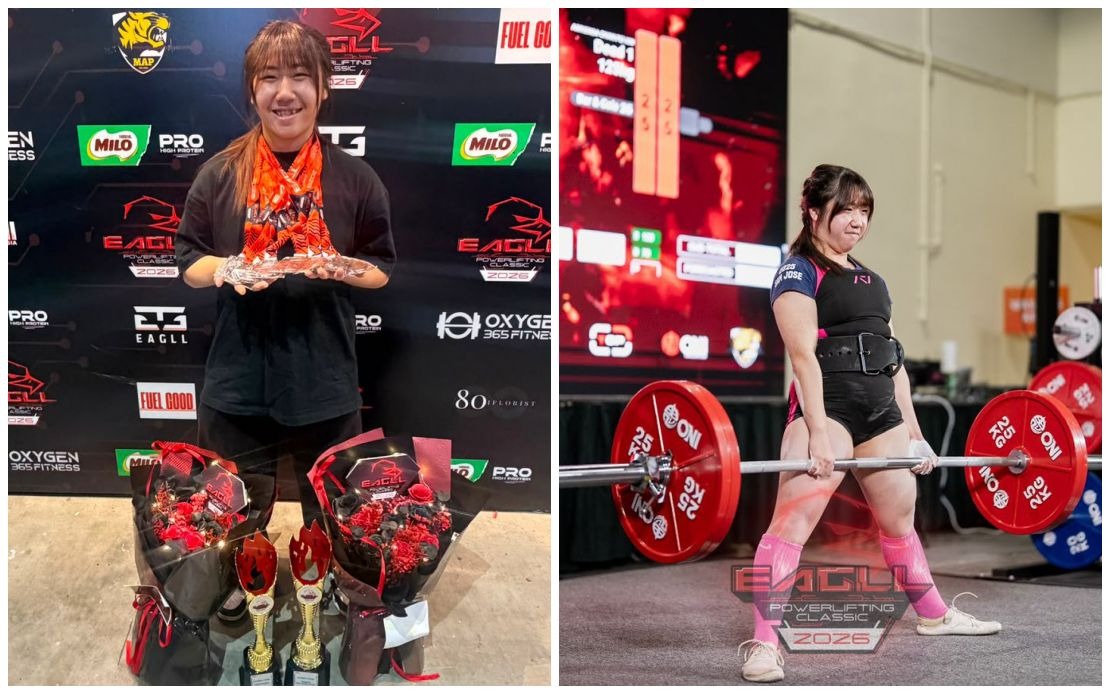
At just 20 years old and standing 151 centimetres tall, Sarawak-born powerlifter Abrienda Chan has emerged as one of Malaysia's most promising strength athletes, breaking through a sport traditionally dominated by much larger competitors. Her latest achievement came at the Eagll Powerlifting Classic (EPC) 2026 in Kuala Lumpur, where the petite athlete etched her name into the national record books by establishing five new marks in the Under-57 kilogramme category.
The magnitude of Chan's breakthrough becomes apparent when examining the specific records she now holds. Her open squat record stands at 128 kilograms, while she simultaneously claimed both junior and open bench press records at 70 kilograms. Most impressively, she established new junior and open total records of 343 kilograms, demonstrating comprehensive dominance across all three powerlifting disciplines. This sweep of records underscores not merely isolated strength in one lift, but rather balanced athletic development and technical mastery across the sport's fundamental movements.
Chan's medal haul at the competition further illustrates her commanding performance on the platform. She captured seven gold medals and one silver medal while competing simultaneously in both the junior and open age categories—a testament to her eligibility and competitiveness across age divisions. Her Junior/Sub-Junior Overall Champion title and second-place finish in the Open Overall standings proved particularly noteworthy given that she counted herself among the youngest competitors in the open field, suggesting her potential remains substantially untapped.
The athlete herself acknowledged that certain factors prevented even more extraordinary results on the day. Technical issues during her final squat attempt cost her the junior squat record, while strategic conservatism in the deadlift—chosen deliberately to secure gold medals and overall titles rather than risk them pursuing additional records—represented a calculated approach to competition. This measured decision-making reveals maturity beyond her years and a prioritization of securing tangible podium success over chasing marginal records.
Chan's trajectory has been consistently upward over recent competition cycles. She previously dominated the Under-52 kilogramme sub-junior category and continues to hold all three lift records and total records in that division, demonstrating that her recent gains represent genuine progression rather than momentary fortune. Her 2024 gold medal at the Asian Classic Powerlifting Championships further validates her status among Asia's elite female powerlifters and provides concrete evidence of her capacity to perform under international pressure.
Preparing for this competition served broader strategic objectives within Chan's development as an athlete. She deliberately structured her training and competition schedule to gather experience, understand her body's capabilities and limitations, and build psychological confidence ahead of two major world championships scheduled for 2027. This methodical approach to athletic development—treating each competition as a learning opportunity rather than merely a destination—reflects the guidance of her coaching team and support network.
The financial and logistical support underpinning her progress deserves acknowledgment within the Malaysian sporting context. Turbo Fitness has provided training facilities and contributed towards competition travel expenses, removing practical barriers that might otherwise impede her development. Chan's explicit gratitude towards her family, coach, and sponsors illustrates how individual talent requires institutional support to flourish. For Malaysian powerlifting and strength sports more broadly, identifying and backing emerging talent through such partnerships becomes essential for developing internationally competitive athletes.
Chan's upcoming international objectives provide clear benchmarks for assessing her continued development. She targets the 2027 World Classic & Equipped Bench Press Championships in Istanbul, Turkiye and the 2027 World Classic Sub-Junior & Junior Powerlifting Championships in Haining, China, where she aspires to break into the world's top three rankings within the U57 junior category. These goals are neither unrealistic nor unambitious—they represent attainable milestones for an athlete of demonstrated quality, while simultaneously demanding continued improvement and refined technical execution.
The broader significance of Chan's achievements extends beyond individual accolades into questions about female participation and visibility within Malaysian strength sports. Powerlifting historically struggled in Southeast Asia with gender representation disparities, yet athletes like Chan are gradually shifting perceptions and inspiring younger competitors. Her willingness to compete across age categories and her achievements in open divisions occupied by older, more experienced athletes provide compelling evidence that female powerlifting talent in Malaysia possesses genuine world-class potential.
For Malaysian sports administrators and talent development programmes, Chan's trajectory offers valuable lessons about identifying and nurturing niche sporting talents. Powerlifting generates limited mainstream media coverage compared to team sports, yet developing specialists capable of competing at world championships generates prestige and international recognition for the country. Chan's records and competition results translate into Malaysia's sporting reputation and demonstrate national capacity in disciplines where international competition occurs regularly.
The psychological dimension of Chan's performance merits consideration. Her surprise at finishing second in the open overall standings, coupled with her status among the youngest competitors in that category, suggests untapped mental resilience and perhaps underestimated physical capabilities. Many athletes experience pressure when competing against more experienced opponents; Chan appears instead to have channelled such circumstances into motivational fuel. This psychological fortitude will become increasingly important as she progresses towards world championships where the gap between excellent and exceptional often depends upon mental preparation and competitive experience.
Looking forward, Chan's documented ambition and demonstrated capacity to convert intentions into achievements positions Malaysian powerlifting to potentially produce its first female world champion in the sport. Her technical competence, physical capabilities, institutional support, and psychological resilience converge to create an athlete genuinely capable of international breakthrough. For Malaysian sports enthusiasts tracking emerging talents with genuine world-championship prospects, Abrienda Chan warrants close attention.

