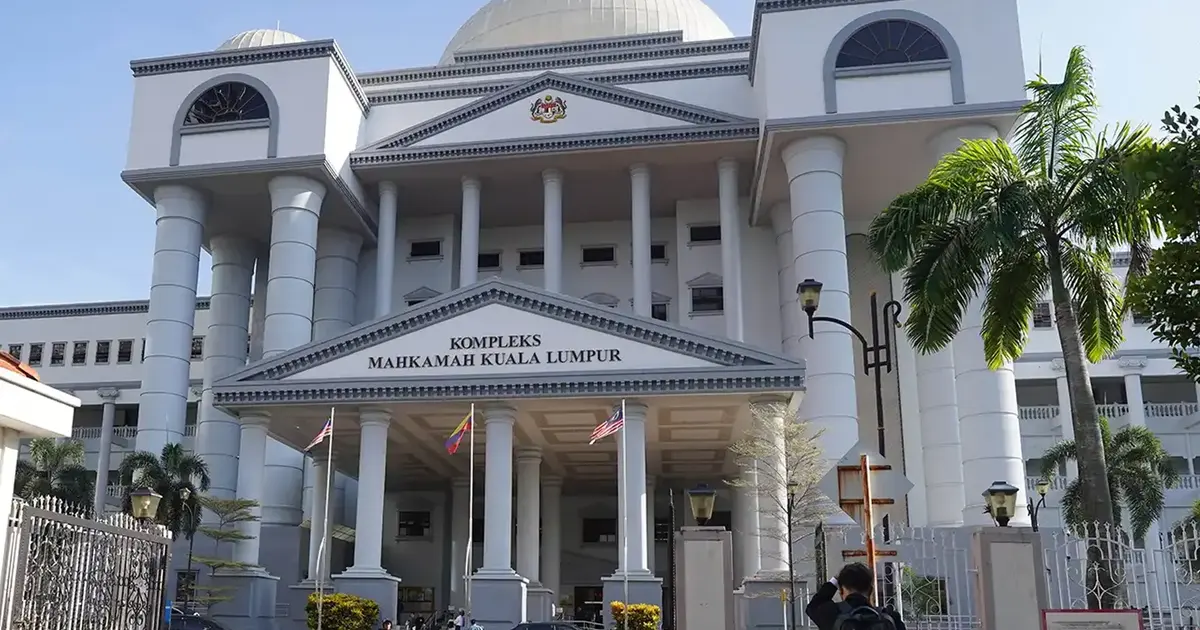
Lawyers for Liberty, a prominent Malaysian human rights organization, has exhausted its constitutional remedy following a High Court decision that the judiciary cannot force the government to assist in challenging a correction directive issued by Singapore's Ministry of Home Affairs. The ruling, reached after more than six years of litigation, represents a significant setback for the group's efforts to contest what it viewed as an unjust application of Singapore's Protection from Online Falsehoods and Manipulation Act.
The case centred on whether Malaysia's courts possessed the authority to intervene and compel the Malaysian government to take action on behalf of the rights group against Singapore's regulatory apparatus. The High Court's judgment effectively confined the dispute within Singapore's legal system, leaving Lawyers for Liberty with limited recourse options in Malaysian jurisdiction. This outcome underscores the complex jurisdictional boundaries between two neighbouring nations and the difficulties faced by non-governmental organizations when challenging regulatory actions across borders.
Lawyers for Liberty had argued that the Singapore directive warranted Malaysian government intervention, framing the matter as one affecting fundamental constitutional protections and international principles of free expression. The organization contended that the correction order represented an overreach of Singapore's regulatory authority and sought judicial review of the government's position regarding the matter. However, the court determined that such matters fell outside its remedial powers and that intervention by the executive branch required a different legal pathway.
The Protection from Online Falsehoods and Manipulation Act, commonly referred to as Pofma, has been subject to considerable scrutiny since its introduction in Singapore. The legislation empowers the government to issue correction directives requiring platforms and individuals to publish corrective notices alongside allegedly false statements. Critics across Southeast Asia, including human rights advocates in Malaysia, have argued that the law's broad provisions could suppress legitimate speech and dissent, effectively serving as a tool for authorities to control public discourse under the guise of combating misinformation.
For Malaysian observers and civil society organizations, the case highlights persistent tensions between regional governments over how to balance security concerns with protection of fundamental freedoms. Singapore maintains that Pofma is essential for preventing the spread of false information that could threaten social cohesion in a multi-ethnic society. Conversely, regional human rights groups contend that the legislation's vague definitions and expansive ministerial discretion create environments where political opposition and legitimate criticism become targets of government action.
The six-year duration of the litigation reflects the complexity of constitutional challenges involving cross-border regulatory matters. Throughout the proceedings, Lawyers for Liberty mounted various legal arguments attempting to establish Malaysian courts' competence to intervene. The organization presented submissions regarding international human rights norms, principles of natural justice, and the extraterritorial implications of Singapore's enforcement actions. The court's final determination, however, favoured a more restricted interpretation of judicial authority that respects national sovereignty and the separation of powers.
This setback does not necessarily conclude Lawyers for Liberty's response options entirely. The organization could pursue remedies within Singapore's own legal framework, potentially filing appeals or seeking judicial review through Singapore courts. Additionally, international advocacy channels and regional human rights mechanisms remain theoretically available, though their practical efficacy often proves limited when confronting sovereign governmental decisions on security and information governance matters.
The judgment carries implications extending beyond Lawyers for Liberty's specific circumstances. For Malaysian civil society organizations and cross-border advocacy networks, the ruling reinforces the principle that judicial intervention in neighbouring countries' regulatory actions faces significant jurisdictional obstacles. This reality shapes how regional human rights groups strategize their campaigns and allocates their resources, often requiring them to work through diplomatic channels, international bodies, or domestic courts in the jurisdiction where the regulatory action originated.
Singapore's approach to online regulation has increasingly influenced policy discussions throughout Southeast Asia as governments grapple with managing digital information environments. Malaysia itself has considered similar legislation addressing online falsehoods, and the region's treatment of these issues often draws comparative attention from authorities developing their own frameworks. The successful defence of Pofma in this case may embolden Singapore policymakers while simultaneously reinforcing arguments from critics who contend that the legislation requires substantive reform to include stronger safeguards protecting legitimate expression.
Looking forward, the case underscores the growing challenge facing civil society organizations attempting to hold governments accountable across jurisdictional lines. In an era where information flows seamlessly across borders but legal remedies remain territorially bound, advocacy groups face structural disadvantages when confronting state regulatory power. The outcome suggests that meaningful challenges to legislation like Pofma may require either political reform within Singapore or coordinated international pressure rather than reliance on foreign judicial intervention.
For Malaysian stakeholders invested in free expression principles, the High Court's decision represents a sobering reminder that constitutional protections operate within defined geographical and legal boundaries. While sympathetic to concerns about regulatory overreach, the court prioritized established principles of jurisdiction and separation of powers over activism aimed at influencing neighbouring governments' domestic legislation. This approach, though legally conservative, reflects broader judicial restraint in transnational human rights disputes.

