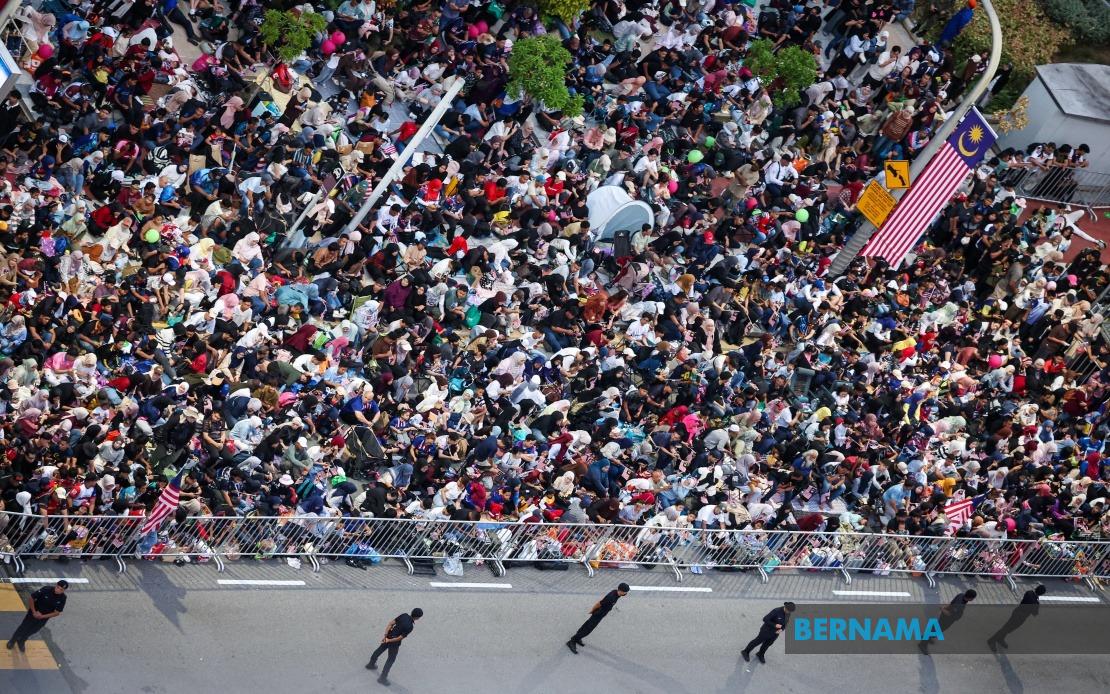
Anticipation reached fever pitch at Dataran Putrajaya as the nation prepared to mark its 69th National Day, with crowds beginning their vigil the evening before in a determined quest for the most coveted vantage points along the parade corridor. The enthusiasm reflected both genuine patriotic sentiment and the practical challenge of accommodating hundreds of thousands of spectators at the capital's most prestigious ceremonial venue, where every metre of viewing space becomes premium real estate on this significant national occasion.
The early arrivals painted a diverse picture of Malaysian society united by the desire to experience the celebration intimately. Mock Wei Qi, a 23-year-old freelance photographer, positioned himself strategically from 11pm the previous evening, recognising in the National Day spectacle an exceptional opportunity to refine his cinematography craft. His motivation transcended mere documentation—he sought to distil Malaysia's distinctive character into compelling visual narratives that could resonate with global audiences, viewing the parade as both patriotic duty and professional portfolio opportunity.
For established families like that of Ahmad Azri Onn, the overnight encampment transformed what might have been a tedious wait into an unexpectedly enjoyable family adventure. At 55 years old, accompanied by his wife and three children aged between 10 and 15, Onn had deliberately chosen to arrive by 5:30pm, calculating that securing comfortable seating merited the sacrifice of a night in the open. The mild weather—punctuated by light drizzle that actually provided welcome relief from August heat—facilitated his family's comfort, whilst the children experienced the excitement of a quasi-camping expedition with the National Day festivities as their reward.
Other visitors demonstrated how past disappointments motivated present action. The couple identifying themselves as As and Adib had learned from their previous year's miscalculation, when arriving too late had consigned them to distant peripheries of the celebration. Their decision to arrive by 5pm reflected pragmatic lesson-learning, demonstrating how individual experiences of public events accumulate into institutional memory within Malaysian communities, with successful strategies shared among families and social networks in the lead-up to such occasions.
The gathering phenomenon at Dataran Putrajaya underscores the enduring cultural significance of National Day within Malaysian national consciousness. Unlike many nations where Independence Day celebrations have become standardised television experiences, Malaysia's tradition of massive in-person gatherings at the capital suggests deeper civic investment in communal celebration. The willingness of families to sacrifice comfort and sleep for better viewing positions indicates that the parade experience remains irreplaceable—a direct connection to national pageantry that media transmission cannot replicate.
The 69th National Day celebration, thematically anchored by "Malaysia MADANI: Kesejahteraan Dinikmati" (Malaysia MADANI: Shared Prosperity Enjoyed), carried particular resonance in 2025. This messaging framework, emphasising collective wellbeing and shared national benefits, resonated with diverse demographic segments, suggesting that contemporary Malaysians understood the parade not merely as ceremonial spectacle but as civic statement about national values and social cohesion. The theme's emphasis on shared prosperity held implicit commentary during an era of economic uncertainty and social polarisation, positioning the National Day celebration as opportunity for national recalibration around common purposes.
The coordination required to manage such crowds reflects Malaysia's institutional capacity for large-scale public events. Dataran Putrajaya, purpose-built as the nation's administrative and ceremonial heart, proved adequate but evidently constrained—the need for overnight camping to secure good positions revealed how demand substantially exceeded naturally available premium space. This crowding phenomenon poses long-term questions about venue sufficiency and whether future National Day celebrations might require expanded hosting arrangements or rotating ceremonial locations to distribute spectator demand.
Photographers and content creators like Mock Wei Qi represented a demographic shift in how Malaysians engage with national events. The deliberate quest for "cinematic views" and "creative footage" suggested that traditional passive spectatorship had evolved into active media production, with attendees simultaneously consuming and creating National Day content. This transformation, enabled by ubiquitous smartphone cameras and social media platforms, means that official broadcasters now compete with millions of alternative visual narratives, each contributing to the collective experience and interpretation of national celebration.
The family-centred participation evident among overnight campers highlighted how National Day celebrations function as intergenerational transmission mechanisms. Parents shepherding children through the experience inculcate patriotic sensibilities whilst creating enduring family memories, embedding the celebration into personal biography. Ahmad Azri Onn's decision to prioritise his children's firsthand experience over convenience demonstrated how contemporary Malaysians, despite competing demands from work and digital entertainment, preserve commitment to embodied participation in national rituals.
Weather considerations played a minor but notable role in the overnight campout calculations. The light drizzle that descended during camping, rather than deterring participants, actually enhanced comfort by moderating temperatures that would otherwise have tested even enthusiastic revellers. This meteorological fortune reflected the broader contingencies of outdoor public gatherings, where weather can unexpectedly influence participation patterns—a factor that event organisers must continually factor into crowd management and contingency planning.
The overnight accumulation at Dataran Putrajaya represented the National Day parade as remaining genuinely consequential within Malaysian civic culture. Unlike many international national celebrations that have contracted to smaller ceremonial circles, Malaysia's Independence Day festivities continued to draw hundreds of thousands to physical locations, willing to endure discomfort for participatory experience. This persistence of large-scale, in-person commemoration in an era of digital alternatives suggests deeper attachment to tangible national ritual than contemporary social science frameworks sometimes acknowledge.

