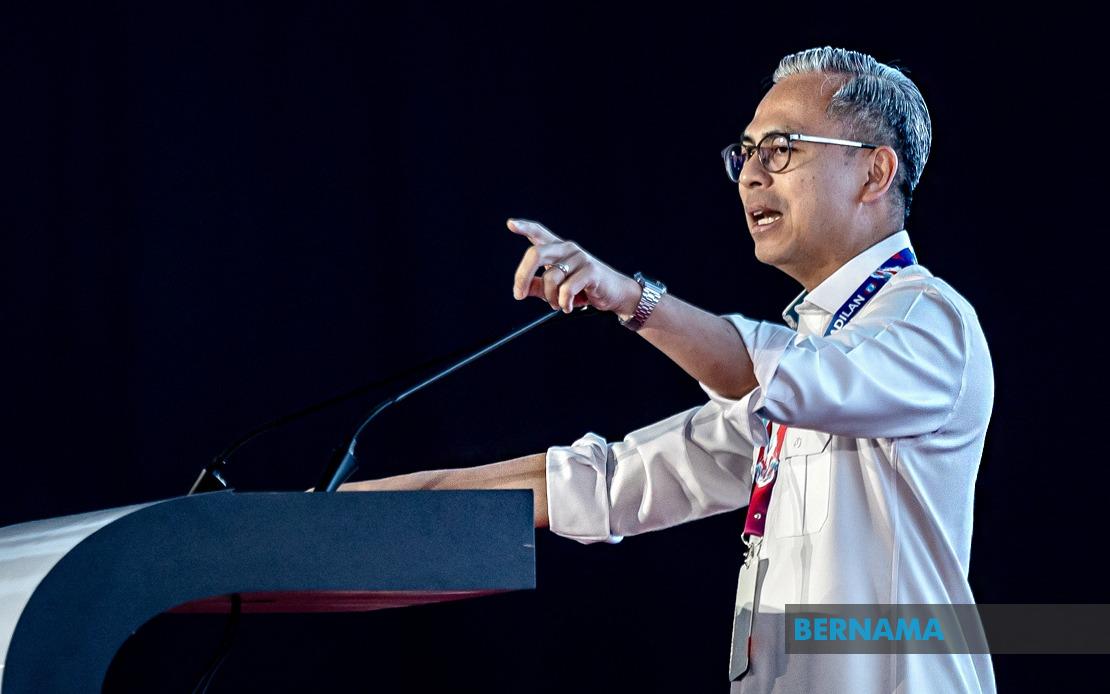
MELAKA — A tangible shift in national consciousness appears underway as Malaysians demonstrate heightened attention to the specific details of their national flag, according to Communications Minister Datuk Seri Fahmi Fadzil. Speaking in Melaka on August 16, he characterised this growing scrutiny as reflecting deeper respect for the Jalur Gemilang, particularly as the country approaches its annual National Month celebrations.
The minister's observations suggest an organic social movement where citizens have begun methodically examining the flag's configuration whenever it appears in public spaces. Fahmi noted that this vigilance has become increasingly commonplace, with individuals actively counting stripes and verifying that the final stripe displays the correct white colouration. What distinguishes this phenomenon is its collective nature — Malaysians are not merely inspecting flags individually but have begun policing standards communally, with citizens offering corrections and guidance to one another when discrepancies emerge.
This behavioural shift carries implications for how national symbols are treated and maintained across the country. Rather than relying solely on government directives or regulatory oversight, a grassroots accountability system has emerged where public consciousness itself acts as a guardian of protocol. Such organic enforcement mechanisms often prove more effective than top-down mandates, as they embed respect for national institutions into everyday social interaction and peer accountability networks.
Fahmi acknowledged awareness of an incident in Batu Buruk, Terengganu, involving an incomplete Jalur Gemilang, though he deferred substantive comment pending formal investigation by relevant authorities. The incident itself underscores why heightened public awareness matters — when flag protocols are breached, informed citizens can identify and report violations promptly, supporting official oversight mechanisms.
A particularly pragmatic development has emerged among vehicle owners navigating the tension between patriotic expression and practical vehicle maintenance. Rather than permanently affixing physical flags to their cars — which can damage paintwork and bodywork over time — many Malaysians have adopted magnetic Jalur Gemilang stickers as an alternative. Fahmi characterised this shift as decidedly positive, noting it strikes a balance between patriotic display and vehicle preservation, while offering owners convenient removability without long-term damage concerns.
This adaptive approach reflects how modern patriotism can accommodate practical considerations without diminishing symbolic commitment. The trend demonstrates that citizens can engage meaningfully with national symbols while applying pragmatic judgment — a nuanced form of nationalism that satisfies both emotional and practical dimensions of contemporary life.
Preparations for the forthcoming National Day and Malaysia Day celebrations are proceeding on schedule, with coordinating bodies managing multiple parallel workstreams. The Ministry of Education continues developing its human graphic performance component, while logistics infrastructure in Putrajaya advances smoothly. A comprehensive coordination meeting has been scheduled for the immediate aftermath of Fahmi's comments, with a separate virtual session dedicated to Malaysia Day arrangements set for August 24, ensuring no aspect of the nationwide observance remains uncoordinated.
Merdeka Eve will feature dual flagship celebrations in the capital. The Ministry of National Unity will orchestrate proceedings at Merdeka Stadium, featuring remarks from Prime Minister Datuk Seri Anwar Ibrahim as the centrepiece event. Simultaneously, Kuala Lumpur City Hall will host celebrations at Dataran Merdeka, providing geographically distributed opportunities for public participation across the capital.
Beyond his communications portfolio, Fahmi's visit to two stroke patients in Melaka — R. Sathia Devi, 70, at Pangsapuri Kiara, Batu Berendam and Abu Zarin Nordin, 64, at Kampung Tun Razak, Bukit Katil — underscored the MADANI government's emphasis on personalised welfare assessment. Rather than relying exclusively on administrative frameworks, the minister conducted direct evaluation of individual assistance requirements, encompassing nutritional support through milk provisions, coordination with the Social Welfare Department, and rehabilitation services.
Fahmi indicated that follow-up interventions would extend beyond conventional therapies to encompassing alternative treatments such as acupuncture, reflecting a holistic approach to patient recovery. This methodology represents a shift towards comprehensive care models where government representatives maintain direct accountability to vulnerable populations, moving beyond bureaucratic distance towards engaged governance.
The cumulative portrait emerging from Fahmi's statements reveals a government attentive to both symbolic nationalism and material welfare concerns. Whether through encouraging informed citizenship regarding national symbols or ensuring personalised attention to vulnerable citizens, the emphasis appears centred on deepening connection between state institutions and public consciousness — one where citizens themselves become invested guardians of national protocols while government maintains responsibility for ensuring systemic support reaches those requiring assistance.

