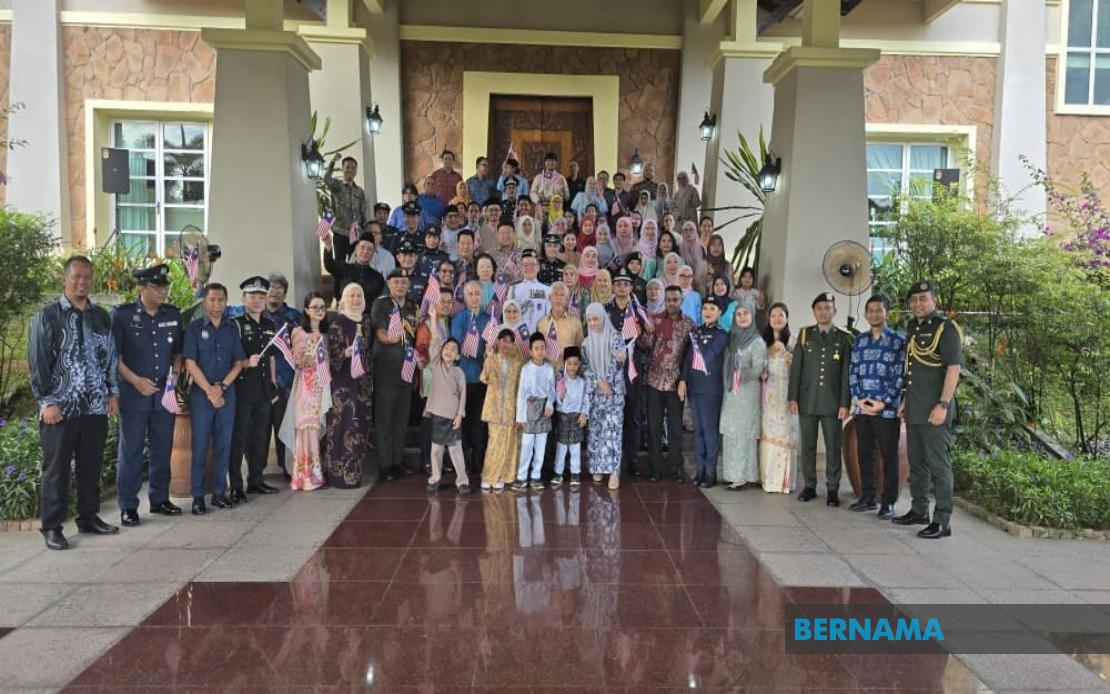
The Malaysian High Commissioner to Singapore, Datin Paduka Anizan Siti Hajjar Adnin, has underscored the pivotal diplomatic and social function discharged by Malaysians residing in the island nation, characterising them as informal yet powerful connectors between the two countries. Speaking during the Malaysian High Commission's 2026 National Day celebration held at Rumah Malaysia, she positioned the expatriate community not simply as residents abroad but as active participants in preserving and strengthening the multifaceted relationship that binds Malaysia and Singapore together.
The relationship between the two neighbours transcends conventional bilateral frameworks, encompassing deep historical entanglement, geographical proximity, and intricate economic interdependencies that have evolved since independence. Anizan emphasised that these foundations extend beyond formal diplomacy into the realm of family networks and cultural continuity, dimensions where ordinary Malaysians contribute significantly. The thousands of cross-border commuters who traverse the Causeway and Second Link daily represent both a practical manifestation of regional integration and a living symbol of the intimate connection between the two populations.
For Malaysians working and living in Singapore, the High Commissioner articulated a responsibility that extends beyond personal career advancement or financial success. She called upon the community to embody Malaysia's finest qualities—integrity, professionalism, courtesy, and mutual respect—in their daily interactions and professional conduct. This framing transforms individual behaviour into a form of soft diplomacy, whereby professional excellence and ethical conduct become implicit statements about Malaysian values and capabilities to the broader Singapore society. The logic is that positive personal examples accumulate into favourable perceptions of Malaysia as a nation.
The expatriate community's role carries particular significance given Singapore's status as a global financial and commercial hub where Malaysian professionals occupy positions across banking, technology, education, and government sectors. Their conduct and achievements in these spheres directly influence how Malaysia is perceived internationally. Anizan's emphasis on making "positive contributions to the communities and countries in which we live" reflects an understanding that diaspora communities function as informal repositories of national reputation.
An important dimension of her message targeted younger Malaysians, urging them to maintain connection with their cultural heritage and linguistic identity despite being immersed in Singapore's English-dominant environment. She specifically highlighted the Malay language as a unifying national symbol, implying concerns about generational erosion of linguistic and cultural competencies among those raised or educated primarily in Singapore. This reflects broader anxieties across Malaysia about language preservation in globalised contexts where English dominance increasingly shapes educational and professional trajectories.
The High Commissioner articulated a vision of Malaysia as a nation confident in its distinct identity while remaining open to international engagement and modernisation. This formulation attempts to reconcile two sometimes competing impulses: the desire for cultural preservation and national distinctiveness on one hand, and the necessity of participating in globalised economic and social systems on the other. For Malaysians abroad, this dual message suggests that engagement with the world need not entail abandonment of Malaysian identity.
The event itself, drawing more than 70 Malaysian High Commission staff members and their families, represented a modest but symbolic gathering. Such occasions serve multiple functions: they provide venues for the expatriate community to congregate, reaffirm collective identity, and receive messaging from official representatives about their role and responsibilities. For the High Commission, these events offer opportunities to maintain bonds with the diaspora and ensure alignment with official positions and values.
Malaysia-Singapore relations, while generally cordial, have historically navigated complex questions around shared resources, immigration, trade, and regional positioning. The presence of large Malaysian communities in Singapore adds a human dimension to these formal relationships, creating networks of friendship, kinship, and professional collaboration that operate beneath the level of official diplomacy. Anizan's remarks acknowledge and seek to enhance this grassroots dimension of international relations.
The emphasis on Malaysians as "unofficial ambassadors" reflects contemporary diplomatic practice, where nations increasingly recognise that formal state actors represent only one component of international relations. Expatriate communities, student populations, cultural associations, and professional networks constitute alternative channels through which national influence flows and international understanding develops. This decentralised approach to reputation management places responsibility for national image upon millions of individual citizens rather than concentrating it within foreign ministries.
For Malaysia, a nation of roughly 34 million people with significant diaspora populations across Southeast Asia and globally, the cultivation of expatriate engagement holds strategic importance. These communities maintain economic ties through remittances, investment, and trade connections, while simultaneously serving as conduits for Malaysian cultural influence and soft power. The High Commissioner's remarks thus articulate an official strategy of activating and channelling the inherent diplomatic potential of the Malaysian diaspora in Singapore.

