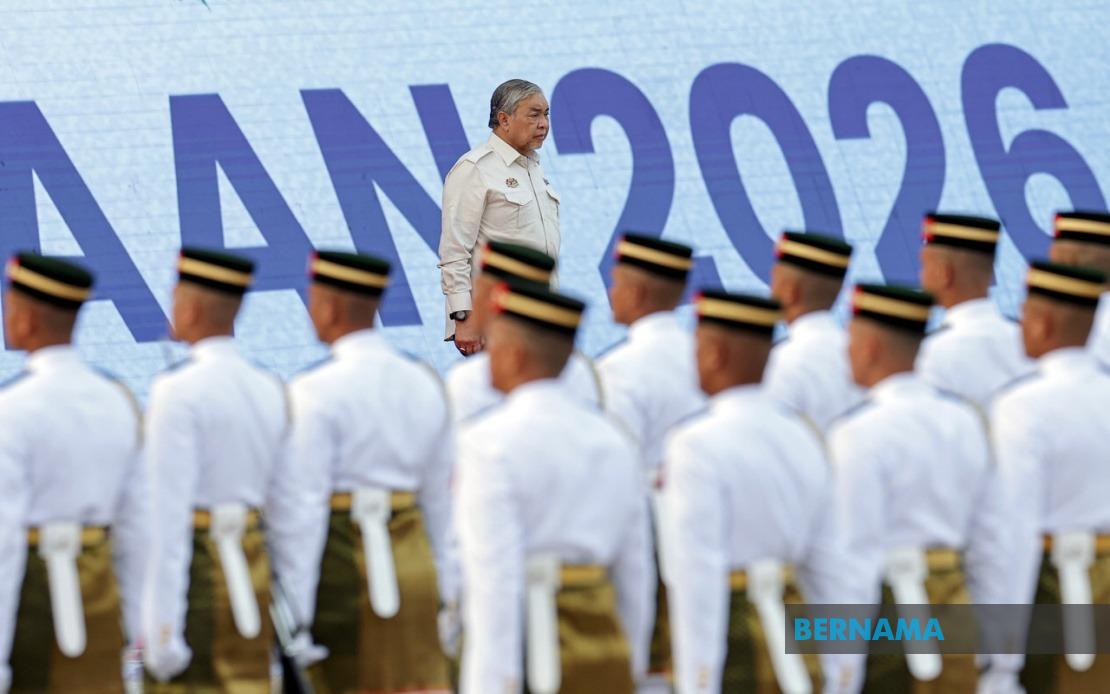
Deputy Prime Minister Datuk Seri Dr Ahmad Zahid Hamidi has characterised this year's National Day celebration as a watershed moment in Malaysia's patriotic expression, describing the Dataran Putrajaya event as surpassing all previous iterations. Speaking to media following the August 31 festivities, he attributed the heightened quality and scale of the gathering to a demonstrable surge in national pride among Malaysians, marking what observers see as a significant cultural moment for the country.
The 2026 National Day observance, held at Dataran Putrajaya under the theme "Malaysia MADANI: Kesejahteraan Dinikmati", commanded unprecedented attendance figures that underscored the public's enthusiasm for national commemoration. More than 100,000 citizens congregated at the venue from dawn, creating one of the largest gatherings for Malaysia's premier national occasion in recent memory. This turnout demonstrates not merely procedural participation but an active engagement with Malaysia's foundational narrative and values.
The formal parade component of the celebration showcased the depth of institutional coordination required for such a spectacle. A total of 10,819 participants representing 76 distinct contingents marched through the streets, accompanied by 22 marching bands that provided musical accompaniment throughout the procession. This composition reflects the extraordinary breadth of Malaysian society—encompassing government agencies, civil defence units, youth organisations, and community groups—all unified in public ceremonial observance.
The presence of Malaysia's constitutional leadership lent considerable gravitas to the proceedings. His Majesty Sultan Ibrahim and Her Majesty Raja Zarith Sofiah, the reigning King and Queen, graced the occasion with their attendance, lending the event the full ceremonial weight of the monarchy. Prime Minister Datuk Seri Anwar Ibrahim and the Cabinet membership's participation further underscored the significance accorded to the celebration across all echelons of national leadership.
Ahmad Zahid's assessment of rising patriotism carries particular resonance in Malaysia's contemporary political context, where national cohesion remains an ongoing national priority. The scale and enthusiasm of this year's gathering, by his account, suggests that despite the country's notorious political divisions and competing particularistic interests, Malaysians retain significant capacity for collective national identification and celebration. This finding, if sustained, could indicate deeper currents of social unity beneath surface-level partisan divisions.
The Deputy Prime Minister's direct interaction with assembled crowds at Dataran Putrajaya provided him firsthand exposure to public sentiment and enthusiasm. Rather than confining himself to ceremonial observations from official platforms, he deliberately spent time amongst ordinary citizens who had made the effort to attend, a gesture that both reflected and reinforced the populist dimensions of the celebration. Such engagement, however carefully choreographed, serves to validate public participation and foster reciprocal recognition between leadership and citizenry.
For Malaysian observers and international commentators, the reported scale and quality of this year's National Day celebration merits examination within broader Southeast Asian contexts. Regional neighbours such as Singapore and Indonesia have long leveraged National Day observances as opportunities for strengthening national identity and social cohesion, particularly among younger generations. Malaysia's apparent success in mobilising comparable public participation and patriotic expression suggests that national leadership messaging around collective identity and shared prosperity continues to resonate with significant portions of the population.
The thematic emphasis on "Malaysia MADANI: Kesejahteraan Dinikmati"—prosperity enjoyed—embedded within the celebration's framework speaks to deliberate messaging around inclusive growth and shared benefits from national development. By framing the National Day observance within this prosperity narrative, organisers positioned patriotic celebration as inextricably linked to tangible improvements in citizens' lives. This rhetorical linking of nationalism to material wellbeing represents a sophisticated approach to fostering sustained public commitment to collective national endeavours.
The reported enthusiasm and scale of this year's celebration also carries implications for Malaysian civil society and generational engagement with national symbols and narratives. Younger Malaysians, often characterised as more cynical toward nationalism or more oriented toward particularistic rather than national concerns, demonstrated through their participation that national occasions retain cultural resonance and appeal. Whether this represents a durable shift in patriotic orientation or a temporary mobilisation remains an open question requiring sustained observation across successive years.
The Deputy Prime Minister's framing of the 2026 celebration as exceptional and improved invites reflection on the trajectory of Malaysia's national identity formation in the post-pandemic era. Public gatherings on this scale require not merely governmental organisation but genuine voluntary participation and enthusiasm. The convergence of these elements at Dataran Putrajaya, if Ahmad Zahid's assessment proves accurate, suggests that Malaysians may be entering a period of renewed investment in national unity and collective identity, a development with potentially significant implications for the country's political and social trajectory in coming years.

