The launch of Malaysia's National Month and Jalur Gemilang 2026 observance will take place this Sunday in Ipoh with a notably restrained approach, signalling a departure from the large-scale public gatherings that have characterised previous years' festivities. According to Muhammad Najmi Mustapha, director of the Information Department's Communications and Community Development Division, organisers have consciously shifted strategy to reflect contemporary global realities, particularly economic constraints and regional security concerns affecting the wider Middle East.
The ceremony at the Ministry of Health Training Institute Sultan Azlan Shah in Tanjung Rambutan will commence at 10 am under the patronage of Prime Minister Datuk Seri Anwar Ibrahim. Rather than outdoor spectacles that drew crowds in Muar, Johor in 2025 or Cyberjaya in 2024, this year's inaugural event will unfold within an indoor venue, a practical adjustment that acknowledges energy supply pressures confronting nations across the region. The relocation from expansive public spaces to controlled indoor settings reflects broader government thinking about managing resources while preserving the celebratory atmosphere that citizens expect during the August-September period.
The strategic use of broadcasting technology will amplify the event's reach beyond the physical venue. Live transmission through Radio Televisyen Malaysia and the Malaysian National News Agency will ensure nationwide coverage, whilst simultaneous streaming across multiple social media platforms—specifically the Facebook Live channels of Merdeka360, the Ministry of Communications, and the Information Department—extends accessibility to digitally-connected Malaysians. This multimedia approach acknowledges the evolving media consumption habits of the population and attempts to foster inclusive participation regardless of geographic location.
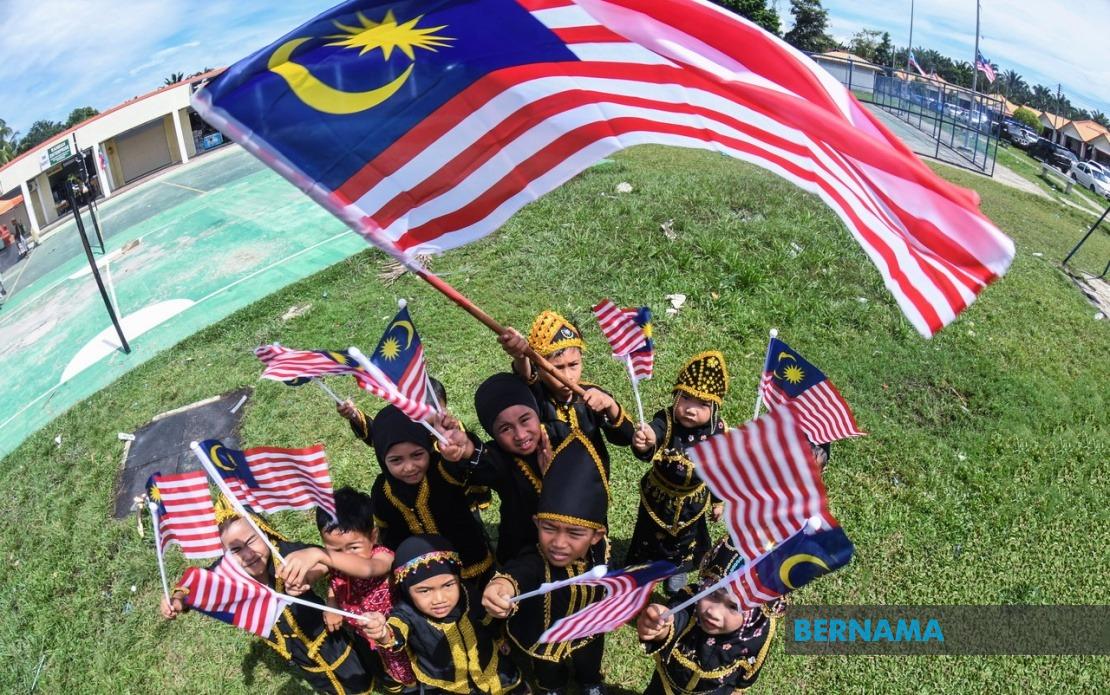
Central to this year's patriotic mobilisation is the continuation and expansion of the Jalur Gemilang campaign, an initiative that has evolved considerably since its introduction several years ago. The "1 Rumah 1 Jalur Gemilang" programme encourages individual households to display Malaysia's national flag, transforming residential areas into visible expressions of collective identity. This grassroots approach democratises patriotism by positioning ordinary citizens as active participants rather than passive spectators in national celebrations.
The campaign framework has substantially broadened to encompass two newly-integrated clusters alongside its established seven. Beyond the traditional domains of education, higher education, health, security, community, sports, industry, and government agencies, the expanded scope now incorporates houses of worship and sporting organisations. This inclusion recognises the vital role played by religious institutions and athletic bodies in shaping social cohesion and national identity, particularly within Malaysia's diverse, multi-faith society where such centres command significant community trust and engagement.
Digital activism forms another pillar of the 2026 strategy. Officials are encouraging Malaysians to leverage social media platforms by adopting the Jalur Gemilang as profile pictures and generating user-created content aligned with National Month messaging. The designated hashtags—#HKHM2026, #MalaysiaMADANI, #KesejahteraanDinikmati, and #Merdeka360—create a cohesive digital ecosystem through which scattered individual acts of expression coalesce into visible collective momentum. This approach capitalises on organic social media virality to amplify state messaging without requiring substantial financial expenditure, making it particularly suitable during periods of fiscal restraint.
The overarching theme for the 2026 celebrations, "Malaysia MADANI: Kesejahteraan Dinikmati" (Malaysia MADANI: Shared Prosperity Enjoyed), anchors the commemorations within the government's broader governance philosophy. Communications Minister Datuk Seri Fahmi Fadzil previously unveiled this thematic framework, positioning National Day observances as opportunities to reinforce policy narratives around inclusive development and equitable resource distribution. The Malaysia MADANI branding, which will persist as the official visual identity through 2027, represents continuity in government messaging and allows sustained reinforcement of core ideological concepts across successive annual cycles.
August 31st National Day celebrations will themselves reflect the same philosophy of modest yet vibrant observance. The ceremony at Dataran Putrajaya, Malaysia's administrative nerve centre, will proceed at a deliberately temperate scale—avoiding the prohibitively expensive pageantry sometimes associated with previous iterations while maintaining sufficient ceremonial dignity and public spectacle to satisfy cultural expectations. This calibration addresses the tension between maintaining national pride and projecting fiscal responsibility, a balancing act increasingly important as regional economies navigate inflation and resource constraints.
For Malaysian observers, this strategic recalibration offers important lessons about adaptive governance during periods of economic uncertainty. Rather than abandoning patriotic observances entirely, authorities have restructured them to achieve similar psychological and social objectives through alternative mechanisms—particularly those leveraging digital connectivity and distributed, community-based participation rather than centralised, capital-intensive events. This approach potentially proves more resilient to future shocks, whether energy-related, financial, or security-oriented, whilst simultaneously democratising national celebration by enabling broader citizen participation beyond those geographically proximate to major venues.
The expanded integration of religious institutions and sporting bodies within the campaign structure also reflects evolving understandings of how national identity operates within plural societies. By explicitly incorporating these traditionally influential social institutions, policymakers acknowledge that patriotic sentiment often flows through established community networks and trusted local leaders rather than solely through formal government channels. This recognition has implications extending beyond flag campaigns, potentially influencing how future civic mobilisation efforts are structured across various policy domains.

