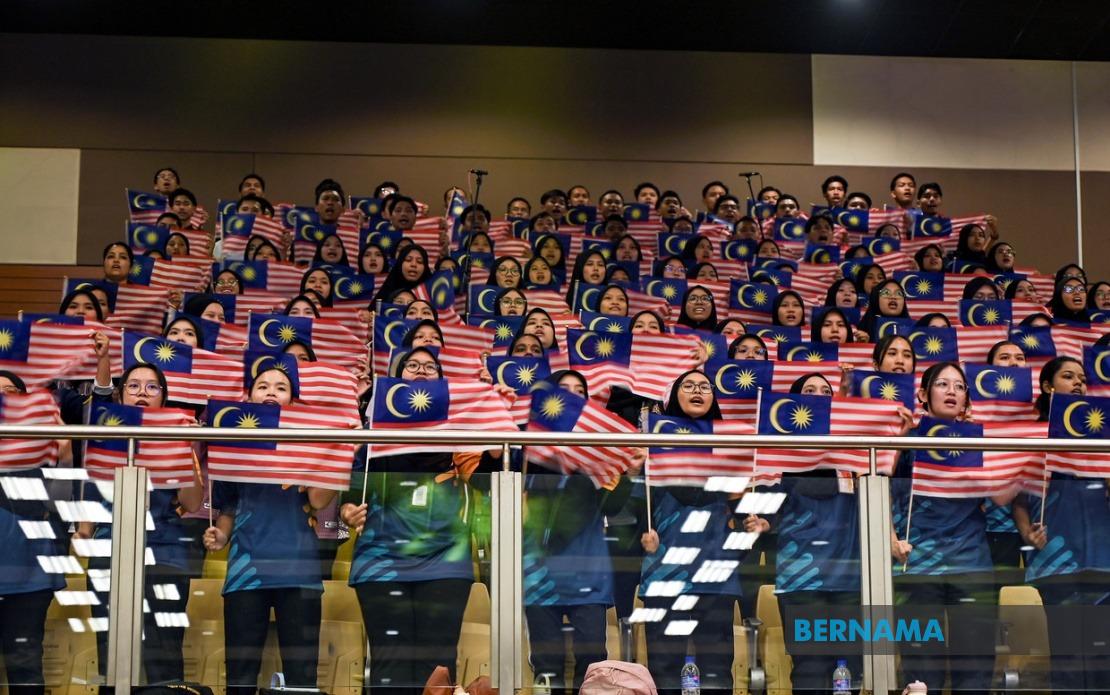
Organisers of the National Month and Kibar Jalur Gemilang 2026 launch ceremony have completed four-fifths of their preparations, with final rehearsals underway ahead of Sunday's inauguration event. The ceremony at Dewan Sri Perdana within the Sultan Azlan Shah Health Ministry Training Institute (ILKKM SAS) in Ipoh will mark the beginning of Malaysia's coordinated National Day and Malaysia Day celebrations scheduled for later in the year. Officials have committed to delivering an event that balances fiscal restraint with meaningful civic engagement, ensuring the occasion resonates with Malaysians across all communities without excessive expenditure.
Faizal Adanan, deputy director of the Information Department's (JAPEN) Communication Services and Community Development Division, briefed journalists on the meticulous groundwork that has enabled the ceremony to stay on schedule. Despite physical constraints—the venue accommodates only 3,000 attendees—organisers anticipate that diversity in participation across different ethnic groups and religious communities will amplify the patriotic message. This approach reflects a deliberate strategy to transform an intimate gathering into a unifying national moment, leveraging the symbolic power of representation over sheer scale.
Prime Minister Datuk Seri Anwar Ibrahim will formally inaugurate the launch, lending the occasion high-level political endorsement and national prominence. His participation underscores the government's commitment to renewing civic pride at a time when Malaysia confronts various domestic and regional challenges. The ceremonial role carries particular significance given the prime minister's previous emphasis on strengthening national unity and inclusive governance, themes that align with the patriotic objectives of the month-long commemoration.
Sunday's programme features several headline components designed to engage multiple constituencies. A Merdeka Patriotic Run expected to attract roughly 2,000 runners will be launched by Datuk Abdul Halim Hamzah, the Communications Ministry's secretary-general, establishing a physical manifestation of collective participation. The race serves a dual purpose: fostering community fitness and wellness while channelling individual participation into a shared patriotic gesture. Such initiatives have gained traction in recent years as Malaysian institutions seek fresh avenues for youth and public engagement beyond traditional ceremony.
A notable highlight involves a patriotic choir performance by ILKKM SAS trainees, a group that previously garnered viral attention on social media platforms. Their participation bridges generational and digital divides, appealing to younger Malaysians who consume content through contemporary channels. This conscious use of social media-savvy performers signals recognition that national narratives increasingly take shape through organic online resonance rather than official broadcasting alone, requiring institutions to adapt their communication strategies accordingly.
The formal Jalur Gemilang flag-raising ceremony by security forces marks a resumption of tradition following a two-year break, suggesting that previous operational or institutional circumstances had necessitated suspension. The restoration of this visual ritual carries symbolic weight, as flag-raising ceremonies remain potent mechanisms for affirming national identity and institutional pride. The presence of uniformed personnel adds ceremonial gravitas while reinforcing the role of security and state institutions in national observance.
Additional programme elements include the launch of an original HKHM2026 theme song performed by a local artist, ensuring cultural production remains rooted in Malaysian talent, and exhibitions mounted by participating government agencies. These components collectively construct a comprehensive narrative arc, moving from symbolic flag ceremonies through artistic expression to practical displays of governmental involvement in civic life. Such layering creates multiple entry points through which different audience segments can find personal resonance within the broader celebration.
Organisers have navigated the tension between accessibility and pandemic-era caution by closing physical attendance while maximising digital reach. Live broadcast capabilities spanning Radio Televisyen Malaysia (RTM), Bernama, the Communications Ministry, JAPEN, and the dedicated Merdeka360 Facebook Live platform will commence at 10 am on Sunday. This distributed multi-platform approach recognises that Malaysians increasingly consume major events through various simultaneous channels rather than through a single primary outlet, with social media providing particularly important access for younger demographics.
The decision to stream the ceremony broadly represents tacit acknowledgment that national participation transcends physical presence in the digital age. Malaysians unable to travel to Ipoh can engage meaningfully through real-time online participation, comment sections, and subsequent sharing of highlights. This democratisation of access potentially expands the circle of those who feel included in national commemoration, though it simultaneously fragments the singular communal experience that in-person gatherings traditionally create. The tension between intimacy and inclusion shapes much contemporary civic communication.
Communications Minister Datuk Seri Fahmi Fadzil previously announced the thematic framework guiding the entire 2026 commemoration, though specific theme details were not fully articulated in available reporting. This thematic scaffolding presumably reflects policy priorities and national aspirations that the government seeks to emphasise during the extended celebration period. The delayed revelation of the complete theme may suggest ongoing refinement or coordination across multiple stakeholder institutions.
Beyond Sunday's launch, the broader National Day celebration will unfold at Dataran Putrajaya on August 31, maintaining the modest yet vibrant character outlined for the inaugural ceremony. This distributed approach—with launching festivities in Ipoh followed by the major celebration in the federal capital—creates multiple nodes of national observance across geographical space. Ipoh's designation as launch venue reflects regional representation considerations, ensuring that commemoration activity extends beyond the capital city and acknowledges the participation of Malaysia's diverse states and territories.
The preparations reaching 80 per cent completion demonstrates institutional capacity to deliver substantial civic events within reasonable timeframes while maintaining quality standards. However, the tight scheduling evident in finalised rehearsals occurring immediately before the event suggests limited buffer for addressing emergent complications. This intensity characterises much contemporary event management, where efficiency gains from streamlined planning coexist with reduced flexibility for accommodation of unforeseen circumstances.

