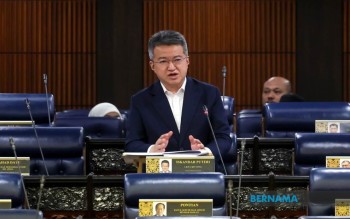
Malaysia's Deputy Finance Minister Liew Chin Tong has signalled stability in the government's fiscal planning for the 2027 budget cycle, asserting that current economic projections do not require revision based on first-half 2026 performance figures. Speaking in parliament on July 15, Liew acknowledged the mounting financial pressures facing the treasury from geopolitical instability in West Asia, yet maintained confidence that the framework underpinning the coming year's spending plans remains sound and resilient against near-term shocks.
The deputy minister's cautious optimism hinges substantially on a counterintuitive offsetting dynamic within Malaysia's energy markets. Rising global crude oil prices—a direct consequence of regional tensions—have simultaneously inflated the government's fuel subsidy bill by an estimated RM40 billion while bolstering petroleum-related government revenues. For every US$1 increase per barrel in world crude prices, Liew explained, the treasury gains approximately RM300 million in oil-linked income. This mechanism, though imperfect as a full hedge, provides meaningful relief to a fiscal position otherwise pressured by the mounting cost of keeping domestic fuel prices artificially low, a politically sensitive matter in Southeast Asia where energy costs directly affect living standards and transport expenses across the supply chain.
The revenue windfall excludes dividends from Petronas, Malaysia's national oil company, which could provide additional breathing room. By layering petroleum revenues against subsidy expenditures, the government hopes to mitigate the net fiscal drag without resorting to controversial new taxation or deeper spending cuts that might hamper economic growth during an already uncertain global environment. Nonetheless, Liew signalled that the treasury intends to conduct thorough monitoring of economic indicators right up to the October tabling of Budget 2027, implying that should conditions deteriorate significantly, a reassessment remains possible.
The government's commitment to sustaining fiscal consolidation reflects a broader strategy spanning several fronts. Targeted subsidy reform—narrowing state support to those most vulnerable rather than blanket price controls—remains a cornerstone of this approach. Equally important are measures to restructure spending priorities, redirecting funds from lower-impact areas toward infrastructure and human capital investments that boost long-term productivity. Simultaneously, the administration continues to press for improved spending efficiency across ministries and agencies, a perennial challenge in large bureaucracies but essential for fiscal discipline without service degradation.
Revenue enhancement through stricter tax compliance and collection drives represents another pillar. Malaysia, like many developing economies, faces persistent challenges in tax administration and voluntary compliance, with informal sector activity and complex corporate structures creating opportunities for avoidance. Enhanced enforcement and technological improvements in revenue tracking could unlock substantial additional income without formally raising tax rates, a politically expedient if administratively demanding approach. Liew's emphasis on these tools suggests the government believes it can manage the fiscal envelope without resorting to new or increased taxes—a critical consideration for business confidence and household purchasing power in a moderately growing economy.
The backdrop to these fiscal machinations is Malaysia's medium-term consolidation trajectory, a multi-year programme aimed at gradually reducing the fiscal deficit as a percentage of gross domestic product. This goal, while economically prudent and necessary to maintain investor confidence and debt sustainability, operates under genuine constraint. The geopolitical volatility emanating from West Asia introduces tangible uncertainty into energy markets and supply chains that feed Malaysian manufacturing and trade. The National Economic Action Council's crisis management task force, Liew noted, is conducting weekly engagement sessions to monitor developments and safeguard energy supplies and basic goods availability—an implicit acknowledgement that stability cannot be assumed and requires active management.
For Malaysian readers and businesses, the implications are multifaceted. The stability of fiscal projections suggests that broad policy direction will not shift abruptly in coming months, offering some predictability for investment and planning. However, the continued vulnerability to oil price fluctuations underscores Malaysia's lingering dependence on hydrocarbon markets, despite decades of economic diversification efforts. Manufacturing, tourism, and services sectors remain exposed to energy cost volatility passed through supply chains and consumer spending patterns. The government's hedging strategy through revenue offsets is pragmatic but imperfect; a sustained oil price spike or geopolitical escalation could still force difficult choices.
The emphasis on monitoring rather than immediate reform also reflects political economy realities. Fuel subsidy reform remains contentious in Malaysia, with memories of past civil unrest over price increases still fresh in policymakers' minds. By maintaining stability in budget projections and relying on revenue growth and efficiency gains rather than subsidy cuts or tax hikes, the government seeks to navigate these treacherous political waters while preserving fiscal credibility. This balancing act is typical of developing Asian economies managing resource dependence, inflation pressures, and social expectations simultaneously.
Regionally, Malaysia's approach offers lessons and contrasts with peers. Indonesia and the Philippines have pursued more aggressive subsidy reform, absorbing short-term political costs for longer-term fiscal sustainability. Vietnam maintains tighter fiscal discipline through state revenue management structures. Thailand's fiscal position, by contrast, faces mounting pressures from aging demographics and military spending. Malaysia's middle path—incremental consolidation coupled with revenue enhancement and efficiency gains rather than abrupt policy ruptures—reflects a government prioritizing stability and social cohesion alongside economic rectitude, a calculus that will shape regional fiscal dynamics and investment flows across Southeast Asia.
Ultimately, Liew's parliamentary assurance that Budget 2027 projections remain valid signals neither complacency nor acute crisis, but rather a government confident in its capacity to navigate medium-term fiscal challenges through disciplined execution of existing policy frameworks. The critical test will arrive in October when the full budget is unveiled, revealing whether economic conditions have shifted enough to necessitate the recalibration that ministers have thus far deemed unnecessary.

