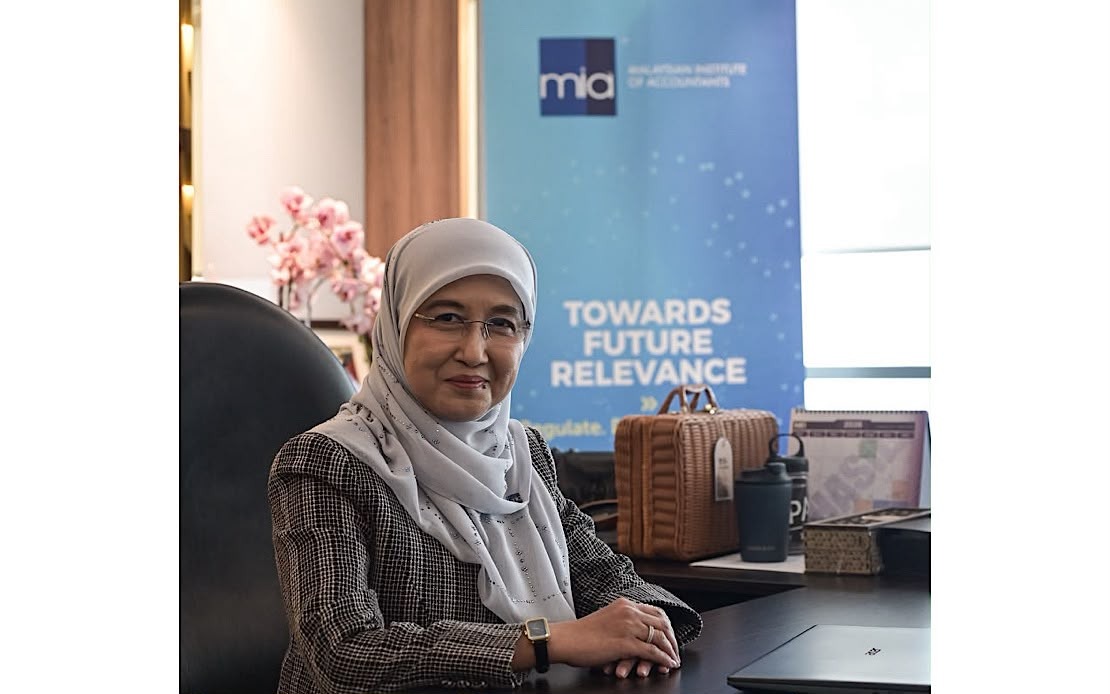
Malaysia's accounting sector stands at a critical juncture, requiring a fundamental shift toward practices that combine cutting-edge innovation with unwavering commitment to integrity and public interest. Speaking at a recent forum, leadership of the Malaysian Institute of Accountants stressed that the profession's future hinges on building stakeholder confidence while simultaneously embracing the technological disruption reshaping global financial services. This dual imperative reflects broader economic pressures facing Southeast Asia's largest economy, where accountants must position themselves not merely as compliance specialists but as strategic advisers capable of navigating unprecedented complexity.
Datuk Saniza Said, who made history as MIA's first woman president when elected in December 2025, articulated a vision where accountancy transcends its traditional bookkeeping associations to encompass sophisticated business advisory, strategic planning and risk management functions. Her emphasis on trust, transparency and ethical foundations directly addresses concerns about corporate malfeasance and financial manipulation that have eroded public confidence in business institutions across Asia in recent years. The timing proves significant given Malaysia's aspirations to strengthen its position as a regional financial hub, where reputational integrity carries substantial economic weight in attracting foreign investment and maintaining capital market stability.
The integration of artificial intelligence and automation into accounting workflows represents perhaps the most disruptive force confronting the profession. Rather than viewing technology as an existential threat, MIA leadership advocates treating it as a tool that liberates accountants from monotonous data entry and reconciliation tasks, freeing them to concentrate on analysis, interpretation and strategic counsel. Shanmugam, MIA's chief executive, characterised this transition as fundamentally positive for the profession's evolution, arguing that younger talent will find greater satisfaction in analytical and advisory roles than in repetitive clerical functions. This perspective aligns with workforce trends evident across developed economies, where professional services increasingly reward creative problem-solving over procedural compliance.
Critically, MIA's position rejects the deterministic narrative that automation will render accountants obsolete. Instead, leadership maintains that human professional judgement remains irreplaceable in contexts requiring contextual understanding, ethical reasoning and accountability. Where artificial intelligence might process thousands of transactions with perfect accuracy, it cannot exercise the nuanced professional scepticism necessary when scrutinising complex financial arrangements or identifying subtle indicators of misconduct. This distinction proves particularly relevant for Malaysia, where regulators and international stakeholders increasingly demand rigorous assurance over financial disclosures from listed companies and public institutions.
The profession's transformation occurs against a backdrop of intensifying global sustainability expectations. MIA's recent launch of a Sustainability Blueprint and accompanying Roadmap signals recognition that modern accountants must develop competencies encompassing environmental, social and governance metrics alongside traditional financial reporting. Malaysian companies competing for international capital and seeking to attract socially conscious investors increasingly require accountants capable of navigating complex sustainability frameworks and regulatory requirements. This evolution expands the profession's relevance beyond Malaysia's borders, positioning local accountants to advise multinational corporations and regional enterprises navigating Asia's diverse regulatory landscapes.
Data analytics and predictive analytics capabilities now rank among the essential technical skills MIA emphasises for members. The ability to identify emerging trends, anticipate market disruptions and quantify future risks transforms accountants from historical record-keepers into forward-looking strategists whose insights inform board-level decisions. Malaysian businesses operating in volatile regional markets and exposed to supply chain disruptions particularly value this foresight capability. When management teams ask accountants what challenges lie ahead and what strategic adjustments they should consider, accounting professionals equipped with sophisticated analytical skills command substantially greater influence and relevance than those confined to traditional financial statement preparation.
MIA's commitment to continuous professional development reflects this strategic repositioning. With approximately 42,000 members growing at 1.5 to 2.0 percent annually, the institute conducts roughly 1,000 continuing professional development programmes each year alongside conferences and digital learning initiatives. This substantial investment in member upskilling acknowledges that technological literacy and business acumen cannot simply be assumed among practising accountants. The Malaysian profession must systematically develop its talent pool to meet international standards while remaining attuned to Southeast Asian business contexts and regulatory environments that differ meaningfully from Anglo-American paradigms.
The reputational stakes for Malaysia's accounting profession carry macroeconomic significance. International investors and credit rating agencies rely substantially on independent assurance from accountants when evaluating financial transparency and governance quality at Malaysian companies and financial institutions. Any erosion of confidence in the integrity or competence of Malaysia's accountancy profession could carry tangible consequences for the country's cost of capital and attractiveness as an investment destination. Conversely, strengthening the profession's capacity to deliver rigorous, technologically sophisticated assurance and advisory services enhances Malaysia's competitive positioning relative to other regional financial centres competing for multinational headquarters, fund management operations and investment banking activities.
Saniza's elevation to the MIA presidency itself symbolises the profession's broader modernisation. Her emphasis on ethical principles and public interest protection represents a conscious recalibration of professional identity away from narrow client service toward stakeholder capitalism principles increasingly expected by global business communities. For Malaysian accountants, this framing positions the profession as custodian of public trust rather than merely as service providers to paying clients. This philosophical shift carries particular importance in Asian contexts where relationship-based business practices sometimes create tension with Western transparency norms that international capital markets increasingly enforce.
The challenge facing MIA members involves mastering an extensive skill set spanning technology, sustainability, data science, strategic thinking and enhanced ethical reasoning—all while maintaining the analytical rigour and professional scepticism that define accounting's core identity. Neither pure technologists nor purely traditional practitioners will thrive in this emerging landscape. Instead, accountants who combine technological fluency with humanistic understanding of business context, stakeholder interests and ethical complexity will command the highest value in Malaysian and regional markets. For a profession historically perceived as backward-looking and compliance-focused, this transformation represents both existential imperative and unprecedented opportunity to redefine its societal contribution and economic value.

