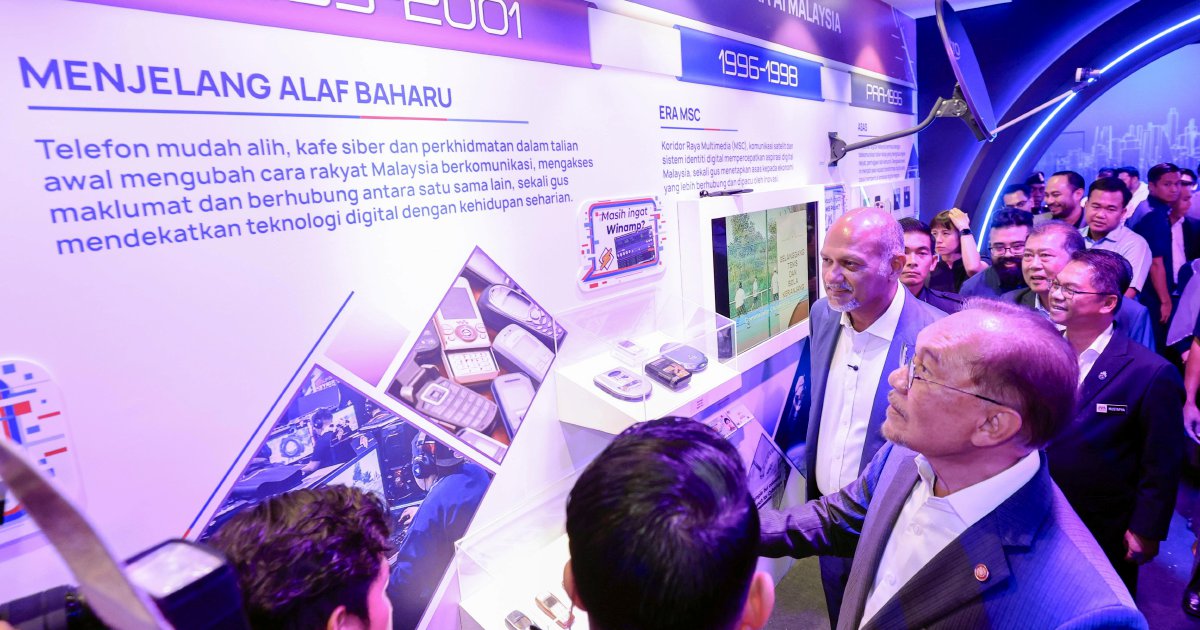
Prime Minister Datuk Seri Anwar Ibrahim has sounded a cautionary note about Malaysia's accelerating transformation into an artificial intelligence powerhouse, warning that the nation risks deepening inequality if the benefits of AI advancement concentrate among the wealthy and technologically connected. Speaking in Cyberjaya, the country's digital hub, Anwar framed the challenge as one of the defining policy questions facing Malaysia as it pursues ambitious AI adoption targets across government, industry, and academia.
The Prime Minister's remarks reflect growing international concerns about the distributional consequences of rapid AI deployment. While governments and corporations worldwide race to harness AI's productivity potential, economists and development experts increasingly warn that without deliberate policy interventions, the technology could sharpen existing fault lines between affluent urban populations with access to digital infrastructure and skills, and rural or economically marginalised communities left outside the digital economy.
For Malaysia specifically, the stakes are considerable. The country has positioned itself as a regional technology leader and is investing substantially in AI research, talent development, and tech-enabled government services. Anwar's emphasis on equitable access signals that Malaysian policymakers are contemplating the social implications of these investments, not merely their economic returns. This perspective distinguishes Malaysia's approach from purely market-driven models elsewhere.
The concern about unequal access to AI technology carries particular relevance in the Malaysian context. The country experiences persistent regional disparities, with Peninsular Malaysia's developed areas contrasting sharply with less-developed zones in Sabah, Sarawak, and rural communities. Digital infrastructure gaps already limit internet connectivity and technology adoption in these regions. If AI-driven economic opportunities cluster in urban centres, rural populations could experience relative marginalisation despite national prosperity gains.
Anwar's warning also extends to the labour market implications of AI proliferation. As artificial intelligence automates routine tasks across sectors, workers without digital literacy or the ability to adapt to AI-integrated workflows face displacement risks. In Malaysia's context, this threatens low-skill workers and those in traditional industries, potentially exacerbating unemployment and inequality unless complementary education and reskilling programmes are implemented systematically.
Educational access represents another critical dimension of the equity challenge. The widespread deployment of AI across Malaysian schools and universities could widen achievement gaps if some students enjoy access to cutting-edge technology and AI-literate teaching while others rely on outdated resources. Similarly, businesses in remote areas may struggle to adopt AI tools due to infrastructure limitations or capital constraints, reducing their competitiveness relative to tech-enabled firms in major cities.
The Prime Minister's framing of AI development as a potential inequality driver reflects broader concerns about technology's distributional effects. Unlike previous waves of industrial advancement, AI's scalability means benefits can concentrate rapidly and intensely. Without intentional redistribution mechanisms—such as targeted digital infrastructure investment in underserved regions, subsidised AI training programmes for disadvantaged workers, or policies promoting AI startups outside major metropolitan areas—Malaysia risks seeing technology wealth concentrate among those already advantaged.
International experience offers instructive lessons. Countries that have managed technological transitions most equitably typically combine innovation incentives with deliberate programmes addressing access disparities. South Korea's investment in rural broadband infrastructure helped ensure that remote communities could participate in the digital economy. Singapore's skills development programmes preemptively retrain workers displaced by automation. Malaysia can learn from these examples while charting a distinctly Malaysian path.
The challenge facing Malaysian policymakers is substantial but not insurmountable. Government can leverage its position to ensure that AI investments in public services benefit all citizens, not merely those in major urban centres. Public-private partnerships could extend AI infrastructure to underserved regions at reasonable cost. Educational institutions can be mandated to incorporate AI literacy across all courses, ensuring that even students in non-technical disciplines develop basic competency.
Anwar's warning suggests that Malaysian leadership recognises these challenges and is signalling commitment to managing them. This positions Malaysia differently from nations pursuing AI development without addressing equity implications. The Prime Minister's Cyberjaya statement appears designed to frame AI not as a narrowly technical matter but as a development issue requiring considered policy architecture.
For Malaysian businesses and investors, the Prime Minister's message carries implications. Companies operating in Malaysia should anticipate that government will increasingly prioritise equitable access in its technology policy. This could create opportunities for businesses willing to develop AI solutions serving underserved markets or communities. It also suggests that corporate social responsibility initiatives focused on digital inclusion could align with government priorities and public sentiment.
Looking forward, Malaysia's success will depend on translating Anwar's equity imperative into concrete policy mechanisms. This requires sustained funding for digital infrastructure in disadvantaged regions, systematic worker retraining programmes, educational initiatives promoting AI literacy across all socioeconomic groups, and regulatory frameworks ensuring AI benefits distribute broadly. The coming months will reveal whether Malaysia can build an AI economy that strengthens rather than fractures its social fabric.

