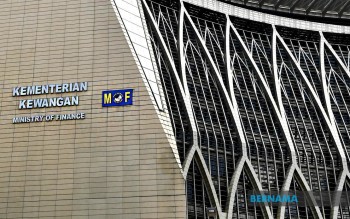
Malaysia's buy-now-pay-later industry has reached a significant milestone, with active account holders climbing to eight million users in the first quarter of 2026, the Ministry of Finance revealed this week. This expansion underscores the rapid penetration of point-of-sale credit offerings among Malaysian consumers, particularly younger demographics accustomed to deferred payment options. The sector's growth trajectory reflects broader shifts in consumer behaviour and payment preferences across Southeast Asia, where BNPL services have emerged as mainstream financial products competing with traditional credit cards and personal loans.
The outstanding debt accumulated through BNPL transactions reached RM5.3 billion during the same period, providing a snapshot of how much liquidity these platforms have extended to consumers. While this figure appears substantial in absolute terms, the Ministry of Finance contextualised the finding within the broader landscape of Malaysian household indebtedness. BNPL lending accounted for merely 0.3 per cent of total household debt as of the end of 2025, suggesting that despite rapid user growth, these services remain a niche segment within Malaysia's overall consumer credit ecosystem. This proportion indicates considerable headroom for further expansion before saturation becomes a concern, though it also reflects consumers' continued reliance on conventional borrowing channels such as banking institutions and licensed money lenders.
Default rates in the BNPL space remain manageable, with total overdue amounts standing at RM181 million, representing 3.4 per cent of outstanding balances. This delinquency figure, while not negligible, suggests that credit quality within the sector has not deteriorated sharply despite the rapid growth in user numbers and transaction volumes. The relatively contained default rate likely reflects the demographic profile of BNPL users—predominantly employed individuals with stable incomes—as well as the typically smaller transaction amounts characteristic of the sector. However, regulators and industry observers remain alert to potential credit cycles that could emerge if economic conditions deteriorate or if BNPL providers relax underwriting standards in pursuit of market share.
The regulatory landscape for BNPL services has undergone fundamental transformation with the Consumer Credit Commission (SKP) establishing licensing and conduct standards designed to standardise operations across the sector. These requirements establish a floor for operational practices, governance structures, and consumer protection mechanisms that all providers must meet before continuing to operate legally in Malaysia. The introduction of formal licensing represents a watershed moment for an industry that largely operated under light-touch oversight during its rapid expansion phase. SKP's intervention reflects growing recognition that BNPL platforms, while newer than traditional financial institutions, increasingly present systemic risks that justify regulatory attention and consumer safeguards.
The licensing framework encompasses both authorisation standards—criteria determining eligibility to operate—and conduct standards addressing how providers must interact with consumers and manage risks. These dual requirements ensure that only entities with adequate capital, operational infrastructure, and governance frameworks can obtain licenses, while simultaneously constraining how providers can market products, collect debts, and handle customer disputes. For Malaysian consumers, the licensing regime promises greater transparency and standardised complaint resolution mechanisms than existed previously. For established BNPL platforms, the requirements create barriers to entry that may ultimately consolidate the market around better-capitalised operators capable of meeting regulatory expectations.
The application window for BNPL licensing opened on June 1, 2026, with existing providers given a deadline of November 30, 2026, to submit applications. This six-month transition period represents a relatively generous timeline allowing platforms to audit their operations, strengthen governance frameworks, and compile comprehensive documentation demonstrating compliance with SKP requirements. The extended deadline also provides regulators space to engage constructively with the industry during the application process. Many of Malaysia's established BNPL operators have begun compliance initiatives to position themselves favourably before the deadline, though smaller or less sophisticated entrants may struggle with documentation and governance burdens. The SKP has signalled it remains actively engaged with providers throughout this period, offering guidance and clarification on specific requirements to facilitate smooth transitions.
The regulatory tightening comes at an inflection point in the BNPL sector's evolution. During the COVID-19 pandemic and immediate post-recovery period, BNPL services expanded rapidly with minimal oversight as consumers sought flexible payment options and merchants embraced frictionless checkout experiences. However, growth in default rates and consumer complaints across several markets prompted authorities worldwide to reassess regulatory approaches. Malaysia's framework, crafted through consultation with industry players and international regulators, reflects lessons learned from markets where inadequate oversight permitted predatory lending practices or resulted in elevated consumer harm. By establishing clear standards before the market becomes entrenched with problematic actors, the SKP aims to foster sustainable growth grounded in sound risk management and consumer protection.
For Malaysian households and businesses, the regulatory framework carries competing implications. On one hand, formal oversight should enhance consumer confidence in BNPL products by ensuring providers maintain adequate safeguards, transparent fee structures, and accessible complaint mechanisms. On the other, compliance costs may result in reduced competition as smaller players exit the market, potentially narrowing consumer choice and reducing pressure on fees and terms. The ultimate impact will depend on how rigorously SKP enforces standards and whether sufficient competition persists within the licensed provider universe to maintain price discipline. Early indications suggest the major fintech platforms and established financial institutions offering BNPL services possess sufficient scale and resources to navigate licensing requirements without material difficulty.
The licensing regime also establishes a clearer delineation between formal and informal credit channels. Previously, BNPL providers operated in regulatory grey zones distinct from banks and licensed money lenders but lacking explicit oversight. The new framework brings these operators into formal regulatory architecture, creating asymmetries with unlicensed competitors offering similar products through less transparent mechanisms. Over time, this regulatory advantage may accelerate migration of consumers and merchants toward licensed BNPL platforms offering regulatory certainty. The regime thus represents not simply a constraint on existing players but a competitive weapon advantaging those prepared to meet formal standards.
The growth trajectory documented by the Ministry of Finance—eight million users with RM5.3 billion in outstanding balance—positions Malaysia as a significant BNPL market within Southeast Asia, though smaller than more mature markets like Thailand and Indonesia by absolute user counts. The sector's continued expansion depends on several variables including economic growth, employment rates, merchant adoption, and competitive dynamics among providers. The regulatory framework now in place will significantly influence these variables by determining which entities can continue operating and under what constraints. As other Southeast Asian nations contemplate similar licensing regimes, Malaysia's implementation will be closely watched by policymakers seeking to balance innovation with prudential oversight and consumer protection.

