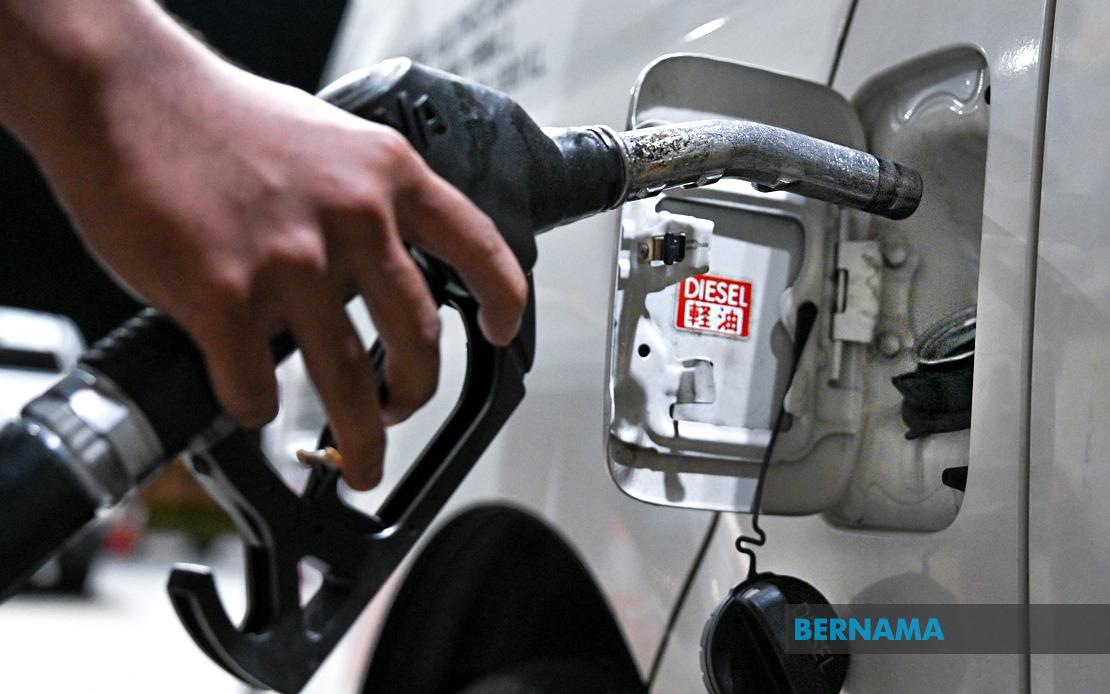
Malaysia's government is preparing to roll out a comprehensive diesel subsidy reform that promises to recoup up to RM2 billion in annual savings while maintaining affordable fuel prices for eligible citizens. The initiative, known as the BUDI MADANI Diesel programme, will set subsidised diesel at RM2.10 per litre beginning July 1, with early access opening from June 27 for qualifying private vehicle owners in Peninsular Malaysia. According to Second Finance Minister Datuk Seri Amir Hamzah Azizan, the programme addresses a critical problem that has ballooned the government's monthly fuel subsidy expenditure from roughly RM800 million to nearly RM4.9 billion by April—a staggering increase driven largely by unaccounted fuel consumption and cross-border leakages.
The spiralling subsidy costs reflect a systemic challenge that policymakers have struggled to contain. Diesel consumption surged abnormally from approximately 624 million litres monthly to almost 1.2 billion litres, suggesting substantial quantities are diverted through illegal channels or claimed by ineligible parties. This explosion in demand has created immense fiscal pressure while simultaneously threatening the reliability of domestic fuel supplies. In East Malaysia, the situation appears particularly acute, with Sabah and Sarawak consuming nearly two billion litres annually against an estimated genuine requirement of around one billion litres—implying leakage of as much as one billion litres per year. These figures underscore the urgency of introducing targeted controls that can distinguish between legitimate consumers and those exploiting subsidy mechanisms.
The BUDI MADANI framework operates through a MyKad-based verification system designed to mirror the approach already implemented for petrol under the BUDI RON95 programme. Under this mechanism, approximately 700,000 private diesel vehicle owners will qualify for the RM2.10 per litre subsidy, with authentication occurring at petrol stations nationwide. The system aims to create a uniform, transparent, and user-friendly subsidy mechanism that functions consistently across all states, eliminating administrative inconsistencies that previously enabled circumvention. By restricting access to those with valid Malaysian identification and verified vehicle ownership, the government hopes to curtail the illicit channels through which smugglers and unqualified users have accessed subsidised fuel.
Existing beneficiaries of the current BUDI Diesel scheme, who have been receiving RM400 monthly cash assistance, will transition seamlessly to the new petrol-station-based subsidy without requiring additional applications. This automatic migration preserves continuity for current recipients while repositioning the subsidy mechanism away from cash transfers toward point-of-sale discounts. The shift represents a behavioural reorientation—rather than providing money that could be spent elsewhere, the government now delivers the benefit directly through cheaper fuel, ensuring resources reach their intended purpose. For policymakers, this approach offers greater accountability and measurability, as fuel consumption patterns become transparent through transaction records at registered outlets.
The motivations driving this reform reflect broader government priorities around financial sustainability and equitable resource distribution. Officials emphasise that subsidies should reach those genuinely eligible while protecting domestic fuel supply stability—a principle challenging to enforce when smugglers, commercial enterprises, and cross-border operators drain subsidised inventories. The leakage problem extends beyond simple diversion; parties that should purchase unsubsidised diesel have been obtaining discounted fuel, distorting market competition and creating perverse incentives. By introducing identity verification, the government attempts to segment the market, ensuring commercial operators and non-residents access fuel at true market rates while preserving affordability for genuine Malaysian motorists.
For Malaysian consumers and businesses, the implications are multifaceted. Qualifying private vehicle owners gain price certainty and savings, with diesel locked at RM2.10 per litre regardless of global oil fluctuations. Conversely, commercial diesel users, commercial vehicles, and unregistered consumers will face unsubsidised prices, which could increase logistics costs and potentially ripple through supply chains. The government's assumption—that RM2 billion in recovered subsidies will be redirected toward broader public benefit—depends on successful implementation and sustained political commitment to avoid gradual subsidy creep. Historically, fuel subsidy reforms have faced resistance and reversions as global prices rise or public discontent mounts, making long-term projections uncertain.
Regional economic observers note that Malaysia's diesel subsidy challenge mirrors difficulties faced across Southeast Asia, where fuel price controls create chronic fiscal drains and inefficiency. Indonesia, another major economy managing fuel subsidies, has attempted similar targeted reforms with mixed results. Thailand and the Philippines have experimented with subsidy reduction programmes that encountered public backlash and implementation challenges. Malaysia's MyKad-based approach offers a technological pathway—leveraging existing digital infrastructure—that could potentially offer lessons for neighbouring countries grappling with comparable pressures. The success or failure of BUDI MADANI Diesel will therefore carry relevance beyond Malaysia's borders.
The programme's effectiveness hinges on operational execution and the robustness of the MyKad verification system. Concerns persist regarding the authentication mechanism's resilience against fraud, the integration of petrol station systems nationwide, and the capacity of retailers to implement new procedures without service disruptions. Additionally, enforcement against smuggling and cross-border diversion requires coordination between customs, police, and regulatory agencies—a complex coordination challenge that previous subsidy reforms have struggled to achieve consistently. Government officials must ensure that infrastructure upgrades and staff training occur before July 1 to prevent teething problems that could undermine public confidence.
The RM2 billion annual saving projection, while substantial, requires contextualisation. This figure assumes complete plugging of identified leakage channels and no unexpected surge in global oil prices that would inflate subsidy costs beyond current levels. If crude prices spike significantly, the actual savings could be overwhelmed by rising base costs. Conversely, if technological and enforcement improvements exceed expectations, savings could exceed projections. The government has provided minimal detail on how recovered resources will be allocated, whether toward deficit reduction, investment in public services, or other priorities—an omission that invites scrutiny about whether citizens will genuinely see public benefits materialise.
Looking forward, the BUDI MADANI Diesel launch represents a critical test of Malaysia's capacity to undertake difficult fiscal reforms while managing equity concerns. Success could validate the approach for other fuel categories and subsidy programmes, potentially inspiring broader subsidy restructuring that prioritises targeting and efficiency. Failure—whether through technical mishaps, widespread fraud, or political pressure forcing programme abandonment—would likely reinforce the perception that Malaysia's subsidy system remains inextricably entangled with fiscal mismanagement. The stakes are elevated because fuel subsidies comprise a significant share of government expenditure, and successful discipline here could free resources for healthcare, education, and infrastructure investments that voters ultimately care about. The months immediately following July 1 will prove decisive in determining whether this initiative becomes a model for sustainable subsidy policy or another iteration in Malaysia's long struggle with fuel price governance.