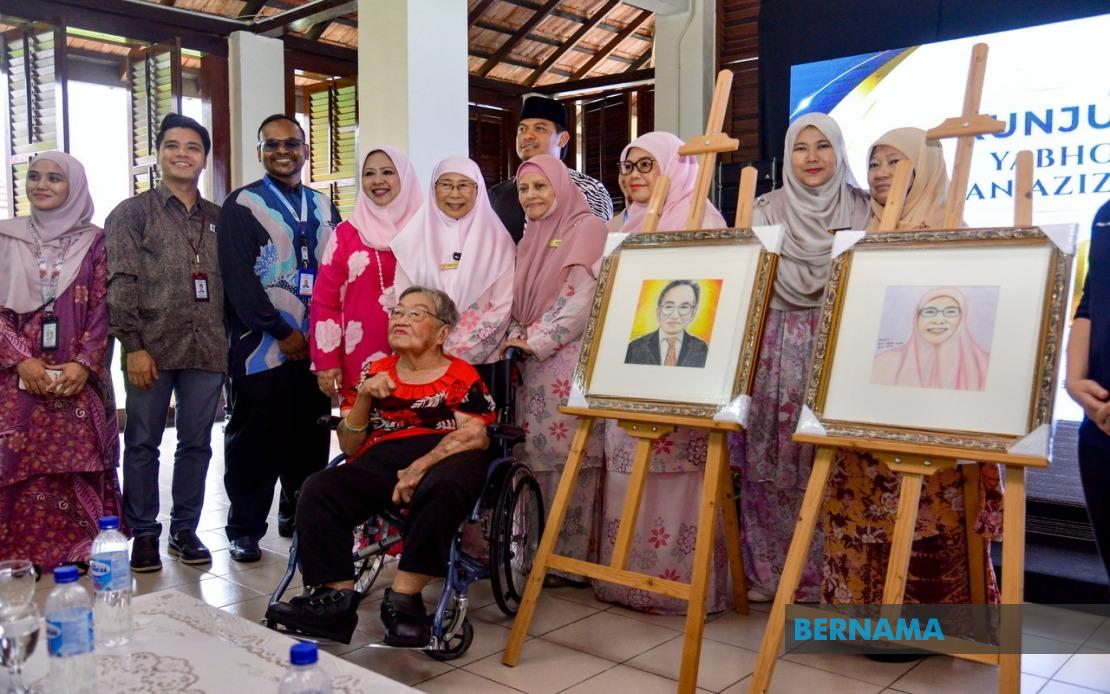
The National Leprosy Control Centre at Sungai Buloh Hospital is entering its second century as a living monument to Malaysia's public health achievements, with the Prime Minister's wife, Datuk Seri Dr Wan Azizah Wan Ismail, calling for its preservation as a cultural and medical heritage asset. During a visit this week to mark the facility's 100th anniversary, Dr Wan Azizah emphasized the institution's enduring significance, arguing that despite the global decline of leprosy as a public health threat, the physical infrastructure and institutional knowledge embedded at the centre remain invaluable records of how Malaysia confronted one of history's most stigmatized diseases.
Established in 1926, the National Leprosy Control Centre emerged from an era when leprosy was poorly understood and deeply feared across the region. The centre's founding reflected colonial-era attitudes toward disease management and isolation, yet over the ensuing decades it evolved into an institution that tracked Malaysia's own development in epidemiology, treatment protocols, and patient care. The facility's trajectory mirrors broader shifts in medical science; what began as an isolation ward became a research and treatment hub, eventually contributing to Malaysia's achievement of leprosy elimination status in 1994. That milestone represented not merely the absence of disease but the culmination of systematic public health intervention, professional training, and resource investment spanning generations of healthcare workers.
Dr Wan Azizah's remarks highlight an often-overlooked aspect of heritage preservation in Malaysia: the protection of sites that document medical progress rather than architectural grandeur or political events. The centre's buildings, equipment, and records constitute a material archive of how Malaysia approached chronic infectious disease during different eras of development. She noted that preservation should encompass both the tangible structures and the intangible knowledge residing with the institution's long-serving staff and resident population, many of whom have spent decades at the facility. This dual approach recognizes that heritage value extends beyond bricks and mortar to encompass human experience and institutional continuity.
The disease itself has undergone a remarkable transformation in public understanding within Malaysia and globally. Leprosy, historically associated with divine punishment and social exclusion in countless cultures, was once a terminal diagnosis triggering mandatory segregation. Modern antimicrobial therapy has rendered it curable within months, yet the centre persists, serving patients who contracted the disease before treatment became widely available, as well as providing ongoing clinical and research functions. The World Health Organisation's recognition of Malaysia as leprosy-free—with prevalence rates at 0.15 cases per 10,000 population, substantially below WHO elimination thresholds—underscores how dramatically the disease's epidemiology has shifted in the Malaysian context. This transformation makes the centre simultaneously obsolete as a quarantine facility and invaluable as a historical institution documenting that elimination process.
During her visit, Dr Wan Azizah, also chair of KASIH Malaysia, the charitable organization affiliated with spouses of government leaders, toured the facility's clinical and residential areas. She presented necessities to residents and received a portrait painted by one of them, a gesture that personalized her engagement with the institution's human dimension. Such visits serve multiple purposes: they affirm governmental commitment to the facility's continuation, they acknowledge the dignity of residents often consigned to social invisibility, and they generate public awareness about an institution that might otherwise fade from contemporary consciousness. Her participation in these ceremonial and substantive acts carries symbolic weight in a nation where medical facilities and heritage sites competing for limited government resources require high-level political validation.
Preservation efforts at the centre must balance competing imperatives, as Dr Wan Azizah acknowledged. Maintaining the physical structures requires ongoing investment in infrastructure maintenance and renovation. Simultaneously, the facility must modernize its healthcare delivery to remain clinically relevant and safe for both residents and staff. The centre already demonstrated flexibility by converting portions of its facilities to serve COVID-19 patients in 2020, illustrating how heritage institutions can adapt to contemporary health crises while retaining their historical character. Future upgrades should enhance patient services—better accommodation, improved medical equipment, enhanced diagnostic capabilities—without erasing the architectural and spatial qualities that document different treatment philosophies and medical eras.
The social dimension of preservation addresses another critical aspect that Dr Wan Azizah highlighted: transformation in public attitudes toward leprosy and those affected by it. Generations past, the disease carried overwhelming stigma that extended to patients' families and even to healthcare workers. Modern understanding, grounded in epidemiology and immunology, has substantially reduced that stigma within educated populations, though vestiges persist in some communities. A preserved and properly interpreted leprosy centre can serve educational functions, allowing visitors to understand how scientific knowledge has challenged prejudice and how mandatory isolation gave way to community-based treatment. This pedagogical potential transforms the centre into a resource for advancing public health literacy and combating discrimination based on disease status.
Regionally, the National Leprosy Control Centre holds comparative significance within Southeast Asia. Before Malaysia achieved elimination status, the centre was once the world's second-largest leprosy isolation facility, reflecting the disease's historical prevalence across the region. As other Southeast Asian nations continue efforts toward elimination, Malaysia's preserved centre—with its documentation of successful elimination strategies, its trained personnel, and its institutional memory—could serve as a reference point and teaching facility. The centre thus occupies a position between national heritage and regional public health asset, making its preservation relevant not only to Malaysian historians and patients but to epidemiologists and health officials across the region pursuing similar elimination goals.
The political and humanitarian case for preservation converges with practical considerations about resource allocation. Government funding for heritage preservation competes with demands for new medical facilities, infrastructure upgrades, and disease prevention programs. Advocates for the centre's preservation must articulate its continuing value to justify ongoing investment. This value proposition includes the documented scientific contributions the centre has made to leprosy research and treatment innovation, its role in training successive generations of healthcare workers, its function as an archive of clinical and epidemiological data, and its cultural significance as a site where Malaysia's medical modernization can be studied and commemorated. Dr Wan Azizah's high-profile endorsement begins to build that justification, lending institutional weight to preservation arguments.
Looking forward, the centre's next hundred years will likely differ fundamentally from its first century. Fewer patients will arrive with untreated leprosy; instead, the population will consist increasingly of aging long-term residents, new patients from neighboring regions, and visitors seeking to understand Malaysia's public health history. The institution's identity will shift from primarily curative to increasingly archival and educational. This transition, rather than representing decline, offers opportunity to reimagine the centre's contribution to Malaysian society. By embracing its historical significance while adapting its clinical functions, the National Leprosy Control Centre can model how medical facilities move gracefully from acute-care institutions to heritage sites that illuminate and educate, preserving both the physical evidence of past medical struggles and the lessons those struggles contain for contemporary and future populations.

