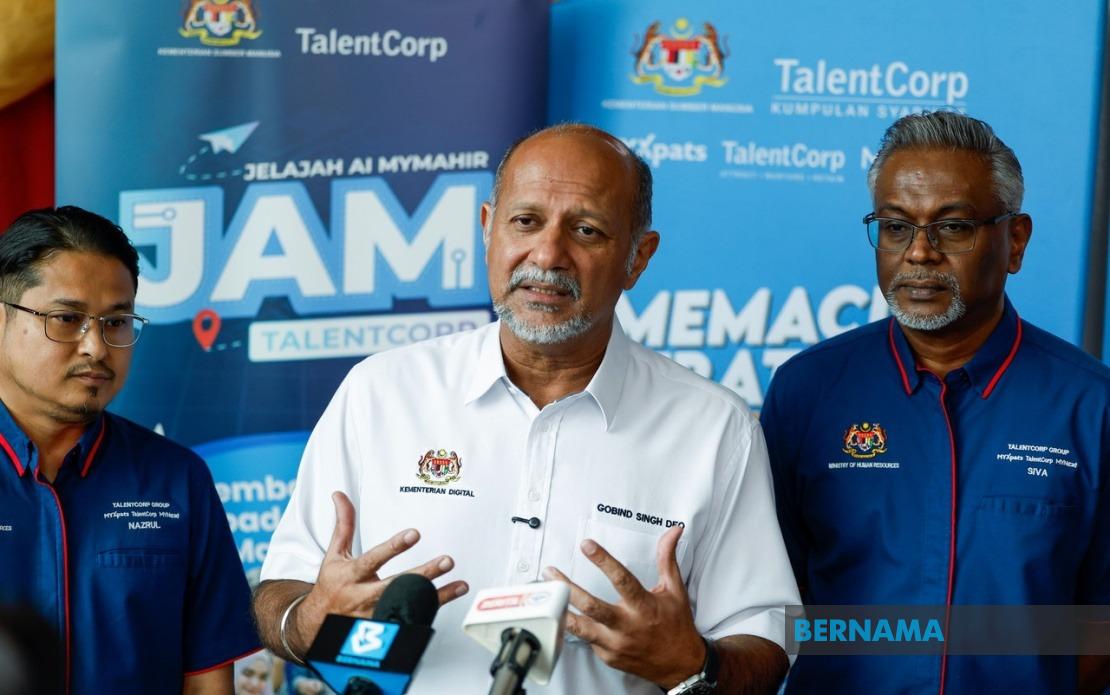
Malaysia's digital creative economy has matured into a significant revenue generator, with Minister for Digital Gobind Singh Deo announcing that the sector has produced more than RM92.5 billion in revenue while simultaneously contributing RM12.1 billion to the nation's export earnings. The financial performance underscores the transformation of what was once viewed purely as an entertainment space into a substantive economic pillar capable of supporting high-skilled employment and attracting substantial foreign capital.
Investment flows into the industry have reached RM85.7 billion, reflecting growing confidence from both domestic and international venture capitalists in Malaysia's creative capabilities and intellectual property production. This investment magnitude signals that major players in the global entertainment and digital media sectors view Malaysia as a credible hub for content creation and technology development. The injection of capital has enabled local companies to upgrade infrastructure, acquire talent, and expand production capabilities to international standards.
During his address at the Borneo Animation and Games Festival 2026 in Kuching, Gobind highlighted the performance of established Malaysian intellectual properties that have transcended domestic markets. Animated series and characters such as 'Upin & Ipin', 'Ejen Ali', and 'Mechamato' represent homegrown creative franchises that have successfully penetrated regional and global audiences, generating revenue streams beyond traditional distribution channels. These properties demonstrate that Malaysian storytelling and artistic sensibilities resonate with international viewers, creating a replicable model for emerging producers.
The employment impact has been equally noteworthy, with over 11,000 high-value jobs created within the digital creative ecosystem. These positions span animation studios, game development houses, visual effects facilities, and related service providers. Unlike manufacturing-based employment, digital creative jobs typically offer higher wage structures and require advanced skill sets, positioning workers to transition into progressively senior roles as they accumulate experience and expertise.
Gobind articulated an expansive vision for the sector's trajectory, stating that Malaysia remains on course for the digital economy to constitute 30 percent of the nation's Gross Domestic Product by 2030. This projection reflects government commitment to nurturing digital industries as central to future economic resilience. Complementing this macroeconomic target, the government envisions creation of 500,000 additional high-value digital jobs over the subsequent four years, a figure that dwarfs current employment numbers and suggests anticipated acceleration in industry maturation and sectoral diversification.
Sarawak has emerged as a strategic geographic anchor for this expansion strategy. The state possesses inherent advantages including a distinctive cultural narrative repository, established creative communities, and an expanding digital infrastructure foundation. Officials recognize that Sarawak's position as Malaysia's largest state, combined with its unique indigenous heritage and multicultural composition, offers competitive differentiation in a crowded global animation and games marketplace. Stories rooted in Sarawakian culture and geography can access both regional and international audiences seeking authentic, locally-inflected content.
The federal government's commitment to partnering with Sarawak extends beyond symbolic gestures, with concrete plans to strengthen digital capabilities across the state and facilitate connections between local creative enterprises and commercial opportunities throughout Malaysia, Southeast Asia, and beyond. This framework acknowledges that creative industries operate within increasingly borderless digital ecosystems where geographic location matters less than technical competence and creative quality. Building those connections requires both infrastructure investment and institutional relationships that can bridge Sarawak's creative community with international distribution networks and production partnerships.
Sarawak's aspiration to establish itself as a regional hub for animation and games production carries significant implications for Southeast Asia's creative economy landscape. The Borneo Animation and Games Festival 2026, marketed as the first international event of comparable scale held in Borneo, functions as both practical venue for industry networking and symbolic statement of regional ambition. Hosting such festivals attracts international producers, investors, and talent scouts who might otherwise concentrate attention on established hubs in Thailand, the Philippines, or Indonesia, potentially diversifying the region's creative production footprint.
The sector's growth trajectory intersects with broader Malaysian policy objectives around economic diversification and technology adoption. As traditional manufacturing sectors face headwinds from automation and shifting global supply chains, digital creative industries offer employment alternatives that leverage Malaysian advantages in storytelling traditions, artistic talent, and increasingly sophisticated technical capabilities. The sector's export component also addresses balance-of-trade concerns by generating foreign currency earnings through intellectual property licensing, production services, and talent export.
For Southeast Asian context, Malaysia's digital creative ambitions reflect a region-wide recognition that animation, games, and digital content production represent legitimate pathways to economic value creation. Thailand, Vietnam, and Indonesia have similarly pursued sector development strategies, creating both competitive dynamics and opportunities for cross-border collaboration. Malaysian positioning as a quality-focused, English-speaking production environment with reliable infrastructure differentiates its offering within the Southeast Asian marketplace.
The intellectual property dimension deserves particular emphasis, as Gobind's statements highlighted that strong domestic IP creates cascading commercial opportunities beyond initial production. Merchandise, licensing arrangements, theme park attractions, and expanded universe extensions can transform successful animation or gaming properties into diversified revenue streams spanning entertainment, consumer products, and tourism sectors. This multiplier effect means that investing in high-quality domestic content creation generates economic returns exceeding direct production revenues.
Challenges remain in translating these ambitious targets into sustained reality. Talent retention, particularly of experienced directors and technical specialists who face lucrative offers from Singapore, South Korea, and North America, presents ongoing difficulty. Access to venture capital for mid-stage companies seeking to scale beyond initial operations requires developed financial ecosystem components that Malaysia continues developing. Competition for international audience attention intensifies as production quality standards rise globally and streaming platforms fragment viewing habits across competing platforms.

