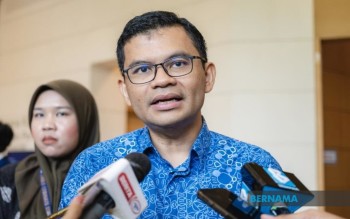
Malaysia's economic trajectory is expected to remain robust through the remainder of 2026, according to Economy Minister Akmal Nasrullah Mohd Nasir, who outlined a cautiously optimistic outlook while acknowledging the need for preparedness against external shocks. Speaking at the Association of Malaysian Economics Undergraduates Economics Summit 2026 in Kuala Lumpur, the minister articulated the government's confidence in sustaining economic momentum despite a complex global environment.
The foundation for this optimism rests on impressive performance data from the first half of the year. Malaysia recorded a 5.6 per cent growth rate in 1H 2026, representing a significant acceleration compared to the 4.5 per cent expansion achieved in the corresponding period of 2025. This improvement reflects broad-based momentum across multiple sectors of the economy, signalling that growth is not concentrated in any single industry but rather distributed across the nation's economic base.
The second quarter of 2026 delivered particularly strong results, with economic expansion reaching 5.8 per cent year-on-year, up from 5.4 per cent in the first quarter. According to the Department of Statistics Malaysia, this acceleration was underpinned by robust performance in the services and manufacturing sectors, which together account for a substantial proportion of economic activity. The services sector, encompassing finance, retail, telecommunications, and hospitality, has emerged as a key growth engine, while manufacturing continues to demonstrate resilience despite global trade uncertainties.
Sectoral recovery patterns reveal encouraging developments across the broader economy. The mining and quarrying sector, which had faced headwinds in previous periods, has staged a meaningful recovery that has contributed meaningfully to overall growth calculations. Simultaneously, the construction sector has maintained its expansion trajectory, reflecting ongoing infrastructure development and private sector investment activity. This diversified growth profile suggests the economy is not overly dependent on any single source of expansion, a structural strength that should provide stability going forward.
Banking sector projections offer additional grounds for confidence. Bank Negara Malaysia maintains its forecast for 2026 full-year growth within a range of 4.0 to 5.0 per cent, a band that would encompass continued solid performance throughout the remainder of the year. The minister's framing of this outlook as requiring both optimism and prudent contingency planning reflects the reality that Malaysia, as an open economy significantly exposed to international commodity prices and trade flows, must navigate an uncertain external environment.
Crucial to sustaining economic momentum are government interventions designed to manage oil supply stability through year-end. These measures acknowledge Malaysia's structural dependence on petroleum revenues and the vulnerability of the fiscal position and overall economy to volatile global energy prices. By maintaining stable domestic oil supplies and managing price transmission to the broader economy, authorities aim to prevent supply-side shocks from disrupting business confidence and consumer spending patterns.
However, the minister's emphasis on vigilance regarding geopolitical developments underscores genuine external risks that could derail otherwise positive trends. Tensions surrounding the Strait of Hormuz, through which a substantial portion of global crude oil transits, represent a material threat to global energy security and by extension to Malaysia's economic performance. Disruptions to shipping routes or conflicts affecting energy infrastructure in West Asia could rapidly cascade into higher global oil prices, elevated inflation, and reduced demand for Malaysian exports, creating headwinds for growth.
Beyond conventional economic management, the government is strategically leveraging major events to amplify growth drivers. The recent confirmation that Malaysia will host the Formula One Grand Prix at the Sepang International Circuit from October 2 to 4 represents a significant opportunity to inject international tourism spending into the economy. Major sporting events of this global profile attract substantial visitor traffic and generate multiplier effects across accommodation, food and beverage, retail, and entertainment sectors.
The Formula One decision carries particular significance under Prime Minister Datuk Seri Anwar Ibrahim's development philosophy, which emphasises inclusive growth benefiting broader society beyond elite segments. While flagship events typically generate headline revenue captured by major corporations and venues, government policy explicitly aims to ensure that small traders, local suppliers, and grassroots entrepreneurs capture meaningful portions of the spending generated by international visitors. This inclusive framing reflects acknowledgment that sustainable growth must create tangible opportunities throughout the income distribution rather than concentrating benefits among established large enterprises.
The timing of the Formula One Grand Prix near the conclusion of 2026 means that event-related spending, preparation activity, and promotional spending will contribute to growth figures in the final quarter of the year, potentially bolstering the 2H 2026 growth profile. Beyond the immediate fiscal impact, the international visibility associated with hosting Formula One provides marketing value for Malaysian tourism and business investment that may generate sustained benefits extending into subsequent years.
The minister's carefully calibrated message combining confidence with acknowledgment of risks reflects professional understanding that extraordinary economic circumstances warrant neither complacency nor pessimism. Malaysia enters the second half of 2026 from a position of relative strength, with established growth momentum, diversified sectoral contribution, and targeted government support mechanisms in place. Simultaneously, external vulnerabilities—particularly geopolitical tensions affecting global energy supplies and broader international trade dynamics—necessitate ongoing monitoring and adaptive policy responses.
For Malaysian businesses and policymakers, the outlook suggests an environment favouring continued investment and expansion planning, provided that contingency provisions are maintained for potential external disruptions. The convergence of solid domestic growth drivers with major event spending opportunities creates a constructive backdrop for the remainder of 2026, though the caveat regarding geopolitical vigilance appropriately reminds stakeholders that external factors remain beyond national control.

