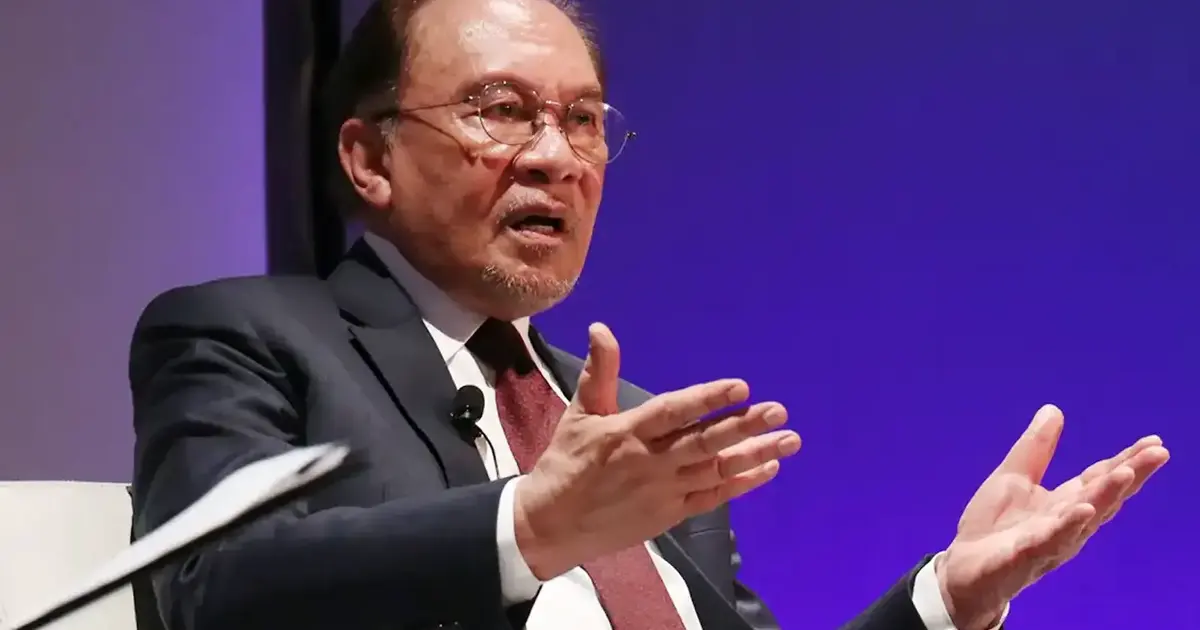
Prime Minister Anwar Ibrahim has pointed to Malaysia's second-quarter economic performance as evidence that the country's fundamentals remain robust despite persistent global headwinds and regional uncertainties. The government leader's assessment underscores growing confidence in the trajectory of Southeast Asia's third-largest economy as it navigates an increasingly complex international landscape marked by geopolitical tensions, trade friction, and volatile commodity prices.
Anwar's characterisation of the economy as resilient reflects the administration's broader narrative around three years of economic reforms implemented since taking office. These structural measures, according to government communications, have been deliberately designed to reduce vulnerabilities and create a more diversified revenue base less dependent on single sectors or commodity cycles. The emphasis on fundamental strengthening rather than short-term stimulus reflects a strategic pivot toward longer-term competitiveness and sustainable growth patterns.
The timing of Anwar's statements carries particular significance for Malaysia's positioning within regional economic forums. As the country prepares for ongoing negotiations around trade agreements and investment frameworks, demonstrating economic stability becomes crucial for maintaining investor confidence and negotiating leverage. Several major trading partners and institutional investors closely monitor Malaysia's growth indicators when assessing the region's economic health and allocating capital across Southeast Asia.
Economic observers have noted that Malaysia's ability to maintain growth momentum depends partly on how effectively the government can translate policy reform into tangible outcomes across multiple sectors. Infrastructure development, digital economy expansion, and manufacturing diversification feature prominently in the administration's strategic priorities. These initiatives aim to position the country beyond traditional commodities and routine assembly operations toward higher-value activities that generate stronger employment and wage outcomes.
The Prime Minister's framing of recent growth figures as validation of the reform agenda serves both economic and political functions. Economically, it signals to investors and trading partners that Malaysia remains a stable investment destination with competent macroeconomic management. Politically, it provides justification for difficult policy choices implemented over the previous three years, some of which have generated public friction or required subsidy reductions and fiscal consolidation measures.
Anwar's comments also reflect awareness that Malaysia faces intensifying regional competition for foreign investment. Neighbouring economies including Vietnam and Thailand have made aggressive pushes to attract manufacturers seeking alternatives to Chinese production. Malaysia must demonstrate not only growth statistics but also improving business conditions and policy certainty to remain competitive within this crowded landscape. The messaging around economic resilience attempts to differentiate Malaysia as a stable, reform-minded destination.
Regional analysts observe that Malaysia's Q2 performance matters disproportionately for Southeast Asian aggregate growth figures. As a major regional economy and important component of ASEAN's collective economic output, Malaysia's trajectory influences how international institutions and investors perceive the broader region's health. A resilient Malaysian economy provides counterweight to concerns about slowing growth elsewhere in Southeast Asia and helps sustain narratives around the region's long-term attractiveness.
The Prime Minister's assertion about strengthened fundamentals implicitly addresses concerns about debt sustainability and fiscal capacity. Three years of economic management have reportedly improved Malaysia's budget discipline and revenue generation, though debt-to-GDP ratios remain subjects of ongoing debate among analysts. Anwar's messaging emphasizes that structural improvements in economic capacity provide buffers against external shocks and create space for future policy flexibility if economic conditions deteriorate.
Looking ahead, Malaysia's economic resilience will face tests from multiple directions. Global supply chain adjustments continue reshaping trade patterns and manufacturing locations across Asia. Interest rate environments in major economies influence capital flows and borrowing costs for Malaysian firms and the government. Domestically, the government must balance growth objectives with fiscal prudence while managing expectations around wage growth and employment quality across different regions and sectors.
The Prime Minister's confidence in Malaysia's economic trajectory reflects assessments shared by international institutions, though with varying degrees of optimism about growth speed and sustainability. The World Bank and other multilateral observers have acknowledged Malaysia's reform efforts while flagging challenges around productivity growth and demographic shifts. Anwar's public statements represent an attempt to sustain positive momentum while preparing the foundation for potentially slower growth phases ahead.
For Malaysian readers, the Prime Minister's characterization of economic resilience carries implications for employment prospects, household purchasing power, and asset values. Consumer confidence indices and business investment intentions will increasingly determine whether official optimism translates into improved circumstances for ordinary Malaysians. The coming quarters will reveal whether the structural reforms referenced by Anwar generate sufficient improvements in private sector dynamism and labour market conditions to validate government assessments.

