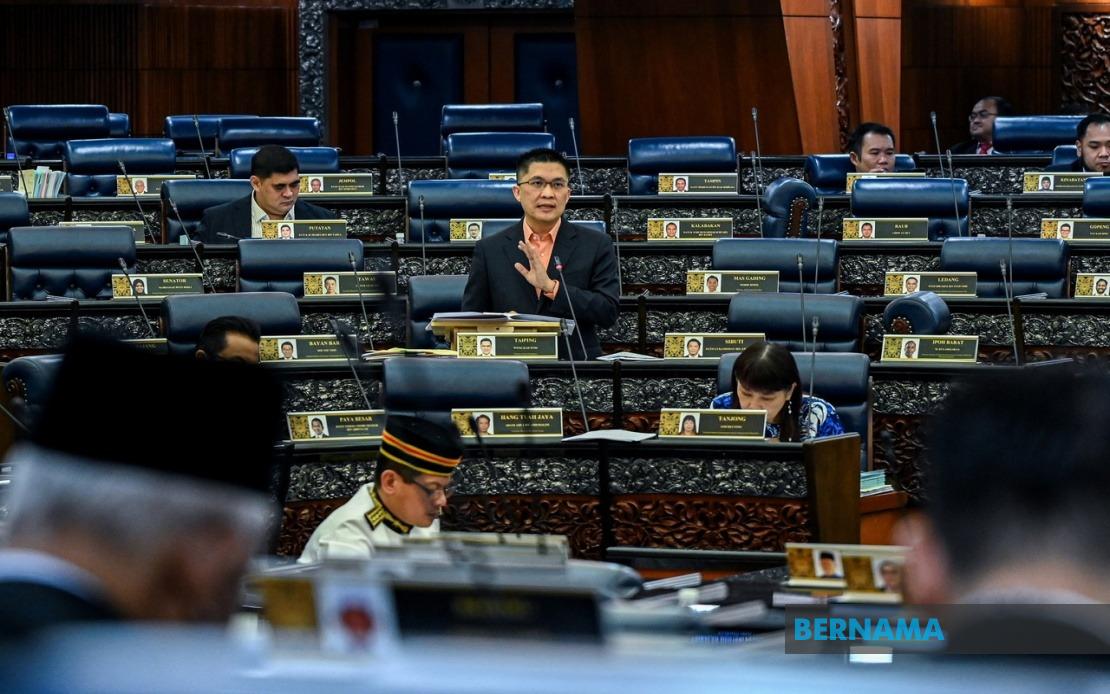
Malaysia's Education Ministry is making digital equity a cornerstone of its long-term development strategy, with Deputy Education Minister Wong Kah Woh unveiling comprehensive plans to eliminate technology-based educational gaps that have historically disadvantaged rural and underserved communities. Speaking during parliamentary proceedings, Wong articulated the ministry's commitment to ensuring that geographical location no longer determines a student's access to quality digital learning resources and connectivity, a critical shift for a nation working to maintain regional competitiveness in an increasingly technology-driven economy.
The initiative forms part of the Malaysia Education Blueprint (RPM) 2026-2035, which represents the ministry's forward-looking agenda for systemic educational transformation. At its core lies a recognition that digital literacy is no longer a luxury but a fundamental skill requirement for participating meaningfully in modern society. The blueprint's emphasis on bridging the digital divide acknowledges persistent disparities that have seen rural students labour under connectivity constraints while their urban counterparts benefit from readily available broadband and smart learning infrastructure.
Central to this effort is the deployment of high-speed internet connectivity across every educational institution in the country, tailored to each school's unique circumstances and technical requirements. Rather than imposing a uniform solution, the ministry is adopting flexible technological approaches that recognise the varied geographical and infrastructural contexts across Malaysia's diverse school network. This pragmatic stance reflects lessons learned from previous rollout initiatives and demonstrates an understanding that one-size-fits-all solutions often fail in environments with vastly different terrain, population density, and existing infrastructure challenges.
Complementing the connectivity push is the Digital Educational Learning Initiative Malaysia (DELIMa) platform, which serves as a centralised repository of curated digital educational materials accessible to both teachers and students. The platform aggregates learning resources in multiple formats and subjects, reducing reliance on individual schools to develop or source quality digital content independently. For rural educators with limited access to specialised training or materials, DELIMa represents a potential equaliser, providing instant access to curriculum-aligned resources that would otherwise require significant investment to acquire.
Wong emphasised that all students will be expected to achieve at least an intermediate level of digital competency as measured through a standardised Digital Competency Score. This benchmark-setting approach allows the ministry to track progress systematically and identify persistent gaps requiring additional intervention. By establishing clear competency standards rather than merely providing access to devices or platforms, the ministry signals that digital literacy transcends mere familiarity with technology—it encompasses critical thinking, information evaluation, and the ability to leverage digital tools for learning and problem-solving.
The ministry's commitment extends beyond hardware and platforms to include equitable distribution of digital devices and educational resources to schools nationwide. This deliberate approach to resource allocation targets the access gap that has traditionally favoured urban institutions with stronger funding bases and donor relationships. By ensuring fair distribution irrespective of school location or socioeconomic context, the ministry addresses a fundamental equity challenge that undermines meritocratic principles in education.
Parliamentary responses from the ministry reveal substantial progress under the previous Malaysian Education Development Plan (PPPM) 2013-2025. The performance gap between urban and rural students in the 2024 Sijil Pelajaran Malaysia (SPM) examination—Malaysia's pivotal upper secondary assessment—narrowed by 26.23 per cent, suggesting that targeted infrastructure and resource interventions yield measurable results. These improvements extend beyond geographic disparities: the gender gap in SPM certification eligibility decreased by 52.78 per cent, while socioeconomic-status-based achievement gaps contracted by 57.75 per cent, indicating that previous initiatives successfully tackled multiple intersecting inequities simultaneously.
Building on these achievements, the ministry plans sustained investment in infrastructure development and the systematic upgrading of deteriorating school facilities, prioritising interventions based on identified local needs rather than standardised assessments. This needs-based approach acknowledges that different regions face distinct challenges—coastal areas may need different infrastructure solutions than highland communities, for instance—and that effective policy implementation requires responsiveness to ground-level realities rather than rigid central planning.
Professional wellbeing for educators remains integral to the ministry's strategic vision, reflecting recognition that digital transformation cannot succeed without teacher engagement and capacity. Since 2023, the ministry has introduced seven distinct measures aimed at reducing teachers' administrative burdens and operational stress. Critically, these measures include eliminating redundant and overlapping record-keeping processes that consume classroom preparation time without contributing meaningfully to student outcomes. By lightening the non-instructional load on educators, the ministry aims to create space for teachers to focus on pedagogy and student engagement—prerequisites for effective integration of digital tools into teaching practice.
The emphasis on teacher wellbeing also addresses a practical dimension of educational equity: burnt-out teachers in underresourced schools are particularly vulnerable to attrition, creating a vicious cycle where rural and disadvantaged communities experience higher turnover among experienced educators. By improving working conditions and administrative efficiency, the ministry acknowledges that infrastructure alone cannot solve educational disparities—human capital, motivation, and retention are equally vital to systemic success.
Implementing these initiatives across Malaysia's diverse educational landscape presents substantial logistical and fiscal challenges. The country comprises urban centres with sophisticated existing infrastructure alongside remote areas where installing reliable broadband remains technically and economically complex. Coordination across federal, state, and district educational authorities must remain fluid to respond to emerging bottlenecks, and sustained political will and budgetary commitment will prove essential to prevent these initiatives from becoming aspirational rather than transformative.
For Southeast Asian policymakers observing Malaysia's approach, the blueprint offers instructive lessons about addressing persistent educational inequities in culturally and geographically diverse contexts. As regional economies increasingly emphasise digital skills and technology-enabled work, countries face mounting pressure to ensure that digital divides do not calcify into permanent educational and economic stratification. Malaysia's integrated approach—combining connectivity, content platforms, competency standards, teacher support, and equitable resource distribution—provides a comprehensively considered model for tackling these interconnected challenges systematically.

