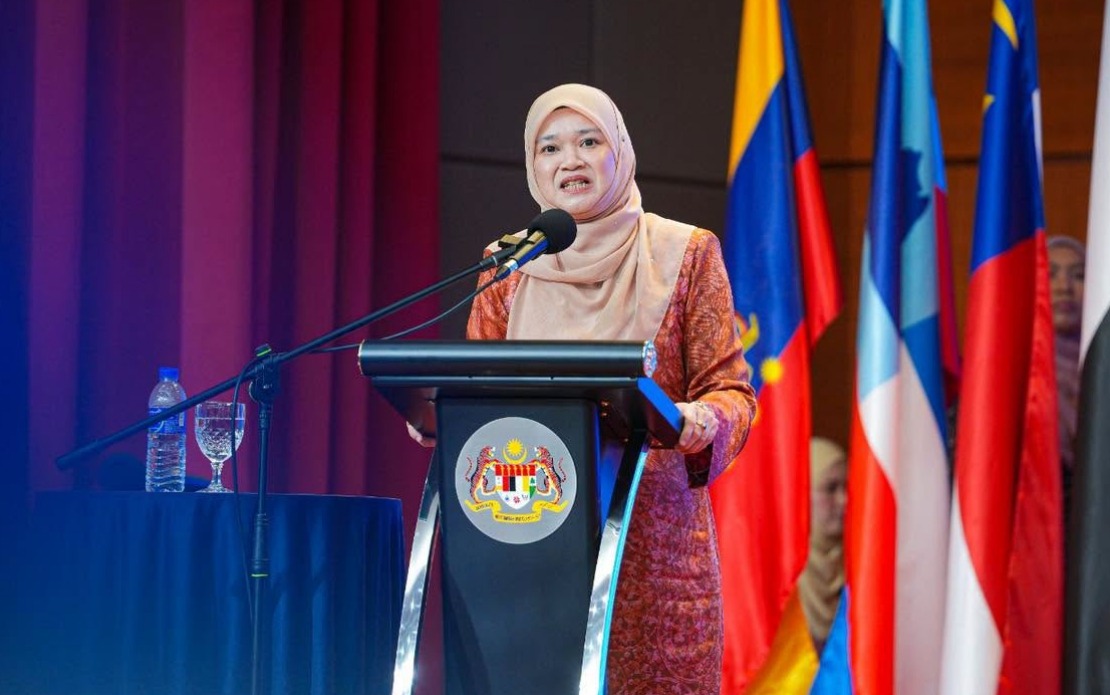
The Education Ministry has committed to evaluating how co-curricular achievements—spanning sports and other activities—can be formally credited to students attending prison institutions, potentially opening pathways to higher education upon completion of their secondary schooling. Minister Fadhlina Sidek announced the initiative while closing the 17th Hijrah Kasih Programme in Kajang, a collaborative effort between the ministry and the Malaysian Prison Department, emphasising that such reforms are essential for ensuring educational progression does not terminate once these students finish their SPM examinations.
The recognition of co-curricular merit represents a systemic shift in how the ministry views educational attainment beyond traditional academic credentials. By permitting students in prison settings to accumulate merit through sports participation and other structured activities, the ministry seeks to create tangible incentives for personal development during incarceration. This approach acknowledges that educational and personal growth can occur within constrained environments when institutions commit adequate resources and recognition frameworks. For these students, whose circumstances may otherwise limit their prospects, formal crediting of such activities could substantially strengthen their university applications and broaden access to tertiary education.
Complementing this initiative, the ministry is exploring partnerships with the Technical and Vocational Education and Training (TVET) sector to certify skills training conducted within prison institutions. Students currently develop practical competencies in areas including textile work and culinary preparation—capabilities that possess genuine labour market value. By formalising these skills through recognised TVET certificates, the ministry aims to equip students with documented qualifications that enhance employability upon reintegration into society, addressing both immediate livelihood concerns and longer-term economic stability.
The backdrop to these announcements is encouraging: prison schools have achieved 100 per cent pass rates in the SPM examination across two consecutive years, a statistic that fundamentally challenges assumptions linking incarceration or institutional setting to educational failure. Minister Sidek's emphasis that success depends on determination rather than location speaks to a broader recognition within the ministry that systemic barriers—not inherent capability—often constrain opportunities for marginalised student populations. This reframing matters considerably in Malaysian discourse, where stigma surrounding incarcerated youth can undermine rehabilitation efforts and social reintegration prospects.
The Physical, Sports and Co-curricular Assessment (PAJSK) framework assumes particular importance under these proposals. Currently, the ministry aims to secure formal recognition of PAJSK scores this year, with implementation extending to SPM candidates from 2027 onwards. Under the proposed system, students from prison institutions would be eligible to receive up to 10 per cent merit consideration in university applications based on their co-curricular performance. This percentage, while modest in absolute terms, could prove decisive for borderline applicants or those pursuing competitive programmes where aggregate scores determine admission eligibility.
Digital learning initiatives represent another critical dimension of the ministry's modernisation efforts for prison education. Plans to extend the DELIMa (Digital Educational Learning Initiative Malaysia) platform to integrity schools and Henry Gurney schools nationwide would position incarcerated students within contemporary educational ecosystems rather than relegating them to isolated, analogue environments. Controlled digital access enabling participation in online learning and retrieval of educational materials could meaningfully narrow the capability gap between prison-based classrooms and conventional schools, though careful implementation protocols must safeguard security considerations inherent to correctional institutions.
For Malaysian policymakers, these developments carry broader implications regarding rehabilitation philosophy within the criminal justice system. By institutionalising pathways to tertiary education and skills certification for incarcerated youth, the government signals a commitment to rehabilitation-oriented rather than purely punitive approaches. This orientation aligns with contemporary penological understanding that educational investment during incarceration substantially reduces recidivism rates and facilitates successful community reintegration. The initiative thus represents a potentially cost-effective intervention in criminal justice administration, generating dividends through reduced re-offending and enhanced social productivity.
Parental involvement emerges as an underemphasised yet critical success factor in Minister Sidek's remarks. She highlighted the importance of sustained family engagement, particularly during periods of institutional confinement when psychological support proves most vital. In the Malaysian context, where family structures traditionally provide primary social safety nets, active parental participation in children's educational trajectories—even from distance—may substantially influence motivation and achievement outcomes. The ministry's acknowledgment of this dimension suggests recognition that incarcerated students' educational success depends not solely on institutional provision but equally on external familial commitment.
The recognition of PAJSK scores for university admission purposes marks a subtle but significant departure from purely academically-weighted selection criteria. By incorporating sporting and co-curricular achievement into admission formulas, universities effectively validate skills and attributes—resilience, teamwork, discipline, perseverance—that correlate with academic success and professional contribution but remain invisible in conventional examination scores. For incarcerated students whose opportunities to develop such attributes might appear constrained, formal crediting acknowledges the character development potential inherent in structured institutional activities.
Contextually, these initiatives align with Malaysia's broader aspirations under the National Education Endowment Fund and related programmes to enhance educational equity and inclusive access. As the nation pursues Vision 2050 ambitions requiring expanded tertiary participation rates, ensuring that no demographic segment remains systematically excluded from higher education pathways becomes strategically important. Students within correctional institutions represent a small but vulnerable population whose inclusion strengthens the nation's human capital development and fulfils equity commitments.
Implementation timelines outlined by Deputy Director-General Datuk Zainal Abas suggest a measured rollout, with PAJSK score recognition targeted for achievement in the current year and extended SPM application eligibility commencing in 2027. This phased approach permits testing and refinement of systems before full-scale deployment, reducing risks of administrative failure or unintended consequences. However, the extended lead time also means current incarcerated students may not benefit immediately, highlighting the importance of parallel expedited recognition mechanisms for immediate cohorts transitioning out of institutions.
The skills training certification component deserves particular emphasis for its practical economic impact. Beyond individual benefit, formalising prison-based skills training acknowledges that labour markets value demonstrated competency regardless of pedigree. For Malaysia's small and medium enterprise sectors and hospitality industries facing chronic skills shortages, certification of prison-trained workers could simultaneously address workforce gaps and provide meaningful employment pathways for formerly incarcerated individuals. This mutual benefit reinforces the economic rationality underlying the policy beyond humanitarian considerations.
Moving forward, the success of these reforms depends substantially on implementation consistency across the diverse prison education system and alignment with university admission requirements nationwide. Without clear ministerial directives to tertiary institutions regarding PAJSK credit recognition and standardised protocols for TVET certificate evaluation, policy intentions may not translate into tangible benefits for students. Coordination mechanisms between the Education Ministry, Prison Department, and higher education institutions will therefore prove decisive in determining whether these initiatives genuinely expand opportunity or remain symbolic gestures toward inclusion.

