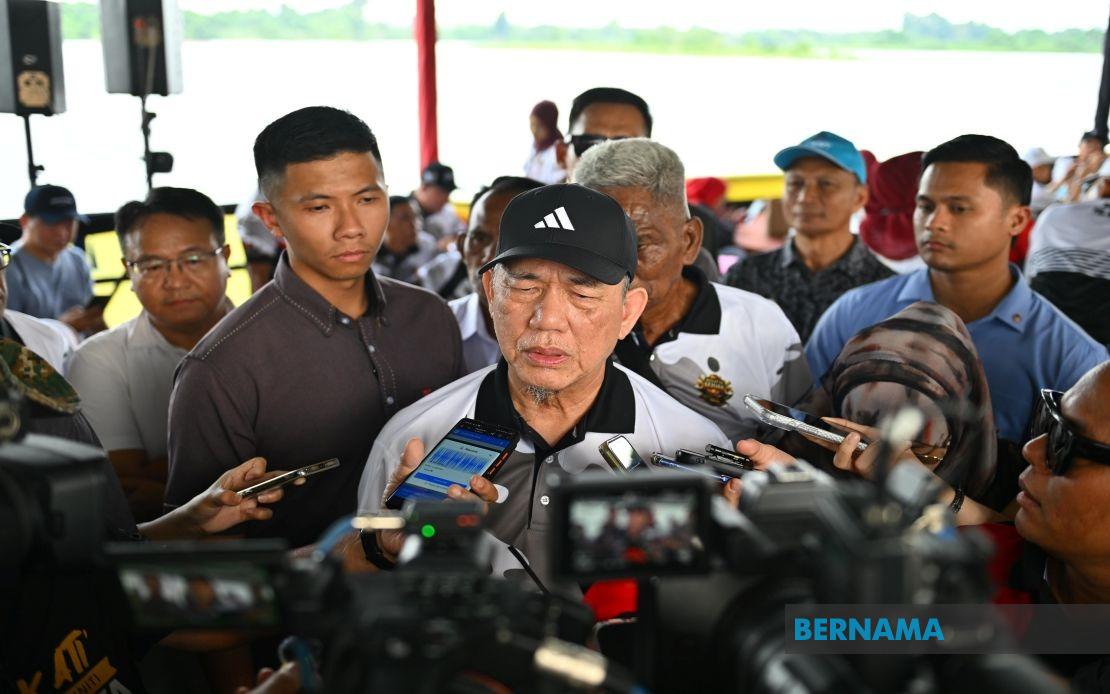
Malaysia's energy sector continues to operate without disruptions as the government maintains vigilant oversight of escalating tensions in the Strait of Hormuz, according to Deputy Prime Minister Datuk Seri Fadillah Yusof. Speaking in Kuching on July 12 after attending the closing ceremony of Regatta 2026 at the main jetty in Kampung Sejijak, the Energy Transition and Water Transformation Minister reassured the public that domestic fuel supplies remain unaffected by the regional security situation.
The stability of Malaysia's energy supplies reflects coordinated efforts between state-owned petroleum company Petronas and Prime Minister Datuk Seri Anwar Ibrahim, who have been pursuing diplomatic and commercial negotiations on multiple fronts to safeguard national energy security. This proactive engagement demonstrates the government's awareness of the strategic importance of uninterrupted fuel supplies to Malaysia's economy and its citizens' daily needs. Fadillah emphasised that these security measures have successfully prevented any supply shortages that might otherwise have materialised given the geopolitical volatility in one of the world's most critical energy transit zones.
The Strait of Hormuz, through which approximately one-third of global maritime petroleum trade flows annually, represents a crucial chokepoint for the region's energy security. Malaysia, as an energy-producing nation and a regional economic player, faces particular exposure to disruptions in this waterway. The government's preventive diplomacy and commercial coordination demonstrate recognition of this vulnerability. By engaging at various governmental and corporate levels, Malaysian authorities are positioning themselves to respond swiftly to any developments that might threaten supply chains.
Despite assurances regarding supply availability, Fadillah acknowledged that the broader energy landscape presents persistent economic headwinds that extend beyond the immediate concern of physical supply disruptions. The vulnerability to price volatility in global oil and gas markets represents a different but equally significant challenge to Malaysia's economic wellbeing. These price fluctuations, driven by geopolitical uncertainty, production decisions by major exporting nations, and broader market dynamics, create unpredictability in energy costs that ultimately affects government budgets and business operations throughout the economy.
The interplay between supply security and price stability creates a complex policy challenge for Malaysia's policymakers. While ensuring that fuel reaches the country's ports and refineries addresses one dimension of energy security, maintaining affordable energy prices—which matter significantly for inflation rates, manufacturing competitiveness, and household purchasing power—requires navigating the far more complex realm of global commodity markets. The government cannot unilaterally control international crude oil prices, making this aspect of energy security fundamentally different from physical supply continuity.
Fadillah articulated the tension inherent in Malaysia's current energy policy: the government must simultaneously pursue financial sustainability and maintain its commitment to supporting citizens' purchasing power through subsidies and assistance programmes. This balancing act becomes increasingly difficult when international energy prices surge unexpectedly. Government revenue from petroleum production may increase, yet expenditure on energy subsidies can also rise sharply, creating fiscal pressures that complicate medium and long-term budget planning.
The situation reflects a broader challenge facing oil and gas-producing nations in Southeast Asia and beyond. Malaysia benefits from petroleum revenues that contribute to government coffers, yet it also faces the economic consequences of price volatility that affects domestic energy costs. Unlike major oil exporters with vast sovereign wealth funds, Malaysia must manage these competing demands while maintaining social stability and economic growth. The subsidies and assistance programmes referenced by Fadillah serve as a cushion against the worst effects of price spikes but require sustainable financing mechanisms.
For Malaysian businesses and consumers, the government's monitoring stance offers some reassurance regarding continuity of energy supplies for manufacturing, transportation, and household consumption. Power generation facilities, which depend heavily on natural gas sourced domestically or through regional partnerships, can continue operations uninterrupted. This supply certainty allows businesses to maintain production schedules and households to avoid energy shortages. However, the caveat regarding price volatility introduces an element of uncertainty regarding future energy costs that affects long-term planning and budgeting.
The geopolitical dimension of energy security extends beyond Malaysia's bilateral relationships to encompass broader regional dynamics. Several Southeast Asian nations depend on energy imports or transit through the Strait of Hormuz, creating mutual interests in maintaining stability in this critical waterway. Malaysia's diplomatic engagement on energy matters therefore has implications for regional cooperation and burden-sharing in addressing common security challenges. The government's multi-level negotiations likely involve coordination with regional partners and international allies.
Looking forward, Malaysia's energy security strategy will likely continue combining physical supply diversification—including domestic production, liquefied natural gas imports, and renewable energy development—with active diplomacy to protect freedom of navigation and stable access to energy sources. The acknowledgment of price volatility challenges suggests the government recognises that long-term energy security requires not just supply assurance but also mechanisms to manage economic exposure to price swings. This might encompass hedging strategies, diversification of energy sources, and gradually transitioning toward renewable and domestically-sourced alternatives that reduce exposure to global commodity price volatility.
The assurances offered by Fadillah provide near-term confidence in Malaysia's energy stability, yet they simultaneously highlight the precarious balance between acknowledging genuine supply security and being candid about economic vulnerabilities beyond the government's direct control. For Malaysian households and businesses, this means energy supply continuity is likely secured in the near term, but economic impacts of global energy price movements will remain a fixture of the broader economic landscape.

