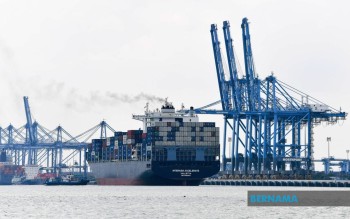
Malaysia's export momentum shows no signs of abating, with major financial institutions revising their growth projections sharply upward amid accelerating global demand for technology products. RHB Investment Bank has lifted its 2026 export growth forecast to 21.7 per cent, up substantially from its earlier estimate of 15.3 per cent, signalling confidence that the current expansion trajectory will be sustained throughout the year. The upgrade reflects reassessment based on actual trade data through the first half of 2026, when Malaysian exports surged 27.5 per cent year-to-date, significantly outpacing prior expectations and suggesting that the underlying demand drivers are proving more resilient than initially anticipated.
The electrical and electronics sector remains the primary engine propelling Malaysia's trade performance, buoyed by the global technology upcycle and the transformative wave of artificial intelligence-related investment sweeping across developed and emerging economies alike. This sector's dominance reflects Malaysia's deeply entrenched position within semiconductor and electronics manufacturing supply chains, a competitive advantage honed over decades. The persistent strength in global demand for semiconductors, accelerated by data centre expansion, cloud computing infrastructure, autonomous vehicle development, and factory automation systems, has created sustained purchasing impulses from multinational technology companies that rely on Malaysian manufacturers and exporters as critical suppliers.
Second-quarter 2026 trade data provides concrete evidence of this exceptional performance, with Malaysia recording a trade surplus of RM83.9 billion compared with just RM15.3 billion in the same period a year prior. This fivefold expansion of the surplus demonstrates how decisively export volumes have outpaced import growth, contributing measurably to broader economic activity and likely lifting the nation's gross domestic product estimate for the quarter. Such substantial trade surpluses strengthen Malaysia's external position and provide cushion against potential future headwinds, while simultaneously reflecting the economy's ability to generate foreign exchange reserves needed for stability and policy flexibility.
Beyond RHB's assessment, MBSB Investment Bank has independently projected 2026 export growth at 18.9 per cent, a remarkable acceleration from the 6.6 per cent recorded in 2025. While slightly more conservative than RHB's forecast, this projection still indicates mainstream consensus among major financial institutions that Malaysia faces an exceptionally strong export environment. MBSB attributes the anticipated expansion to multiple demand sources: technology product exports will remain the flagship driver, yet commodity-related shipments including petroleum products and liquefied natural gas will benefit from industrial and energy-transition dynamics globally. This diversified demand profile reduces dependence on any single sector, providing structural resilience to Malaysia's export base.
The acceleration in import growth, which both banks forecast at elevated rates for 2026, reflects Malaysia's own economic vigour and the reinforcing cycle of trade expansion. As export-oriented manufacturers boost production, they must source raw materials, intermediate components, and capital equipment from abroad, driving import bills higher. MBSB projects 2026 imports to expand 13 per cent, up from 6.0 per cent in 2025, consistent with the notion of an economy operating near capacity with strong domestic investment alongside rising consumer demand. This synchronised growth in both export and import flows characterises a healthy, integrated trading economy rather than an artificial imbalance vulnerable to correction.
June 2026 data released by Malaysia's Statistics Department corroborates the upward momentum, with total trade volume jumping 44.7 per cent year-on-year to RM340.9 billion. Exports climbed 45.4 per cent to RM177.9 billion whilst imports surged 43.9 per cent to RM163.0 billion, demonstrating exceptionally broad-based expansion across both directions of merchandise flows. The monthly trade surplus ballooned 64.9 per cent to RM14.9 billion, underscoring Malaysia's competitive prowess in capturing global demand at a time when supply chain pressures have eased relative to the preceding two years. Such rapid month-on-month growth sustains the narrative of an economy capitalising on favouring global conditions rather than facing transient demand spikes.
Analysts acknowledge that Malaysia's resilience owes fundamentally to its diversified economic structure and sophisticated integration into multiple regional and international supply chains. Rather than relying on a handful of export destinations or product categories, the nation has cultivated broad-based competitive advantages spanning semiconductors, electrical components, palm oil and derivatives, petroleum, petrochemicals, optical and medical instruments, and numerous light manufacturing sectors. This structural diversification insulates Malaysia against sector-specific downturns and enables it to benefit simultaneously from multiple global demand trends, whether technology-driven or commodity-linked.
However, the positive outlook faces several material risks that policymakers and businesses must monitor vigilantly. Geopolitical tensions, particularly any escalation in major power conflicts or regional disputes, could disrupt shipping lanes, raise transport costs, and undermine business confidence. Elevated oil prices, whilst boosting Malaysia's energy exports, simultaneously increase production costs for manufacturing sectors and transportation expenses for supply chains, potentially squeezing competitiveness if prices rise too sharply. Should such pressures materialise, multinational companies might reassess manufacturing locations and sourcing strategies, potentially redirecting orders to alternative suppliers in Vietnam, Thailand, or Bangladesh.
Trade policy constitutes another consequential downside risk, particularly given growing protectionist rhetoric in developed economies. The United States, under various administrations, has pursued tariff increases and stricter rules of origin requirements that could complicate Malaysia's export pathways, particularly for technology products incorporating inputs from China or other sensitive jurisdictions. Extended trade disputes, new sectoral tariffs, or broader restrictions on technology transfers could undermine the assumptions underpinning current growth forecasts. Malaysian manufacturers and exporters must therefore maintain strategic flexibility and contingency planning alongside capitalising on current tailwinds.
The semiconductor and electronics export strength, whilst currently robust, depends fundamentally on sustaining the artificial intelligence and data centre investment cycles that have energised global technology spending. Should this cycle moderate unexpectedly due to oversupply, margin compression, or technological saturation in key applications, demand for Malaysia's E&E exports could soften markedly. The global technology industry historically experiences sharp cyclical swings, and the current euphoria around AI deployment could eventually give way to more measured investment growth patterns, requiring Malaysia to ensure that export growth during boom periods translates into structural economic improvements rather than temporary windfalls.
Despite these cautions, Malaysia's position as a critical node within global technology supply chains provides durable competitive advantages unlikely to erode rapidly. The nation's technical expertise, reliable infrastructure, stable political environment, and established relationships with multinational corporations create switching costs that render sudden relocation of major manufacturing operations impractical. Policymakers can reinforce these advantages through sustained investment in education and technical training, infrastructure modernisation, and trade negotiations that preserve market access and competitive terms for Malaysian exporters. The 2026 export outlook reflects genuine underlying strengths rather than unsustainable anomalies, positioning Malaysia favourably for sustained trade-driven growth alongside carefully managed downside risks.

