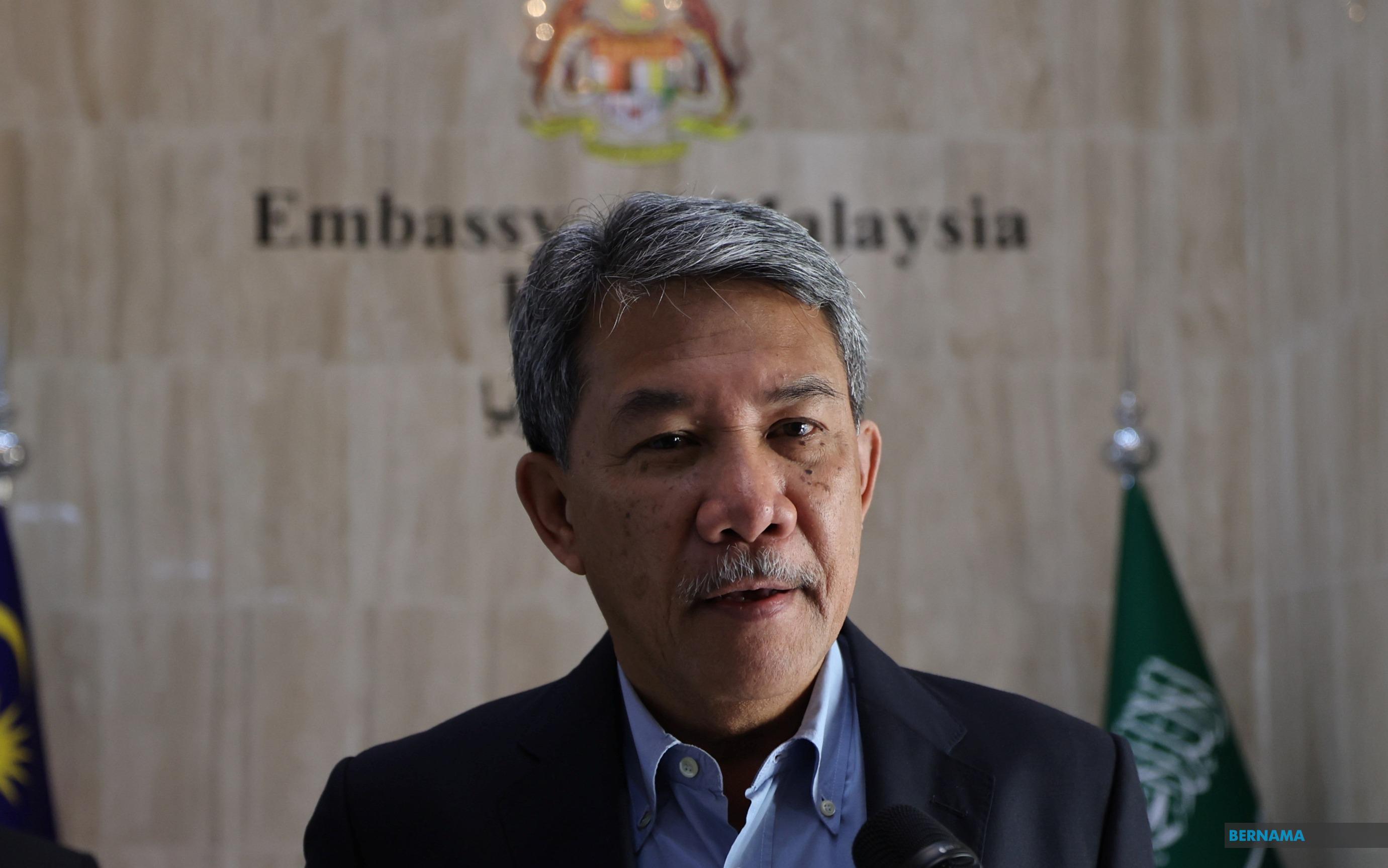
Foreign Minister Datuk Seri Mohamad Hasan touched down in Jeddah on August 26 to participate in an extraordinary gathering of the Organisation of Islamic Cooperation's Council of Foreign Ministers, underscoring Malaysia's active engagement on Middle Eastern geopolitical issues. His arrival at King Abdulaziz International Airport was marked by a formal reception from Malaysian Ambassador to Saudi Arabia Datuk Syed Bakri Syed Abdul Rahman, signalling the diplomatic importance attached to the visit.
The one-day ministerial forum convenes to address pressing developments in the Palestinian territories, with particular emphasis on the humanitarian and political implications of ongoing Israeli military operations in Gaza and the West Bank. The agenda also encompasses the contentious issue of illegal Israeli settlement expansion, a longstanding flashpoint that has repeatedly drawn international condemnation and fuelled regional tensions. Malaysia's participation reflects the nation's consistent positioning as an advocate for Palestinian rights within multilateral Islamic frameworks.
As head of the Malaysian delegation, Mohamad is tasked with delivering a formal national statement that will reiterate Malaysia's principled stance on Israeli-Palestinian affairs. The statement is expected to reaffirm Malaysia's unwavering commitment to the Palestinian people's legitimate aspirations for self-determination and the establishment of an independent, sovereign state with borders aligned to the pre-1967 demarcation lines—a cornerstone of international consensus documented in multiple UN resolutions.
According to Ambassador Syed Bakri, Malaysia's attendance carries particular significance in articulating the nation's firm disapproval of what it characterises as Israeli aggression against Palestinian territories. By participating in the OIC forum, Malaysia seeks to amplify regional consensus and strengthen collective diplomatic responses to developments perceived as violations of Palestinian sovereignty and international law. This stance aligns Malaysia with broader Arab and Muslim-majority nation positions within the OIC's 57-member structure.
Beyond the core agenda focused on Palestine, the gathering presents a multilateral platform for bilateral engagement. Mohamad is scheduled to hold separate discussions with counterparts from several nations, leveraging the meeting's convening power to advance Malaysia's broader foreign policy objectives. These conversations are anticipated to explore pathways for deepening bilateral cooperation across multiple sectors, including traditional diplomacy and contemporary economic partnerships.
The bilateral discussions are particularly geared towards identifying fresh avenues for collaboration in business, trade, and investment. For Malaysia, such engagement opportunities are strategically valuable, as they can yield tangible economic returns while simultaneously reinforcing diplomatic relationships with key Islamic-majority nations. The OIC forum thus functions simultaneously as a platform for addressing shared political concerns and as a venue for pursuing mutually beneficial economic initiatives.
The timing of this extraordinary meeting reflects the ongoing volatility characterising the Israeli-Palestinian conflict and regional security dynamics. As developments in Gaza and the West Bank continue to generate international concern, Islamic nations have increasingly mobilised through the OIC mechanism to coordinate responses and maintain diplomatic pressure on key actors. Malaysia's active participation demonstrates its commitment to being a meaningful voice within these crucial deliberations rather than a peripheral observer.
For Malaysian observers, the visit illustrates how foreign policy decisions on Middle Eastern conflicts remain substantive matters within Malaysia's diplomatic portfolio. Rather than treating Palestinian issues as peripheral humanitarian concerns, Malaysia consistently invokes them as central to its identity as a Muslim-majority nation with defined geopolitical interests. This approach reflects domestic political considerations alongside genuine policy commitments.
The extraordinary nature of the OIC Council meeting underscores the gravity with which member states regard recent developments. Regular scheduled OIC forums occur at established intervals, but extraordinary sessions are convened only when circumstances demand urgent collective deliberation. The convening of such a session signals that the Palestinian situation has reached a threshold of concern sufficient to warrant interrupting normal diplomatic calendars across a global coalition of nations.
Moreover, the meeting provides Malaysia with an opportunity to shape nascent consensus among OIC members regarding appropriate diplomatic and political responses. As a country with notable diplomatic influence within Islamic forums and the Non-Aligned Movement, Malaysia's contributions can meaningfully influence the tone and substance of collective OIC positions. This influence extends beyond the meeting itself, as OIC statements and positions are frequently cited in international forums as representative Muslim opinion.
For Southeast Asian readers unfamiliar with the OIC's operational mechanics, it represents a significant diplomatic institution through which Muslim-majority nations articulate common positions on issues of shared concern. Malaysia's active participation reinforces its role as a bridge between Southeast Asian geopolitics and broader Islamic world concerns, a positioning that carries implications for regional security architecture and Malaysia's diplomatic profile within ASEAN and beyond.
The visit also reflects Malaysia's consistent historical position favouring a two-state solution to the Israeli-Palestinian conflict, predicated on the 1967 borders framework. This position aligns Malaysia with mainstream international consensus, though Malaysia continues advocating for more robust international mechanisms to ensure Palestinian statehood realisation. Such advocacy, while sometimes rhetorically emphatic, operates within established diplomatic frameworks rather than endorsing extralegal approaches.

