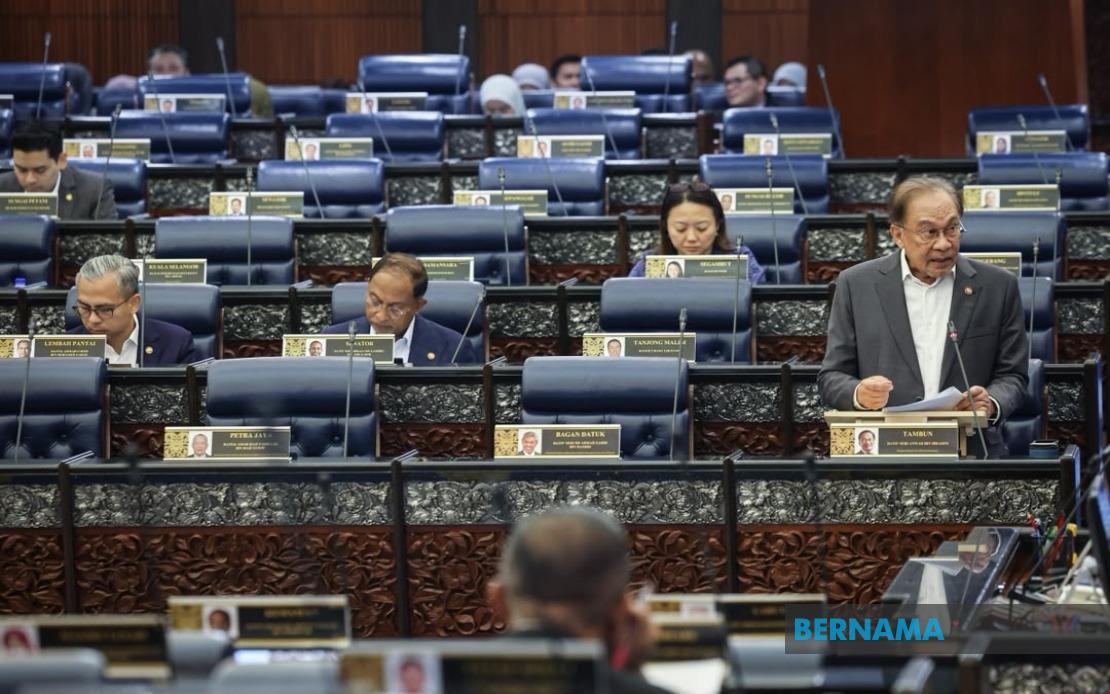
Prime Minister Datuk Seri Anwar Ibrahim has moved to counter criticism of Malaysia's fuel pricing strategy by drawing direct comparisons with major oil-producing economies in the Middle East and the Gulf region. Speaking in parliament on July 14, the Prime Minister emphasised that retail fuel costs in Malaysia remain substantially lower than those found in Saudi Arabia, Qatar, and the United Arab Emirates, despite claims to the contrary circulating in public discourse.
The government's position centres on the BUDI MADANI subsidy initiative, which maintains the price of RON95 petrol at RM1.99 per litre. This figure serves as the centrepiece of Anwar's argument that Malaysia continues to provide citizens with competitive and affordable fuel costs. By anchoring the comparison to actual prices in neighbouring oil economies, the Prime Minister sought to reframe the narrative around domestic fuel pricing from one of declining competitiveness to one of sustained affordability relative to global peers.
Saudi Arabia's fuel pricing presents a particularly striking contrast in this comparison. Current prices in the kingdom have exceeded RM2.40 per litre, representing a considerable premium over Malaysia's subsidised rate. This gap is especially significant given Saudi Arabia's status as one of the world's largest crude oil producers and exporters, with vast reserves and minimal extraction costs. The fact that even the Saudi government charges substantially more at the pump than Malaysia does underscores Anwar's central claim that Malaysian drivers enjoy genuine price advantages.
Qatar and the United Arab Emirates round out the comparative analysis presented by the Prime Minister. Both nations, despite their substantial hydrocarbon wealth and production capacity, maintain fuel prices higher than Malaysia's current offering. The UAE's situation merits particular attention, as the government raised fuel prices two months prior to this parliamentary statement, a decision made despite the nation's status as a major oil producer with ample resources to subsidise domestic consumption. Such moves underscore the global trend toward price rationalisation even among petro-states.
Anwar's remarks were delivered in response to a supplementary question from Datuk Rosol Wahid, the Member of Parliament for Hulu Terengganu from Perikatan Nasional. The question invoked comparative analysis of fuel pricing during the previous administration under Datuk Seri Najib Razak, alongside references to Anwar's own campaign promises made during his time in opposition, when he pledged to reduce fuel prices to RM1.50 per litre. This line of questioning obligated the Prime Minister to address both past commitments and present realities in the context of broader regional trends.
The RM1.50 pledge warrants contextual examination, as it represented an ambitious target articulated during a period when global oil markets operated under different conditions. When that promise was made, the Prime Minister noted, fuel prices in Saudi Arabia stood at approximately 50 sen per litre, reflecting significantly lower global crude prices and limited subsidisation. The intervening period has witnessed substantial shifts in international energy markets, currency valuations, and government fiscal positions across the region, rendering direct comparison between past promises and present circumstances complex.
The BUDI MADANI framework itself represents a policy choice to maintain price stability through targeted government subsidy rather than allowing market forces to dictate fuel costs entirely. This approach reflects deliberate government prioritisation of affordability for the general population, particularly those dependent on personal vehicles for employment and essential services. The sustainability of such subsidies depends on government budget allocation, commodity price fluctuations, and broader macroeconomic conditions that remain subject to external pressures.
From a regional perspective, Malaysia's fuel pricing presents a compelling narrative for Southeast Asian competitors and observers. The nation's ability to maintain subsidised prices lower than those in wealthier petrostate economies challenges conventional assumptions about the relationship between resource wealth and consumer pricing. It demonstrates that government fiscal commitment can override the natural pricing mechanisms that might otherwise prevail based on global commodity markets alone.
The Prime Minister's invocation of these comparisons serves multiple political purposes beyond simple factual presentation. It addresses public sentiment regarding cost of living pressures, responds to parliamentary opposition questioning, and positions the current government as steward of citizen welfare in economic matters. By elevating the discussion to regional scale and invoking the example of nations far wealthier in per-capita terms, Anwar reframes domestic fuel policy from a question of insufficiency to one of relative advantage.
For Malaysian consumers and businesses dependent on fuel consumption, the practical significance of these price differentials compounds across time and volume. A family undertaking regular cross-border travel to Singapore or brunei immediately encounters higher fuel costs, rendering the domestic BUDI MADANI rate more valuable in comparative terms. Commercial operators, logistics companies, and agricultural enterprises similarly benefit from lower input costs relative to their counterparts in neighbouring economies.
Looking forward, the government's commitment to maintaining the RM1.99 per litre rate faces ongoing pressures from global oil market volatility, currency fluctuation, and domestic fiscal constraints. International crude prices remain subject to geopolitical disruption, supply shocks, and demand fluctuations beyond Malaysian control. The sustainability of subsidies therefore depends on careful budget management and continued political commitment to prioritising fuel affordability.
The parliamentary exchange underscores persistent public interest in fuel pricing as a barometer of government economic management and consumer welfare. Across Southeast Asia and beyond, fuel costs remain symbolically significant and practically consequential for household budgets and business operations. Anwar's comparative analysis, while addressing specific parliamentary criticism, speaks to broader regional conversations about the relationship between resource wealth, government policy, and citizen prosperity.

