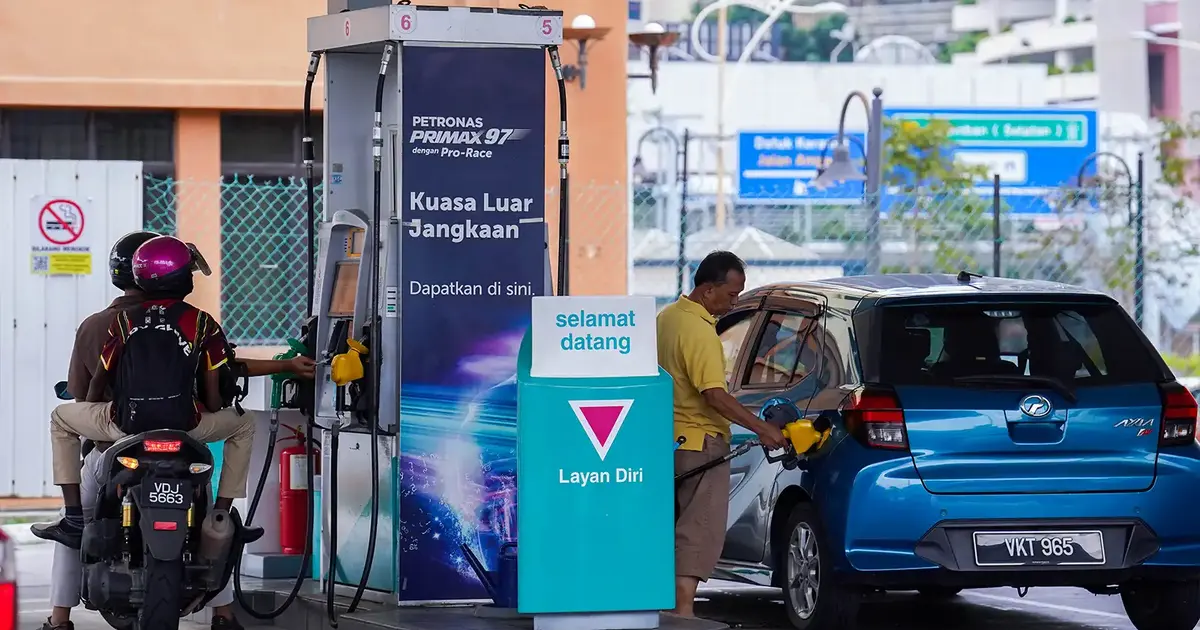
The Malaysian government is bracing for a significant drain on its coffers as fuel subsidies are projected to consume RM40 billion in 2026, underscoring the mounting fiscal pressures facing the country's energy support mechanisms. This substantial allocation reflects the continuing commitment by authorities to shield consumers from the full market impact of global crude oil price fluctuations, even as the government grapples with broader budgetary constraints and the need to fund essential services across healthcare, education, and infrastructure development.
Prime Minister Anwar Ibrahim has sought to calm concerns about energy security by reiterating that Malaysia's domestic petroleum supplies remain robust and sufficient to meet national demand. This reassurance carries particular significance given the global energy landscape's volatility and the strategic importance of fuel affordability to Malaysia's social stability and economic competitiveness. The government's emphasis on supply adequacy attempts to distinguish between questions about resource availability and those surrounding fiscal sustainability, two separate but intertwined challenges facing policymakers.
The projected RM40 billion expenditure represents a substantial commitment of public resources that might otherwise be deployed toward development initiatives or deficit reduction. For context, this sum is comparable to entire ministerial budgets and demonstrates the scale of subsidy obligations relative to other government priorities. As fuel represents a fundamental input across Malaysia's economy—from transportation to electricity generation to manufacturing—the subsidy mechanism functions as an indirect industrial and social policy tool, cushioning consumers and businesses against commodity price shocks.
Fuel subsidies have long been a contentious policy element in Malaysia, sitting at the intersection of fiscal responsibility and political economy. While maintaining affordable fuel prices delivers immediate relief to households and businesses, particularly benefiting lower-income groups and rural communities dependent on affordable transport, the policy's long-term sustainability remains questionable. The projection of RM40 billion for 2026 suggests that global oil market conditions and domestic consumption patterns are expected to render subsidy costs prohibitively expensive without intervention.
Malaysia's position as a petroleum-producing nation distinguishes it from energy-importing neighbours, providing some natural advantage in managing domestic energy costs. However, even resource-rich nations face difficult choices when global prices surge, as the revenue that governments might capture from higher international prices must be weighed against the domestic political and economic consequences of allowing those prices to flow through to consumers. The substantial subsidy bill reflects this fundamental tension in Malaysia's energy policy framework.
The fiscal implications of RM40 billion in annual subsidy expenditure demand careful consideration alongside Malaysia's other budgetary obligations. In a budget of several hundred billion ringgit, this represents a meaningful proportion of discretionary spending that could theoretically be redirected toward capital investment, debt servicing, or safety net programmes. The government's decision to maintain subsidies therefore involves implicit trade-offs with other policy objectives that merit public scrutiny and democratic debate.
Regionally, Malaysia's approach to fuel pricing differs from several neighbours, some of whom have undertaken more aggressive subsidy reform. Understanding Malaysia's policy choices requires recognizing the distinctive political economy context, including the country's dependence on petroleum revenues and the particular distribution of voting blocs sensitive to fuel price changes. These factors shape the political feasibility of subsidy adjustments even when economists might advocate for more market-oriented pricing.
The government's emphasis on supply stability alongside the subsidy projection suggests an attempt to address multiple anxieties simultaneously. Consumers worry both about affordability and about whether the nation can sustain its energy infrastructure and supply chains. By highlighting petroleum abundance, Prime Minister Anwar Ibrahim aims to decouple the question of resource availability—which is genuinely favourable for Malaysia—from the fiscal sustainability question, which is more complex and less amenable to reassurance alone.
Looking forward, the trajectory of fuel subsidies will likely depend on several variables beyond government control, particularly international crude oil prices and the strength of the Malaysian ringgit against major currencies. Higher global prices or ringgit weakness would inflate subsidy costs further, potentially forcing difficult policy conversations earlier than anticipated. Conversely, more moderate international prices might provide breathing room for gradual, planned subsidy rationalization rather than emergency adjustments.
The RM40 billion projection serves as a reminder that Malaysia's fiscal framework operates within real constraints and that current policies carry forward-looking financial obligations that deserve serious analysis. Whether through gradual price adjustment, efficiency improvements in the subsidy delivery system, or alternative policy instruments, policymakers will eventually need to address the structural mismatch between the cost of subsidies and the government's ability to sustain them indefinitely without compromising other priorities. The challenge ahead lies in managing this transition while maintaining social cohesion and economic stability.

