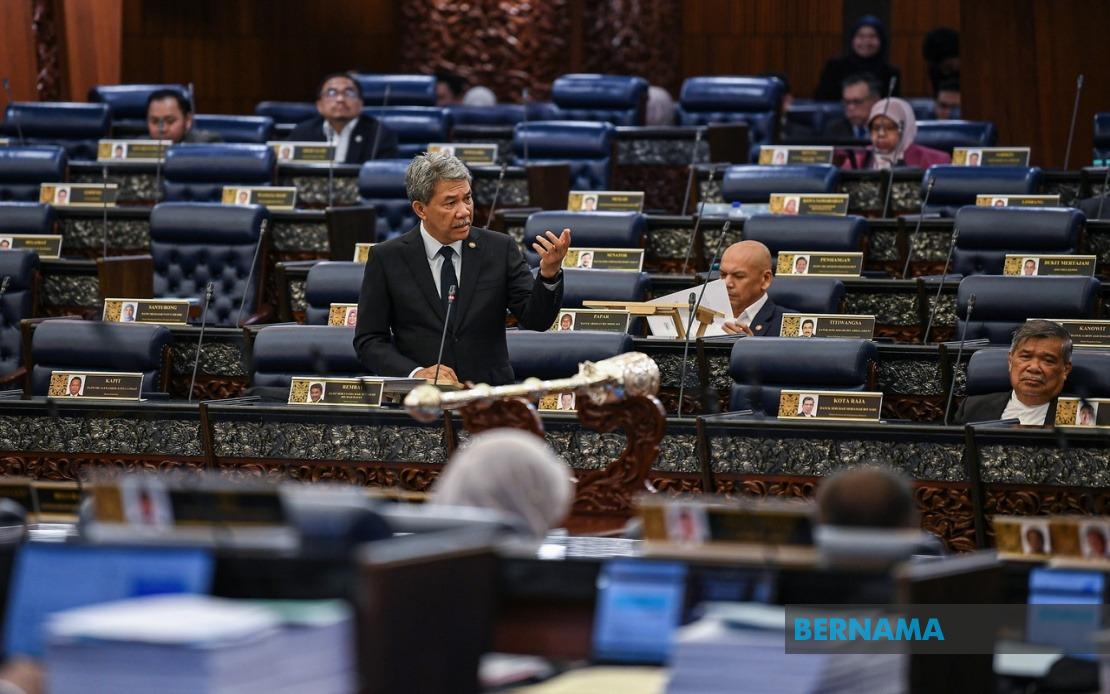
Foreign Minister Datuk Seri Mohamad Hasan has moved to reassure Parliament that Malaysia's assistance programme for Palestinians operates under rigorous governance structures, responding to public concerns about how the Humanitarian Trust Fund for the People of Palestine (AAKRP) manages and deploys resources. Speaking during parliamentary Question Time in Kuala Lumpur on June 23, Mohamad clarified that the fund operates as a government-controlled mechanism rather than as an independent entity, thereby subject to the same accountability frameworks applied to other state financial instruments.
The Foreign Minister's statement came in reply to supplementary questioning from Ahmad Tarmizi Sulaiman, an elected representative from Sik, regarding whether humanitarian assistance actually reaches intended Palestinian beneficiaries. This line of inquiry reflects broader public interest in financial transparency, particularly given the high visibility of Malaysia's humanitarian engagement with Gaza and the proliferation of unverified claims circulating on social media platforms about fund management practices.
Mohamad emphasised that the AAKRP undergoes regular auditing by Malaysia's Auditor-General, the constitutional officer responsible for scrutinising government expenditure and financial propriety. Beyond this independent audit function, the fund's status and financial position are regularly reported to Cabinet, the highest executive body, ensuring ministerial visibility and collective government responsibility over resource allocation decisions. This layered oversight structure—combining external audit with cabinet-level reporting—contrasts sharply with unsubstantiated allegations that have circulated suggesting the fund operates outside conventional government accountability mechanisms.
A critical safeguard ensuring aid reaches vulnerable Palestinians lies in Malaysia's delivery methodology. Rather than transferring funds directly to recipients or third parties that might operate without transparent systems, the ministry channels assistance exclusively through established international humanitarian organisations with proven operational capacity and their own accountability requirements. These channels include the United Nations Relief and Works Agency for Palestine Refugees in the Near East (UNRWA), the long-standing UN body managing refugee assistance; the Jordan Hashemite Charity Organisation (JHCO), a government-affiliated Jordanian entity; the Palestine Red Crescent Society, the local equivalent of the International Red Cross and Red Crescent Movement; and King Hussein Hospital, a major medical facility in Amman serving Palestinian patients. By routing assistance through these organisations, Malaysia leverages existing institutional infrastructure and duplicates oversight mechanisms rather than creating parallel systems susceptible to mismanagement.
Beyond financial transfers, Malaysia has supplied tangible humanitarian commodities directly to Gaza, including foodstuffs, medicinal products, and health equipment vital for a population experiencing severe resource scarcity. The Foreign Minister noted that some earlier consignments destined for Gaza encountered delivery delays, a common logistical challenge given the region's restricted border crossing infrastructure and security constraints. However, Mohamad reported that overland humanitarian routes—which pass through Egypt—have recently reopened following coordination with the Egyptian government, allowing these delayed shipments to reach their destinations. This development addresses a critical bottleneck that has periodically disrupted humanitarian supply chains into Gaza since the latest escalation of conflict.
The humanitarian environment in Gaza that Malaysia is attempting to address remains dire by any standard. Mohamad characterised the overall situation as critical, with essential civilian infrastructure bearing the brunt of sustained conflict. Hospitals, which serve as lifelines for populations with acute and chronic health needs, have suffered extensive damage. Educational facilities including schools have been similarly impacted, disrupting learning and child development during formative years. Religious institutions serving as spaces for worship and community cohesion have equally been damaged. This infrastructure destruction compounds the humanitarian crisis beyond immediate needs for food and medicine, affecting long-term social stability and economic recovery prospects.
The Foreign Minister directly addressed misinformation circulating through social media, cautioning the Malaysian public against accepting unverified narratives regarding AAKRP management. He stressed that such claims do not reflect actual operational practices and represent attempts to mislead public understanding. By framing the fund's management as professional and responsible, Mohamad appealed to public confidence in government institutional capacity, positioning the ministry as a steward ensuring that limited resources designated for Palestinian assistance achieve their humanitarian purpose.
For Malaysian observers and policymakers, this parliamentary clarification carries several implications. It signals the government's continued commitment to transparent governance in an area of significant public and diplomatic concern. It also reflects broader Malaysian foreign policy positioning as a supporter of Palestinian causes, particularly relevant given Malaysia's own emphasis on social justice and developing-nation solidarity within international forums. The emphasis on using international humanitarian channels rather than bilateral transfers suggests Malaysia is mindful of both effectiveness and the international legal and ethical standards governing aid delivery.
The articulation of these safeguards—Auditor-General oversight, Cabinet reporting, verified delivery channels through established international organisations, and direct shipment of in-kind assistance—is intended to address a gap between public perception and institutional reality. In an era of information fragmentation and viral misinformation, government institutions face ongoing challenges in maintaining public trust, particularly when operations involve sensitive geopolitical contexts. By detailing specific governance mechanisms, the Foreign Minister attempted to provide the Malaysian public with sufficient concrete information to evaluate claims independently rather than rely on unverified social media narratives.