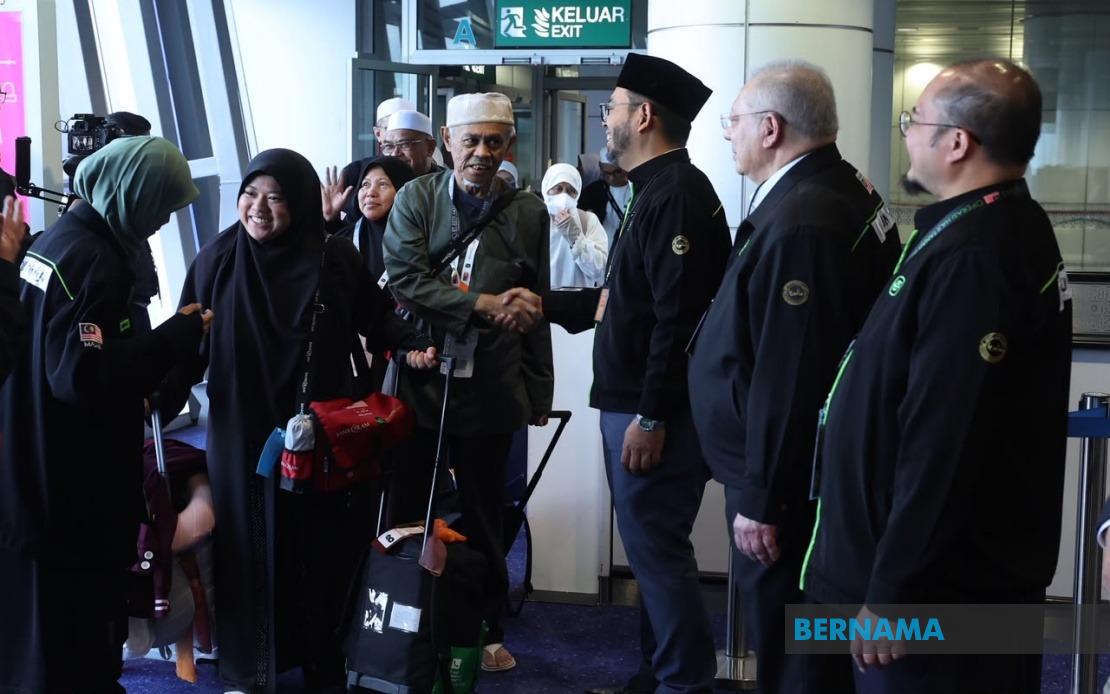
Malaysia's 1447 Hijrah haj operations drew to a successful close on Tuesday when the final contingent of 258 pilgrims touched down at Kuala Lumpur International Airport, marking the end of another year's pilgrimage season. The group, aboard Malaysia Airlines flight MH 8385, arrived at 12.10 pm after departing Madinah the previous evening, completing what authorities hailed as a seamless and well-managed campaign despite considerable headwinds from the ongoing conflict in West Asia that cast uncertainty over the broader regional landscape.
Minister in the Prime Minister's Department (Religious Affairs) Dr Zulkifli Hasan welcomed the returning pilgrims and acknowledged the collective achievement in bringing all devotees home in good health and safety. The successful completion of operations was not merely a logistical success but represented the culmination of months of meticulous planning and coordination across multiple government departments and private sector partners who worked in concert to uphold Malaysia's reputation as one of the world's most efficiently organised haj contingents.
The recognition Malaysia has garnered this season extends beyond domestic satisfaction. The country's haj management prowess received international validation when the Ministry of Haj and Umrah in Saudi Arabia conferred the Labbaikum Diamond Award upon Malaysia, the highest honour bestowed by the Saudi authorities for exemplary haj operations and service delivery. This accolade underscores Malaysia's standing among the global community of haj-sending nations and reflects the professional standards maintained by Tabung Haji and supporting institutions throughout the season, even as regional tensions threatened to complicate pilgrim movements and accommodation arrangements.
The success of this year's operations rested upon several foundational pillars. Dr Zulkifli credited the discipline and spiritual commitment of Malaysian pilgrims themselves, who underwent intensive preparatory courses conducted by Tabung Haji before departing for the Holy Land. This emphasis on pre-departure training has become a hallmark of Malaysia's haj strategy, recognising that informed and well-prepared pilgrims significantly reduce operational complications and contribute substantially to the overall conduct of the season. The investment in education and orientation ensures that participants understand both the spiritual significance of their journey and the practical protocols necessary for their own safety and the smooth functioning of group operations.
Enhancements implemented during the 1447H season illustrated Tabung Haji's commitment to continuous improvement in pilgrimage management. Among the innovations deployed were expanded haj preparatory courses offering deeper instruction to participants, implementation of the MyNIISe system to streamline visa processing and management, provision of sofa beds and upgraded tent facilities at holy sites, round-the-clock bus transportation shuttling pilgrims between mosques and accommodation areas, and enhanced medical and logistical personnel stationed throughout the Holy Land. These incremental improvements, though they may appear modest individually, collectively represent a substantive elevation in the quality of Malaysia's haj provision and contribute measurably to pilgrim comfort and safety during the demanding pilgrimage season.
The coordination required to execute flawless haj operations extends across an intricate network of institutions and agencies. Dr Zulkifli extended particular appreciation to Tabung Haji administration, the Ministry of Health whose medical teams were positioned throughout Saudi Arabia, Malaysia Airlines and other carriers who transported pilgrims, the Immigration Department which processed arrival and departure formalities, and the myriad logistics providers whose unglamorous work often escapes public attention despite proving absolutely essential to operational success. The Deputy Minister in the Prime Minister's Department (Religious Affairs) Marhamah Rosli and Tabung Haji chairman Tan Sri Abdul Rashid Hussain were present at the welcome ceremony, underscoring the senior-level attention devoted to the culmination of haj operations.
Looking forward, Tabung Haji has already initiated the evaluative processes that will inform planning for subsequent haj seasons. The National Haj Muzakarah, a conference bringing together stakeholders to deliberate on operational challenges and proposed enhancements, is scheduled for August to review the 1447H experience and chart refinements for future seasons. This systematic approach to post-season review has become institutionalised within Malaysia's haj management framework, ensuring that each year's accumulated knowledge and lessons inform progressively higher standards for subsequent operations.
The geopolitical context within which Malaysia executed its 1447H haj operations warrants consideration. The persistence of conflict in West Asia created a backdrop of uncertainty that could have disrupted arrangements, complicated security protocols, or induced anxiety among pilgrims and their families. That Malaysia navigated these challenges successfully while simultaneously improving service provision and earning international recognition speaks to the institutional robustness of its haj management systems and the crisis competency of officials overseeing the operations. For Malaysian and Southeast Asian readers, this success carries particular significance, demonstrating that religious observance and regional stability need not prove mutually incompatible and that professional management can sustain vital spiritual traditions even amid turbulent circumstances affecting the broader region.

