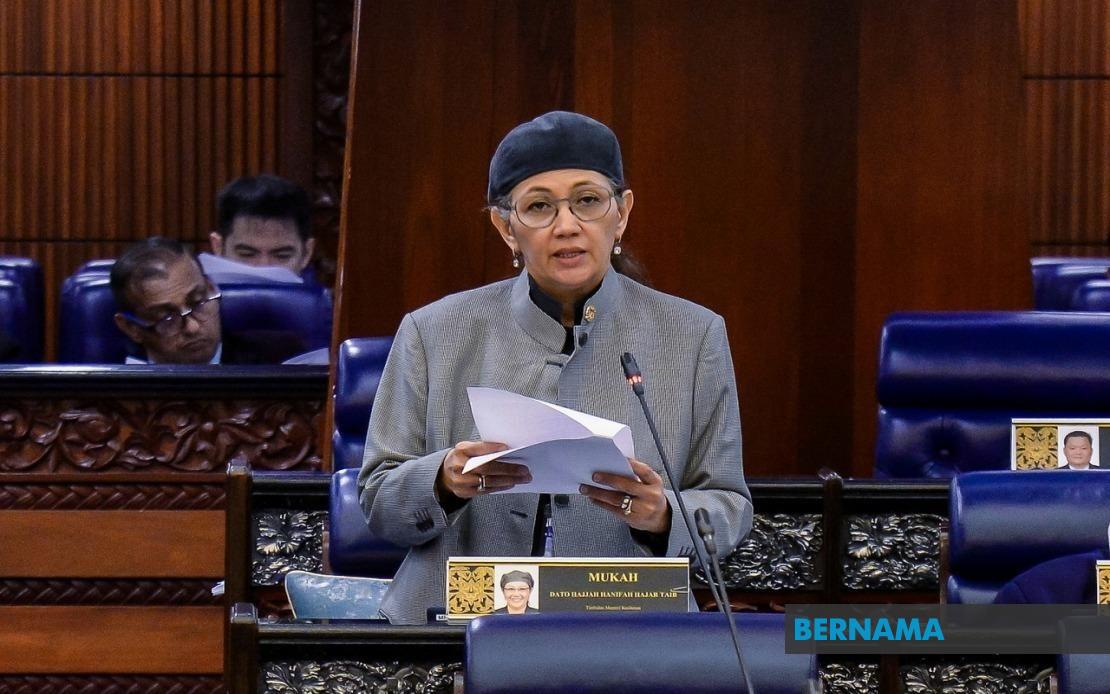
The Ministry of Health is making a significant push to address Sabah's persistent doctor shortage by assigning 560 permanent medical officer positions to the state beginning this October, Deputy Health Minister Datuk Hanifah Hajar Taib announced in Parliament this week. The measure forms part of a nationwide acceleration programme aimed at filling 4,500 permanent medical positions across Malaysia, underscoring how the doctor supply crisis extends well beyond Sabah's borders and reflects broader structural challenges in the nation's healthcare workforce planning.
Despite the ambitious appointment numbers, the Deputy Minister tempered expectations with a sobering acknowledgement: historical evidence suggests only approximately 280 officers will actually report for duty in Sabah, based on past acceptance rates hovering around 50 per cent. This figure, while representing an improvement over the current situation, would still fall short of closing the state's documented shortfall of 256 medical officers. The gap between positions offered and positions filled illustrates a persistent problem that recruitment alone cannot solve—the underlying reluctance among medical professionals to work in less developed regions, a phenomenon that has long plagued Malaysian healthcare planning.
Sabah's medical workforce presents a complex picture of capacity constraints. The state currently maintains 2,803 established medical officer posts, of which only 1,863 positions (66.5 per cent) are actually staffed. A further 366 officers (13.1 per cent) are on study leave pursuing advanced qualifications, while 570 posts (20.3 per cent) remain unfilled. To manage this precarious situation, the Ministry has deployed 680 contract doctors throughout Sabah to plug critical gaps in service delivery. This heavy reliance on contractual arrangements, while necessary for continuity of care, creates workforce instability and prevents the kind of long-term planning that sustainable healthcare requires.
The recent experience from the Ministry's first phase of permanent appointments provides cautionary evidence of the challenge ahead. From June 2026, 328 medical officers were offered permanent positions nationwide, with Sabah receiving 39 of those slots. The outcome proved disappointing: only 20 candidates actually reported to their assigned positions, while 19 rejected their postings outright. This 51 per cent acceptance rate—marginally above the historical average—suggests that offering positions and having them accepted represent fundamentally different hurdles, and that structural incentives may need recalibration to attract and retain medical talent in underserved regions.
The broader national context makes Sabah's doctor shortage part of a systemic issue rather than an isolated problem. Eight Malaysian states, including Sabah, currently fall below the national average for doctor-to-population ratio, indicating that healthcare workforce imbalances affect multiple regions simultaneously. However, there are signs of progress. Sabah's doctor-to-population ratio improved by 25.1 per cent between 2020 and 2023, suggesting that targeted interventions can move the needle, albeit incrementally. Sustaining this upward trajectory while also addressing existing shortfalls will require sustained commitment and potentially different approaches to recruitment and retention.
To improve placement acceptance rates, the Ministry has introduced enhanced mechanisms through its e-Placement system, which rolled out in 2025. A notable innovation requires medical officers transitioning from contract to permanent status to select at least one placement opportunity in Sabah, Sarawak, or Labuan. This approach recognizes that East Malaysian states face particular recruitment challenges and attempts to redirect newly permanent officers toward underserved regions rather than relying entirely on new graduates to fill gaps. Such measures reflect evolving thinking about how to manage geographic imbalances in healthcare workforce distribution.
East Malaysia's combined quota under the e-Placement system reveals the scale of investment in regional healthcare. Sarawak has been allocated 650 permanent medical officer positions while Sabah receives 310 through this system, together representing 42.7 per cent of the nationwide placement quota of 2,248. This substantial allocation underscores the Ministry's recognition that Borneo's healthcare challenges demand disproportionate resource attention. Yet the figures also raise questions about whether such concentrated deployment reflects realistic assessment of actual staffing needs or represents a response to political pressure from a region long frustrated with inadequate health services.
The implications for Malaysian healthcare extend beyond Sabah. If the nation's largest accelerated recruitment programme—placing 4,500 permanent positions across two phases—faces consistent 50 per cent acceptance rates, then truly filling these vacancies may take years longer than planned timelines suggest. This temporal dimension matters enormously for patient care, as prolonged vacancies force remaining doctors to work under unsustainable conditions, potentially accelerating burnout and further departures from the profession. The mathematics of workforce planning suggest that without addressing root causes of reluctance to accept remote or regional postings, Malaysia risks creating a perpetual recruitment treadmill.
For Malaysian policymakers and health administrators, Sabah's situation encapsulates both the urgency and the complexity of healthcare workforce development. While permanent appointments represent genuine career advancement and security compared to contract positions, they apparently fail to overcome reservations about geographic location or working conditions. Understanding whether resistance stems from limited infrastructure, family considerations, career development concerns, or compensation levels remains crucial for designing effective interventions. The Ministry's experience in the coming months will provide valuable data about whether the e-Placement system's innovations and mandatory regional posting requirements prove sufficient to shift acceptance patterns, or whether even more fundamental changes to how Malaysia attracts and deploys medical professionals become necessary.

