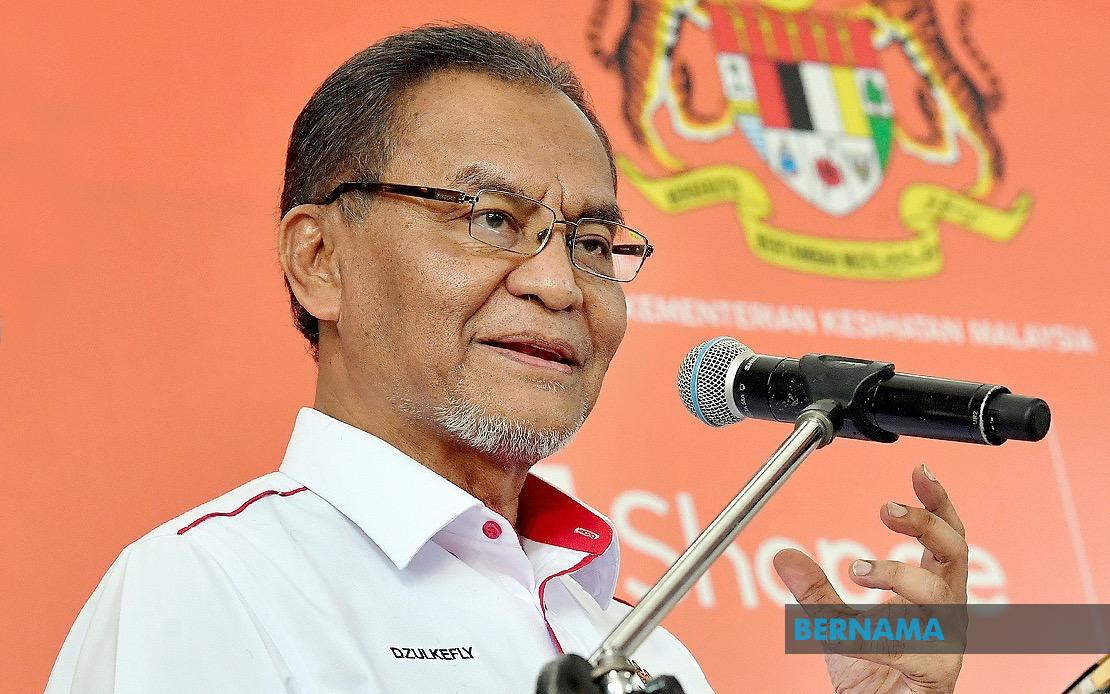
The Malaysian Health Ministry has set an ambitious target to guarantee permanent employment for all housemen upon completion of their training by 2028, a move that signals a significant shift in how the country manages its junior medical workforce. Health Minister Datuk Seri Dr Dzulkefly Ahmad announced the initiative through a social media statement on July 6, positioning it as a cornerstone of the ministry's wider transformation agenda under the Inter-Ministerial Joint Task Force framework. The pledge represents a direct response to longstanding complaints from junior medical professionals about employment uncertainty and contractual instability, issues that have fuelled the persistent brain drain affecting Malaysia's public healthcare system.
This commitment must be understood within the context of Malaysia's broader healthcare crisis. For years, the public health sector has struggled with severe personnel shortages, with housemen—newly graduated doctors completing compulsory training—facing indefinite contract positions and irregular employment status. Many have opted to leave for private practice or migrate abroad, exacerbating the gap between available positions and qualified medical personnel. By 2028, the Health Ministry aims to reverse this trend by guaranteeing secure, pensionable positions to all trainees who successfully complete their housemanship, fundamentally altering the career trajectory expectations for new medical graduates entering public service.
The ministry's strategy extends beyond housemen placements. This year alone, the Health Ministry intends to absorb 4,500 contract medical officers into permanent roles, demonstrating immediate action on workforce stabilization. Additionally, 800 new permanent positions are being approved annually, with an overarching goal to fill more than 18,000 vacancies across various service schemes by 2026. These figures underscore the scale of Malaysia's medical workforce challenge and the government's determination to address it through sustained recruitment and regularization efforts. For Malaysian healthcare workers weighing career decisions between public and private sectors, these announcements carry tangible implications for job security and pension benefits.
Minister Dzulkefly has been explicit that no recruitment freeze is occurring despite budget constraints and operating expenditure realignments. This distinction is crucial for understanding the government's prioritization of healthcare staffing over other spending categories. While many government agencies face hiring restrictions, the Health Ministry is carving out space to expand its permanent workforce. This approach reflects recognition that healthcare cannot absorb workforce reductions without compromising service delivery and patient safety—a lesson reinforced globally by the COVID-19 pandemic and increasingly strained health systems across Southeast Asia.
A parallel challenge receiving ministerial attention concerns the production of local medical specialists. Dzulkefly has tasked the newly appointed deputy director-general of Health for Medical Affairs to overhaul the specialist training pipeline, addressing both local Master's programmes and the Parallel Pathway programme. This distinction matters significantly because specialists command longer training periods and typically work in tertiary care settings that underpin the health system's capacity for complex procedures. Without adequate specialist numbers, Malaysia risks seeing critical surgical services, oncology treatment, and other specialized care concentrated in private facilities accessible primarily to affluent patients, widening healthcare equity gaps across the nation.
The government's focus on creating a sustainable training ecosystem reflects lessons from previous years when specialist shortages contributed to extended patient waiting lists and uneven service distribution. The Inter-Ministerial Joint Task Force approach indicates coordination across multiple government bodies—suggesting that fixing healthcare workforce issues requires input from education, civil service, and financial authorities simultaneously. This whole-of-government framing acknowledges that unilateral health ministry action cannot solve problems rooted in broader civil service structures, medical education policies, and budget allocation mechanisms.
Burnout among medical professionals, particularly junior doctors, remains a pressing concern that these permanent appointment initiatives attempt to address. Contract uncertainty compounds the stress of demanding work schedules and emotionally taxing clinical responsibilities. By 2028, eliminating the anxious limbo many housemen experience during and after training could improve retention rates and mental health outcomes within the profession. For Malaysian medical schools and teaching hospitals, this structural change may also enhance training experiences by reducing the preoccupation with employment prospects that currently shadows many trainees' clinical years.
The timeline extending to 2028 positions this as a medium-term reform rather than an immediate fix. This phased approach allows the ministry to stabilize finances, secure budget allocations, and implement systemic changes without destabilizing current operations. However, it also means junior doctors entering the system in 2024 or 2025 may still experience contract positions before transitioning to permanent status closer to 2028. Policymakers will need to balance messaging that acknowledges progress without creating false expectations of instant transformation among current housemen facing immediate employment decisions.
Regionally, Malaysia's healthcare workforce strategy carries implications for neighboring countries experiencing similar brain drain patterns. If the Health Ministry successfully executes this plan, it could demonstrate a viable model for attracting and retaining medical professionals in Southeast Asian public health systems competing with private sectors and international migration opportunities. Conversely, if implementation falters or the timeline extends beyond 2028, it risks reinforcing perceptions that public health careers remain precarious despite government rhetoric—a narrative that drives continued emigration among qualified medical professionals.
The announcement also reflects evolving political awareness that healthcare workforce stability represents both a public health imperative and an electoral consideration. Medical professionals and their families constitute a politically engaged constituency sensitive to healthcare policy. By articulating concrete workforce targets with specific timelines, the government signals responsiveness to professional concerns and positions itself as committed to dignifying healthcare work. Whether actual budget allocations and administrative implementation match the ambition of these targets will ultimately determine credibility and effectiveness.
For students currently in medical school or contemplating healthcare careers, these commitments create a more attractive employment landscape compared to the uncertainty facing recent graduates. Enhanced job security, pension eligibility, and permanent status upon training completion could influence specialty choice decisions and encourage talented individuals to pursue public service rather than exclusively private practice. This talent retention capacity, if realized, represents perhaps the most significant long-term benefit of the 2028 target for Malaysia's overall health system sustainability.

