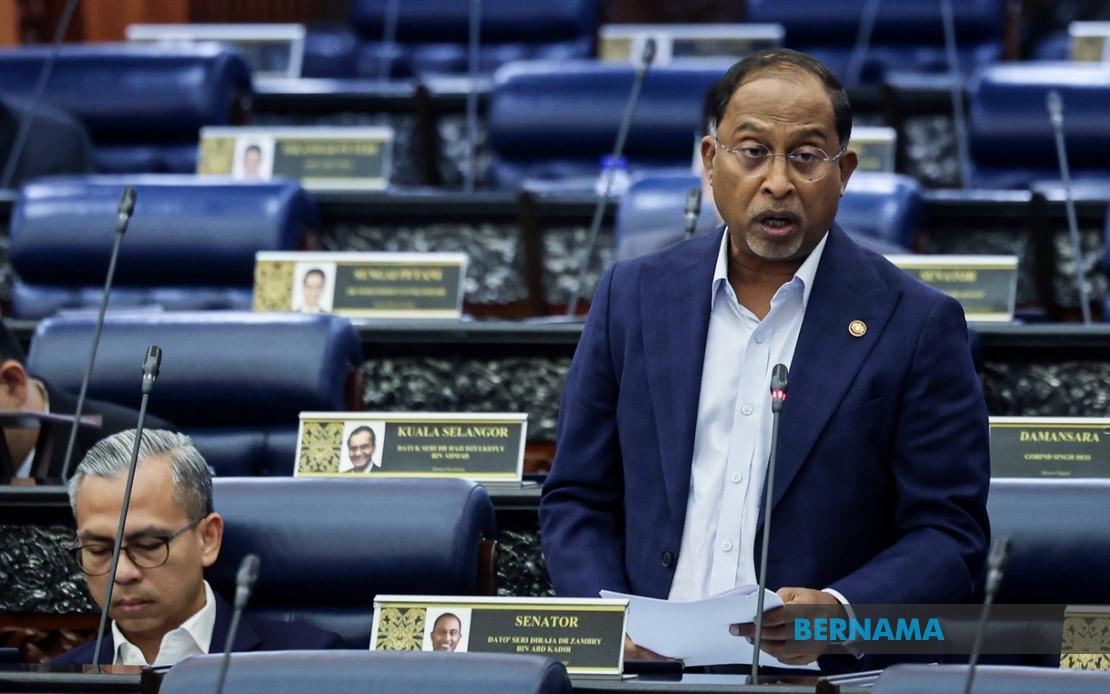
The Ministry of Higher Education has signalled its willingness to evaluate proposals for additional academic courses at institutions across Sabah, marking a strategic shift toward strengthening the state's higher education ecosystem. Speaking during parliamentary question time, Higher Education Minister Datuk Seri Dr Zambry Abdul Kadir outlined a framework designed to systematically expand study options at Universiti Malaysia Sabah, polytechnics and community colleges, while ensuring sustainability and avoiding costly programme duplication across the public higher education sector.
The ministry's approach balances ambition with practical constraint. Rather than simply approving all new programme requests, each application will undergo rigorous evaluation using multiple criteria that reflect both institutional capacity and regional economic priorities. These include the submitting institution's existing strengths, demonstrated demand from employers and students, realistic delivery capacity, and crucially, the employment prospects graduates will face upon completing their studies. By insisting that new offerings avoid replicating programmes already available through other public institutions, the ministry aims to preserve limited resources while maintaining academic quality.
This measured strategy reflects a broader commitment to positioning Sabah's higher education sector as locally responsive without duplicating expensive infrastructure. Dr Zambry emphasised that quality, relevance and alignment with Sabah's development trajectory form the foundation of the decision-making process. The approach recognises that economic development in East Malaysia increasingly demands skilled graduates with specialist knowledge tailored to regional needs rather than generic qualifications.
Currently, Sabah hosts 16 public higher education institutions comprising four universities, three polytechnics and nine community colleges, many operating through branch campuses. This network already provides considerable diversity, yet the geographic and economic characteristics of Sabah suggest targeted expansion remains necessary. The state's economy relies heavily on sectors including tourism, natural resource management, marine industries and agriculture—fields where specialised training locally available could meaningfully improve graduate outcomes.
Universiti Malaysia Sabah stands positioned to lead this expansion by leveraging its unique geographic advantages and research capacity. The institution is actively developing programmes centred on Borneo's exceptional biodiversity and geographic characteristics, including marine science and aquaculture, tropical biotechnology, medical sciences, and heritage studies. These offerings directly address skill shortages in industries central to Sabah's economic future. Meanwhile, Universiti Teknologi MARA's Sabah branch concentrates on hospitality, tourism and business administration—sectors where the state possesses genuine competitive advantage.
The financial commitment underlying this expansion demonstrates genuine government intent. MOHE is deploying RM1.05 billion across 21 development projects statewide to enhance higher education capacity, with RM160.6 million specifically allocated under the 13th Malaysia Plan through 2026. This substantial investment signals that the ministry recognises educational infrastructure development as critical to Sabah's long-term prosperity and regional stability.
A particular challenge addressed by this initiative concerns the historical pattern of Sabah students migrating to Peninsular Malaysia for tertiary education. While some programmes inevitably remain exclusive to other regions due to specialisation or economies of scale, the ministry's niche-based strategy seeks to reverse migration trends where feasible. Notably, Dr Zambry identified law programmes as a priority area, recognising that Sabah and Sarawak face distinct legal and governance contexts that generate localised demand for qualified legal professionals.
The absence of rigid quotas or target percentages in the ministry's approach reflects sophisticated policy thinking. Rather than imposing artificial targets such as requiring 80 per cent of programmes to operate locally, the strategy accepts that certain fields require critical mass only achievable through centralised delivery. However, this flexibility does not mean complacency. By systematically expanding niche offerings where Sabah genuinely possesses competitive advantages, the ministry aims to incrementally improve access while maintaining educational quality.
Research and innovation capacity underpins this expansion strategy. The ministry supports university research through dedicated funding mechanisms including the Research, Development, Innovation, Commercialisation and Economy Programme, which prioritises research with commercial application. For Sabah's institutions, this funding opens pathways to develop research clusters in marine sciences, biotechnology and heritage studies that could simultaneously serve educational and economic development objectives.
The parliamentary exchange reveals important nuances about how Malaysia's federal system approaches regional development in higher education. While the ministry coordinates policy nationally, implementation necessarily responds to local circumstances. Sabah's geographic isolation and distinct economic profile justify tailored rather than one-size-fits-all approaches. The commitment to expanding academic options represents tacit recognition that Peninsular Malaysia-centric higher education delivery inadequately serves East Malaysian needs.
For Malaysian policymakers more broadly, Sabah's experience offers lessons about strategic expansion in a resource-constrained environment. Rather than pursuing comprehensive programme diversity at every institution, concentrating investment on genuine competitive advantages creates sustainable excellence. This principle applies equally to Sarawak and other states seeking to strengthen their higher education sectors without reproducing expensive duplication across the system.
Looking forward, the success of this initiative depends on how effectively institutions convert the ministry's openness into concrete proposals. University leaders in Sabah must identify programme gaps where local demand exists, institutional expertise is available, and employment prospects justify investment. The ministry's willingness to evaluate applications suggests a genuine opening, but one requiring initiative from regional institutions to seize opportunity and translate policy flexibility into tangible expansion benefiting Sabah's students and economy.

