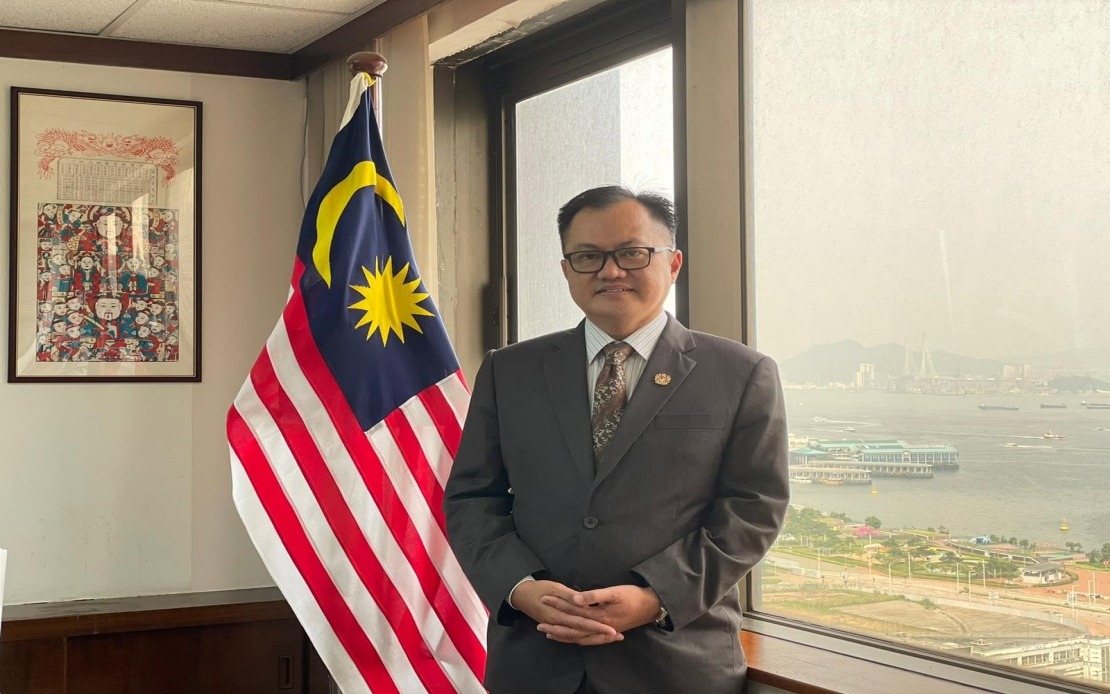
Malaysia's Consulate General in Hong Kong has pushed back against international media coverage suggesting that overseas Malaysian voters faced barriers to participation in the recent Johor state election, asserting that it had implemented a comprehensive communication strategy to keep the diaspora informed. The diplomatic mission, led by Consul General Muzambli Markam, responded directly to an article published in the South China Morning Post on July 9 that characterised overseas Malaysians as being locked out of the electoral process due to tight registration deadlines and limited awareness. The consulate's defence underscores broader tensions between how Malaysia's government manages overseas voting engagement and how international media outlets frame accessibility challenges for citizens abroad.
Muzambli's response highlighted a multi-pronged approach to voter education that extended beyond the consulate's own communications channels. The mission had partnered with the Malaysian Association of Hong Kong to amplify information about registration windows and voting procedures, working to encourage active political participation among the approximately 70,000 to 100,000 Malaysian expatriates estimated to reside in Hong Kong. By leveraging established community organisations, the consulate sought to reach voters through trusted local networks rather than relying solely on official government platforms, a strategy reflecting recognition that diaspora communities often prefer receiving civic information through cultural and social institutions familiar to them.
The consulate took particular issue with the South China Morning Post article's framing, arguing that the headline substantially misrepresented the efforts undertaken by both the Election Commission and the Malaysian government to facilitate overseas voting. Muzambli contended that the piece glossed over crucial context that the mission had explicitly provided to the journalist prior to publication, suggesting a gap between what the consulate believed it had communicated and how the narrative ultimately appeared in print. This discrepancy raises important questions about how government institutions in the region engage with international media and whether diplomatic missions have adequate mechanisms to ensure their perspectives receive proportional representation in foreign coverage.
A key element of the consulate's defence centred on the modernisation of Malaysia's electoral infrastructure for overseas voters. The digitalisation of the voter registration process through the MySPR online portal represents a significant structural shift, enabling Malaysian citizens abroad to submit applications directly without requiring consular intermediation. Muzambli characterised the consulate's deliberate absence as an intermediary in this system not as an administrative weakness but rather as an intentional feature designed to enhance security and streamline operations. This argument reflects a broader global trend among democratic nations to centralise and digitise electoral systems, reducing human processing steps that can introduce delays or inconsistencies.
The distinction between the consulate's role and that of the automated registration system illuminates a potential source of confusion for overseas voters. While digital portals offer convenience and speed, they may simultaneously create awareness gaps if voters do not know these systems exist or how to access them. The consulate's claim that it had actively promoted these registration windows through advisories and instructional materials on official platforms addresses this concern partially, yet the existence of international media criticism suggests that its outreach may not have reached all eligible voters equally. The reliance on digital literacy and consistent social media engagement as prerequisites for voter awareness can inadvertently exclude segments of the diaspora, particularly older voters or those less connected to online government communications.
The tension between the South China Morning Post's reporting and the consulate's response also reflects differing definitions of accessibility in democratic processes. The media outlet's framing emphasised structural barriers—tight deadlines and limited time windows for registration—that disproportionately affect overseas voters managing affairs across time zones. The consulate's counter-narrative emphasised the availability of information and the streamlined nature of digital systems, implying that barriers are surmountable through adequate awareness. These competing perspectives highlight a genuine policy challenge: whether overseas voting systems are fundamentally designed with diaspora populations in mind, or whether they represent a secondary consideration in election administration primarily organised around domestic participation.
For Malaysian expatriates in Hong Kong and across Southeast Asia more broadly, the consulate's defence carries practical implications. The claim that the MySPR portal allows direct-to-system applications means that Malaysians abroad theoretically have the same registration access as those residing domestically, provided they have appropriate documentation and technological access. However, this theoretical accessibility does not automatically translate to equal participation rates. Research from other democracies with significant diaspora populations consistently demonstrates that overseas voter turnout lags substantially behind domestic participation, often reflecting a combination of awareness gaps, administrative complexity, and reduced sense of connection to local political processes.
The consulate's acknowledgement of collaboration with the Malaysian Association of Hong Kong represents an important mechanism for reaching the diaspora, yet the very existence of coverage criticising voter awareness suggests these partnerships may not extend sufficiently across the entire community. The MAHK likely attracts engaged members of the Malaysian expatriate population already predisposed toward civic participation, while reaching less politically active segments remains challenging. This structural limitation is not unique to Malaysia but reflects a common challenge that diplomatic missions worldwide face when attempting to mobilise overseas populations around electoral processes.
The broader context of overseas voting in Malaysia deserves attention as the country seeks to enhance democratic participation among its citizens abroad. The Johor state election represents one of several subnational contests in which Malaysian expatriates theoretically hold voting rights, yet the logistics of international participation often prove taxing. Consulates operate with limited resources and competing priorities, and devoting extensive capacity to voter education must be balanced against other consular functions. The digitalisation of registration partly addresses this constraint by shifting responsibility from human-intensive consular processing to automated online systems, though it simultaneously places greater burden on voters to navigate digital platforms independently.
Muzambli's assertion that the Malaysian government remains fully committed to facilitating overseas voting rights through digital infrastructure and diplomatic engagement reflects official policy orientation, yet the international media coverage and subsequent consular response indicate that gaps remain between stated commitment and on-the-ground experience for some voters. The incident highlights the importance of comprehensive evaluation mechanisms that measure not merely whether information is published, but whether it reaches intended audiences and translates into informed electoral participation. As Malaysia continues refining overseas voting systems, such feedback—even when delivered through international media criticism—provides valuable data for identifying adjustment opportunities.
Moving forward, the dialogue between Malaysia's consular services and international media outlets covering overseas voting deserves formalisation and clarification. The consulate's concern that crucial context was omitted from the South China Morning Post article suggests potential value in establishing clearer protocols for pre-publication consultation and ensuring that government perspectives receive adequate representation. Simultaneously, Malaysian authorities should welcome external scrutiny of voting accessibility, using such criticism as diagnostic information to identify whether particular demographic segments or geographic regions require enhanced outreach efforts. The democratic principle of broad-based electoral participation ultimately benefits from this ongoing conversation between government institutions, civil society organisations, media outlets, and diaspora communities themselves.

