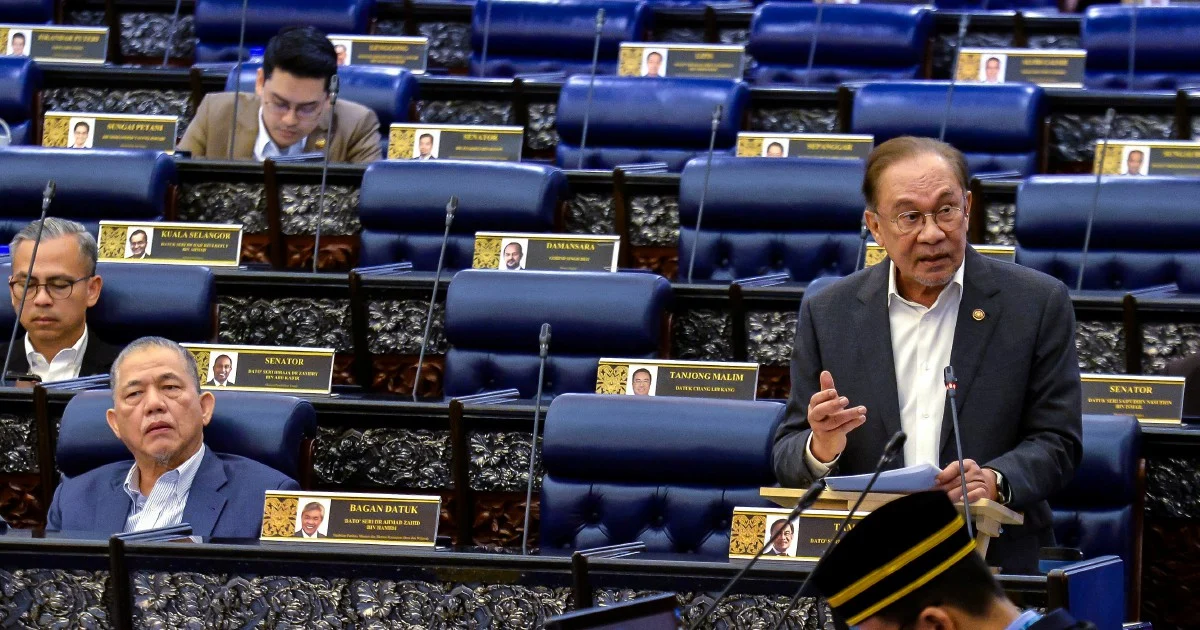
Malaysia's household debt burden has climbed to RM1.73 trillion as of the end of March 2026, Prime Minister Datuk Seri Anwar Ibrahim disclosed, with the obligation now constituting 84.4 per cent of the nation's gross domestic product. The figure offers a sobering snapshot of the financial pressures increasingly weighing on Malaysian households, particularly as the cost of living continues to shape family budgets across the country.
This debt-to-GDP ratio places Malaysia's household sector among those carrying substantial financial obligations relative to economic output. The magnitude of the figure underscores how deeply embedded consumer borrowing has become in the economy's functioning, with families carrying mortgages, car loans, credit card balances, and other consumer debts that collectively represent a significant claim on future household income. For context, household debt encompasses borrowings from financial institutions for residential property purchases, vehicle acquisitions, personal loans, and credit facilities—the primary mechanisms through which Malaysian families finance major purchases and smooth consumption across their lifetimes.
The trajectory of household debt warrants careful monitoring given Malaysia's position as an upper-middle-income economy navigating complex monetary policy decisions. Bank Negara Malaysia has had to balance supporting economic growth through competitive interest rates against the imperative of ensuring financial stability. Higher interest rates, which the central bank has employed to manage inflationary pressures in recent years, directly increase the cost of servicing existing household debt, potentially straining the budgets of already-stretched families. Mortgage holders and those with variable-rate loans face monthly repayment obligations that rise as benchmark lending rates climb.
Regional comparisons add perspective to Malaysia's position. Household debt levels across Southeast Asia vary considerably, reflecting different stages of financial development, household savings behaviours, and credit market maturity. Thailand, for instance, has grappled with similarly elevated household debt-to-GDP ratios, while the Philippines and Vietnam maintain comparatively lower levels owing partly to less penetrated credit markets. Malaysia's position reflects a financially developed system where credit access is relatively broad, enabling consumers to leverage borrowing for productivity-enhancing investments like education and homeownership, but also creating vulnerability to income shocks.
The composition of Malaysia's household debt matters substantially for assessing systemic risk. Mortgage debt typically comprises the largest segment, generally considered lower-risk given the underlying asset collateral, though property market volatility introduces complexities. Personal loans and credit card debt represent riskier categories from a lender's perspective and may indicate households attempting to bridge consumption gaps through high-cost borrowing. Understanding this composition becomes critical for policymakers assessing whether debt levels reflect investments in future productivity or consumption beyond current means.
Socioeconomic disparities in debt exposure likely remain pronounced across Malaysian society, though aggregate figures mask these variations. Higher-income households in urban centres like Kuala Lumpur, Selangor, and Penang typically carry larger absolute debt burdens but possess greater capacity to service obligations through stable employment and asset accumulation. Lower-income households and those in less developed regions face proportionally heavier burdens relative to earning capacity, making them more vulnerable to economic downturns, job losses, or unexpected expenses that trigger debt distress. This inequality dimension carries social implications extending beyond pure financial metrics.
Labour market conditions form another crucial lens through which to evaluate household debt sustainability. Malaysian employment trends, wage growth trajectories, and sectoral shifts influence debt serviceability across the population. The transition toward higher-skilled work and emerging sectors creates winners but may leave others with stagnating incomes insufficient to comfortably manage debt obligations accumulated during better times. Unemployment or underemployment among prime-working-age individuals compounds these challenges, particularly for those carrying mortgage obligations on properties purchased during periods of higher economic confidence.
Regulatory frameworks governing household credit in Malaysia have evolved to address debt-related risks. Bank Negara Malaysia's loan-to-value guidelines for property purchases, debt-to-income assessments for credit approval, and ongoing monitoring of household debt metrics represent attempts to prevent excessive leverage. However, the persistence of high household debt despite regulatory guardrails suggests either that safeguards have proven insufficient, that genuine economic needs drive borrowing, or that alternative credit channels outside formal regulation allow households to accumulate obligations uncaptured in official statistics.
Consumer behaviour and financial literacy intersect with structural economic factors in shaping debt trajectories. Malaysian households increasingly access financial services through digital channels, potentially broadening access but also raising concerns about impulse borrowing and inadequate assessment of repayment capacity. Educational initiatives promoting financial planning, budgeting discipline, and understanding of debt risks remain important complements to regulatory oversight. The government and Bank Negara have invested in financial literacy programmes, though penetration and effectiveness require continuous evaluation.
The broader macroeconomic context—including inflation, currency stability, and regional economic conditions—directly influences household debt dynamics. Persistent inflation erodes purchasing power, compelling families to borrow for necessities they previously could purchase outright. Exchange rate fluctuations affect import-dependent households and those with foreign currency obligations. Regional economic slowdowns in key trading partners impact Malaysian export competitiveness and employment stability, indirectly pressuring household financial positions across dependent sectors.
Moving forward, balancing financial inclusion with debt sustainability remains a central policy challenge. Malaysian authorities must weigh enabling household access to credit for productive investments against preventing excessive leverage that generates systemic financial risk. This equilibrium becomes increasingly delicate as cost-of-living pressures mount and income growth struggles to keep pace. Targeted interventions addressing vulnerable household segments, combined with macroprudential oversight of credit markets, may help stabilize household debt while preserving access to financing for genuine development needs across Malaysian society.

